Sita Becomes Mahakali
Adbhuta Ramayana
Ram lay unconscious upon the battlefield. Sahasra Ravana stood triumphant, certain that the struggle had ended.
Sita looked at Ram, at the broken weapon, and at the ruler who believed no power remained to oppose him. Grief moved through her, but what rose with it was not helplessness.
Her familiar human appearance opened into the fierce cosmic form of Mahakali—dark radiance, flowing hair, powerful arms, and the terrible majesty of the Mother who confronts forces that have placed themselves beyond ordinary restraint.
This was not a frightened woman borrowing another deity's strength. The revelation was that the power had always been Sita's. The gentle Sita and fierce Mahakali were not rivals. The one who could comfort a grieving companion was also the one who could stand before a tyrant whom Ram's greatest weapon had not stopped.
Sahasra Ravana had mocked every challenger, but he could not command Shakti. Sita went to meet him.
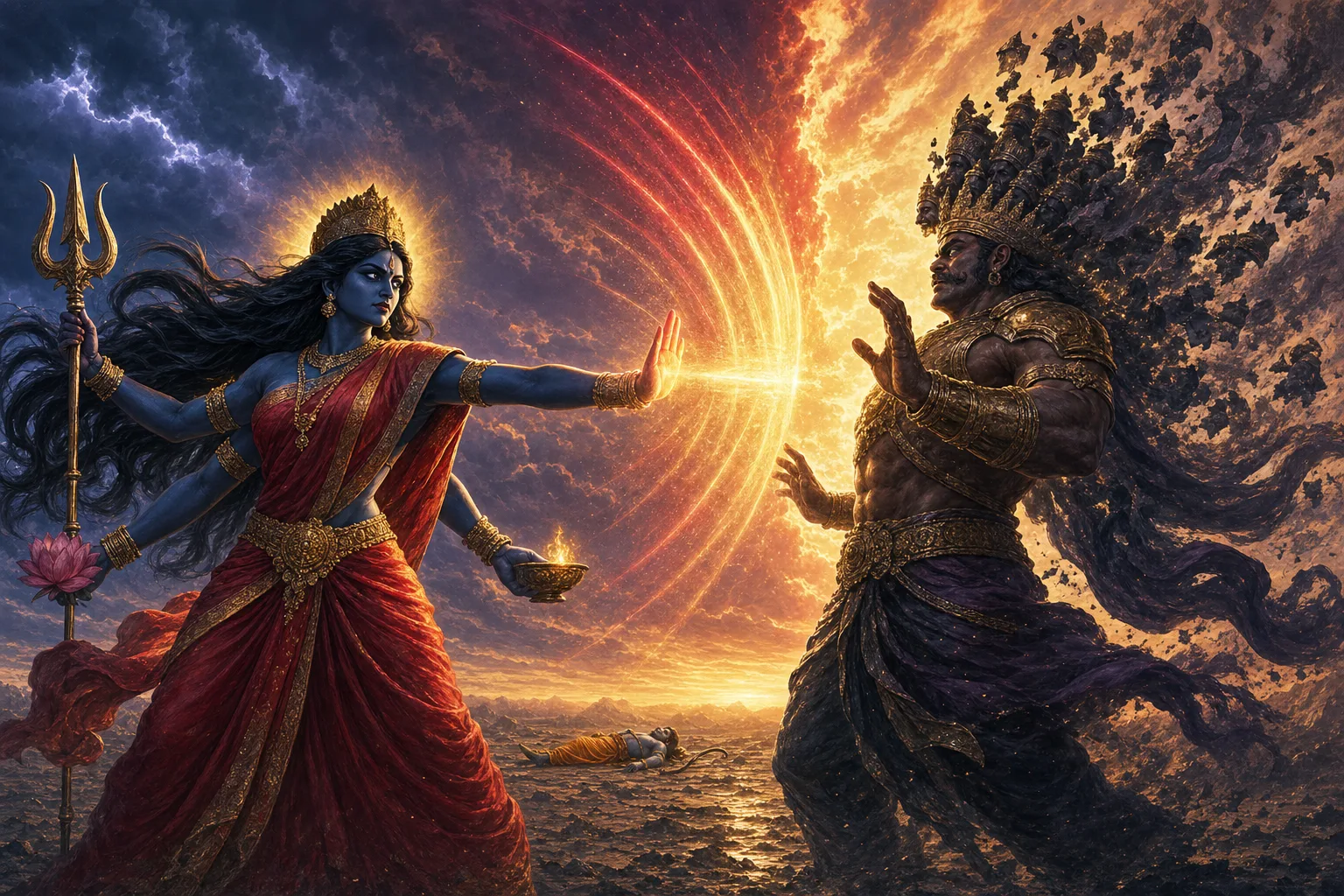
The battle that followed was fierce and swift. Sita's power scattered every soldier and shield the thousand-headed king still commanded. Then she struck the king himself, and he fell. Sahasra Ravana had believed himself invincible; his reign ended with him.
Victory did not make violence beautiful. Mahakali's power exposed the terrible cost of the world Sahasra Ravana had created.
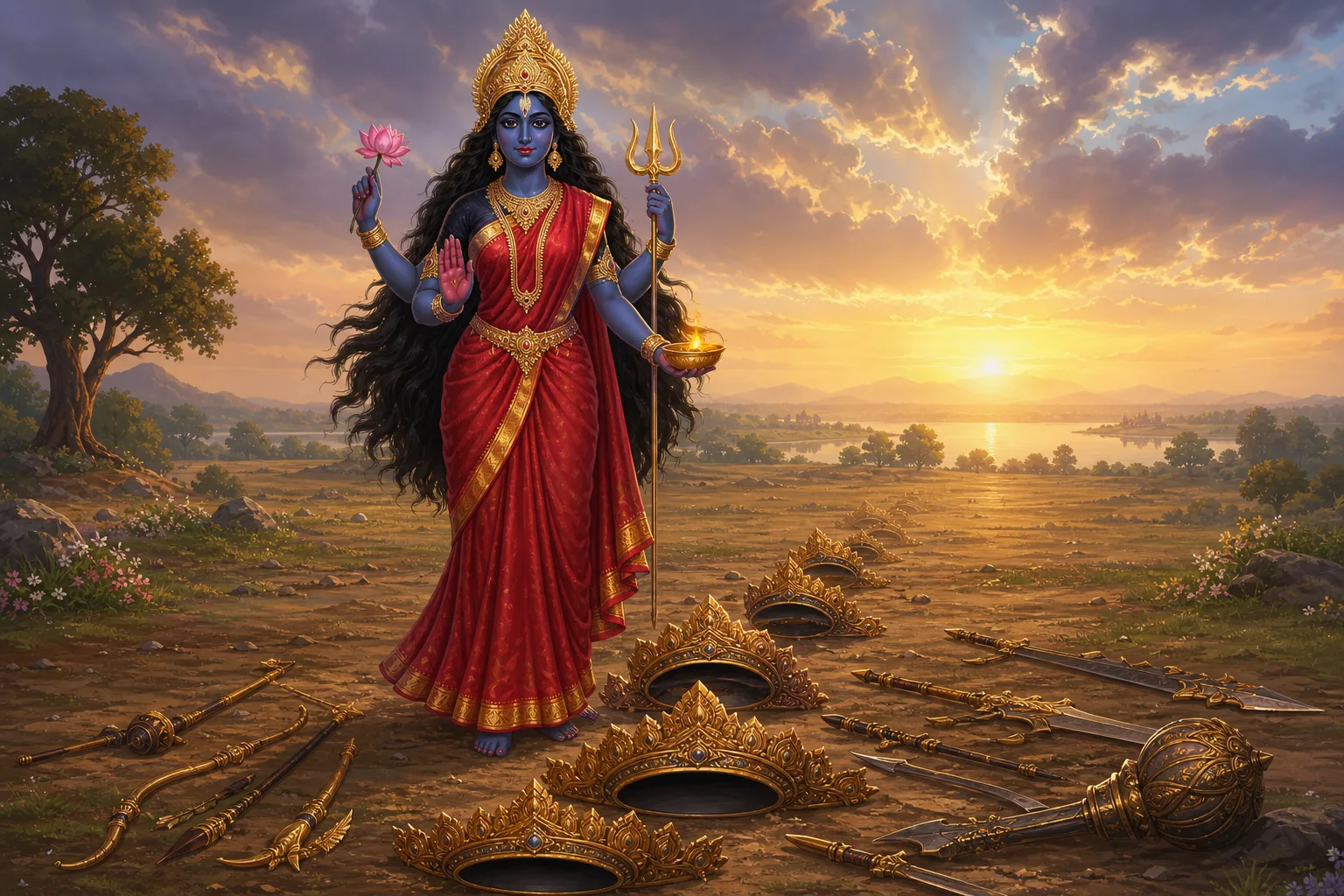
Then Sita's cosmic dance shook the earth. The force that had ended the tyrant did not instantly become small because observers wished the danger neatly concluded. Mountains trembled and the ground struggled to bear her energy.
Shiva came beneath her in a still, corpse-like form. He did not steal the victory or overpower Sita. His presence helped receive and steady the immense movement of Shakti so that the worlds would not be broken by it.
The gods watched with awe and fear. They had desired an end to Sahasra Ravana, yet now had to confront the power through which that ending became possible. Shakti was not a weapon they could summon, praise only when useful, and dismiss without recognition.
Ram remained unconscious. Sita stood as Mahakali over the ended threat, surrounded by the force of her revelation.
The decisive victory belonged to her. No later praise, explanation, or awakening would transfer it to another hand.
“Protective power may be fierce, but it must be understood rather than turned into spectacle.”
New stories in your inbox
One story every week, and a special tale on festivals. Free, always.
Your email goes to our newsletter provider (beehiiv) so we can send you stories. It is not linked to any child's reading on this site. Unsubscribe any time from the email footer.