The Wondrous Return to Ayodhya
Adbhuta Ramayana
The Pushpaka rose from Pushkara and travelled toward Ayodhya. Ram and Sita watched mountains and rivers pass below while the meaning of the battle settled between them.
In Ayodhya, those returned by the wind weapon had feared the worst. When the aerial car appeared, people rushed to the open courtyards. Bharat and Shatrughna, the scattered warriors, and Sugriva and Vibhishana, who had hurried from Kishkindha and Lanka as soon as the wind set them down, gathered with relief.
Ram did not begin by placing himself at the centre of the story. He described the journey prompted by Sita's knowledge, the strength of their allies, the wind that scattered them, the broken Brahmastra, and his own fall.
Then he told how Sita manifested as Mahakali, defeated Sahasra Ravana, shook the worlds with her power, restored relationship after his awakening, and granted him vision of her cosmic nature.
The hall became silent. Some listeners struggled to join this account with the Sita they thought they knew. Ram repeated what he had learned: gentleness had never meant absence of power, and the fierce form was not a stranger.
Sita also spoke. She did not ask the court to forget Ram's courage or the allies' service. She asked them not to erase her victory in order to preserve an easier heroic pattern.
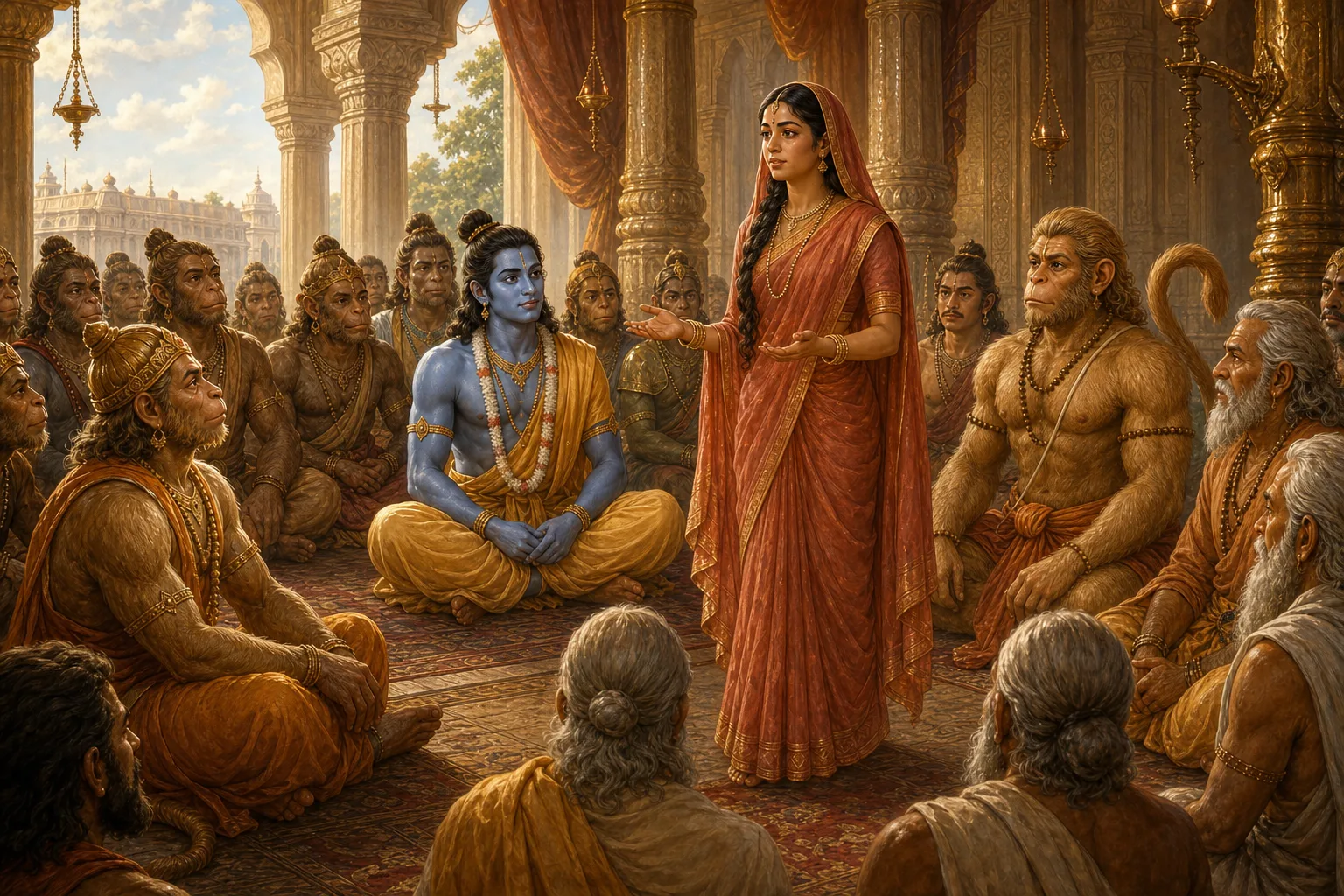
The scattered warriors were honoured for what they had contributed before the wind carried them away. Sugriva and the vanaras prepared to return to Kishkindha. Vibhishana and his companions turned toward Lanka. Farewells held gratitude as well as relief.
Back beside the Tamasa River, Valmiki's voice grew quiet. Bharadvaja understood why Sita stood at the centre of the hidden account. She had appeared as daughter, student, traveller, captive, queen, knower, protector, Mahakali, and cosmic power. No single role contained her.
The telling did not replace every other Ramayana. It returned the listener to those traditions with a new question: Whose knowledge and power have we failed to notice?
Bharadvaja bowed. Preserving the story would require more than remembering its wonders. He must name the Adbhuta tradition, distinguish it from other tellings, treat its difficult passages honestly, and never transfer Sita's victory to another hand.
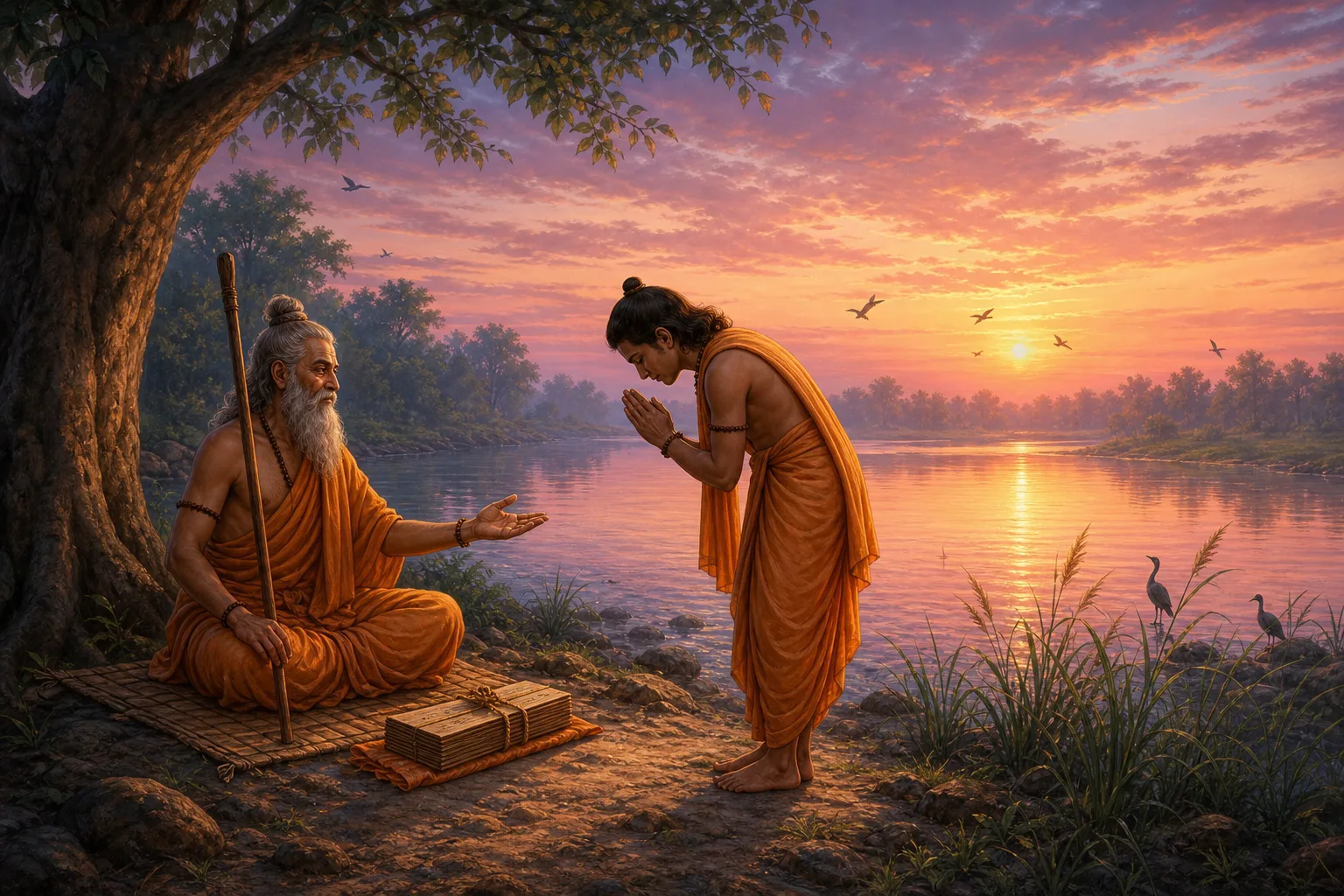
The river continued to flow. The hidden Ramayana was hidden no longer—but it still depended upon careful listeners to carry its truth forward without making it smaller.
“A story is honoured when its truth is carried forward without hiding who acted.”
New stories in your inbox
One story every week, and a special tale on festivals. Free, always.
Your email goes to our newsletter provider (beehiiv) so we can send you stories. It is not linked to any child's reading on this site. Unsubscribe any time from the email footer.