Kaushika's Unbending Song
Adbhuta Ramayana
Kaushika's voice was not the loudest in the land, but people became quiet when he began to sing. He lived simply, offering every song to Vishnu. Farmers, craftspeople, travellers, and learned visitors sat together to listen.
His companions also loved sacred music. Some played instruments, some sang, and others made sure that every newcomer found a place. No one asked whether a listener had brought a costly gift.
News of Kaushika's music reached the king of Kalinga. The ruler imagined how splendid the singer would sound in his court.
Kaushika and his companions were summoned to the palace. The king sat beneath a decorated canopy and said, "Sing of my victories. Let every visitor hear that no ruler is greater than I."
Kaushika bowed respectfully. "Your Majesty, my songs are offerings to Vishnu. I can honour good conduct, but I cannot turn worship into flattery."
The court fell silent. The king first offered gold, fine cloth, and a house near the palace. Kaushika thanked him but did not change his answer.
"Do you consider me unworthy of a song?" the king demanded.
"This is not a judgment of your worth," Kaushika replied. "A gift has a purpose. If I use sacred music to praise whoever can reward or punish me, the song is no longer freely offered."
The king's embarrassment became anger. He ordered musicians to sing his praises so loudly that Kaushika's group could hear nothing else. He seized their belongings and banished them from the kingdom.
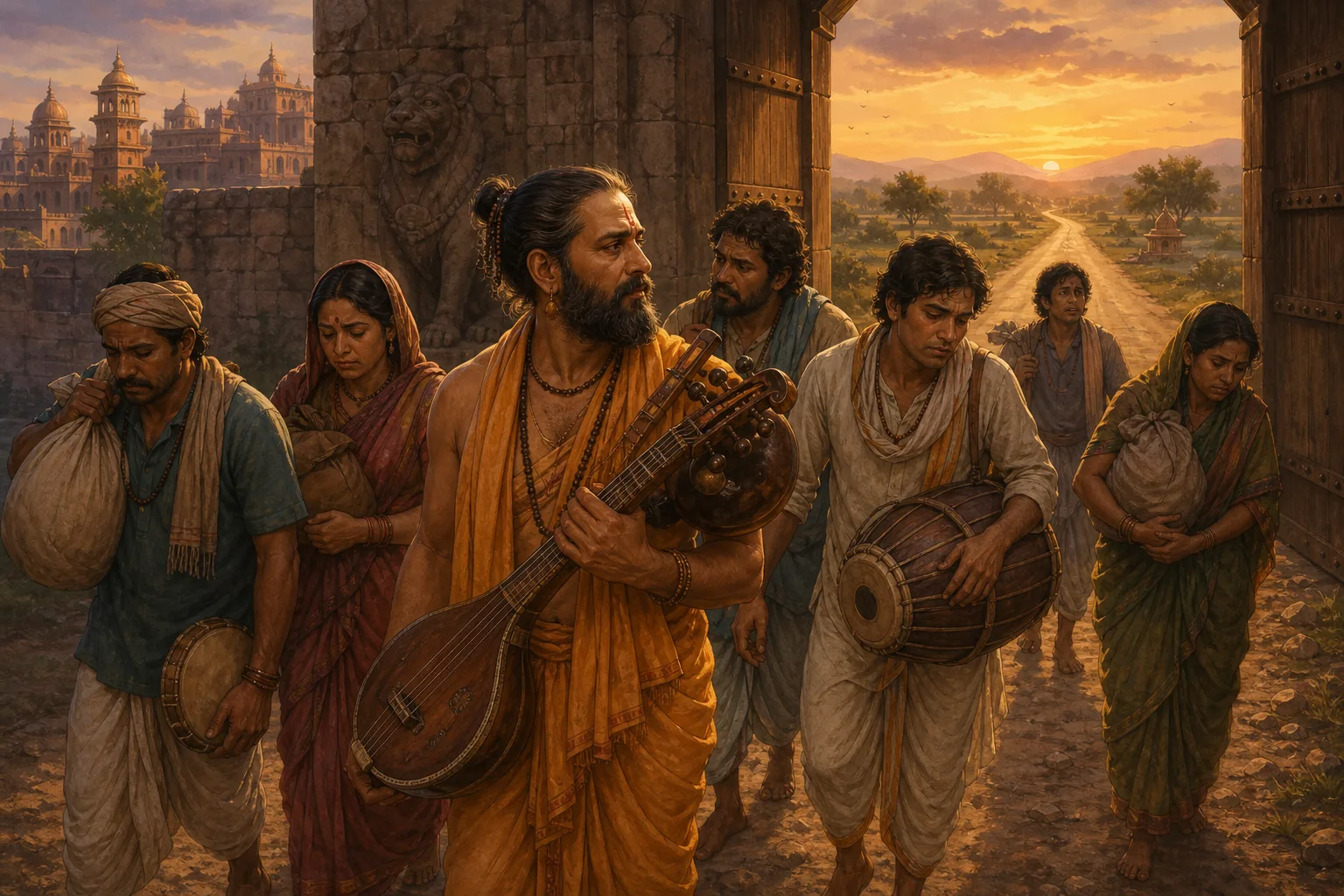
The road away from home was difficult. The singers had lost shelter and familiar neighbours because of one ruler's pride. Kaushika did not pretend that their suffering was pleasant or insist that everyone remain cheerful.
"You may leave me and return if it becomes safe," he told his companions.
They answered, "We stayed for the purpose of the music, not for your comfort alone. We will decide together how to continue."
Wherever the group rested, they sang quietly. Travellers heard them beside roads. Children gathered at village wells. A potter tapped a rhythm on an empty vessel, and an old woman joined a refrain she remembered from childhood.
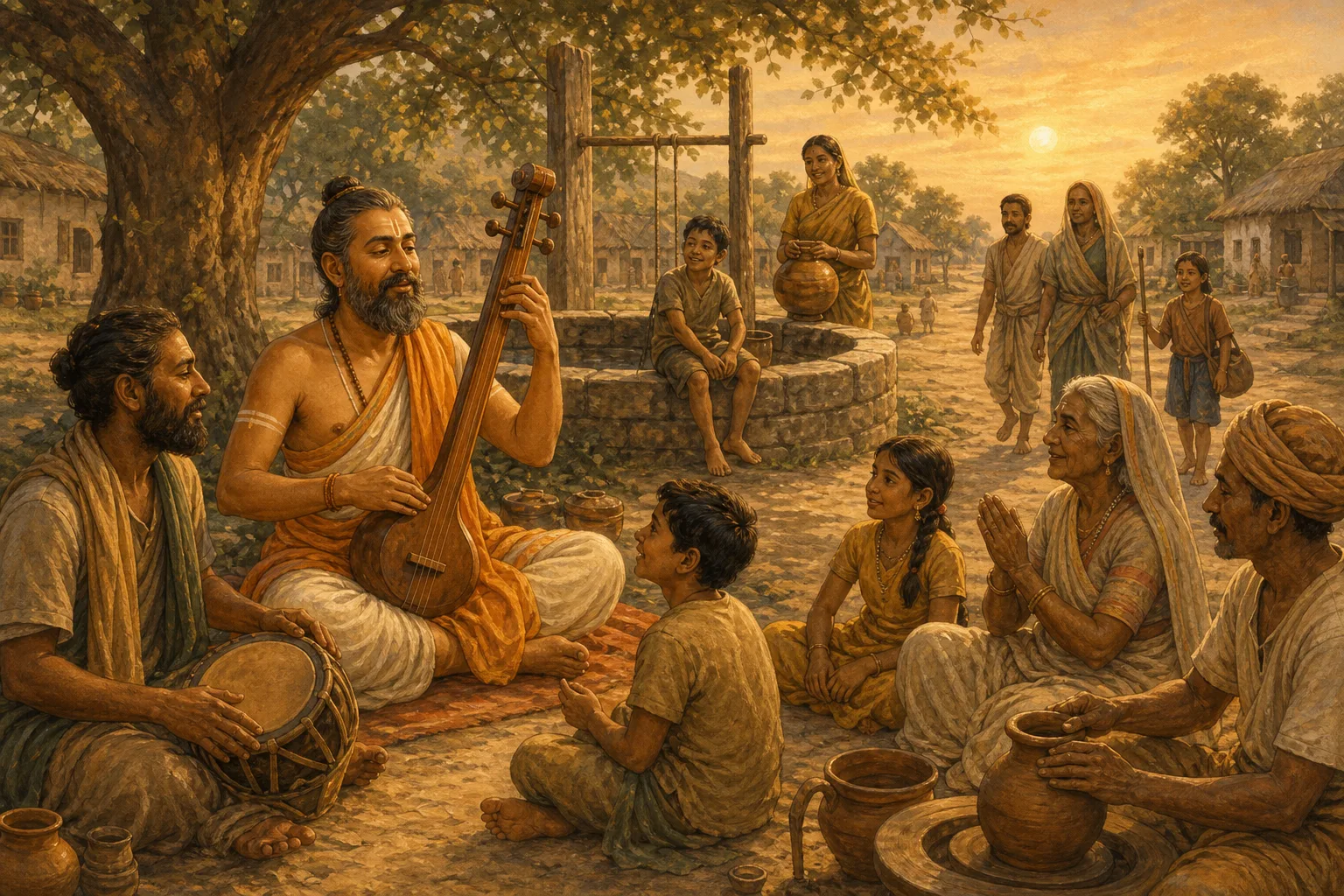
The king could remove possessions and command noise in his own court. He could not command the meaning of their voices.
When Kaushika and his faithful companions at last reached the end of their earthly lives, Brahma himself received them and led them to Vishnu's abode. Their reward was not for insulting a ruler. It was for refusing to sell devotion and for caring for one another when punishment came.
“Integrity means keeping faith with the purpose of our gifts.”
New stories in your inbox
One story every week, and a special tale on festivals. Free, always.
Your email goes to our newsletter provider (beehiiv) so we can send you stories. It is not linked to any child's reading on this site. Unsubscribe any time from the email footer.