Shrimati Chooses Vishnu
Adbhuta Ramayana
The svayamvara hall glittered with lamps and flower garlands. Kings, sages, and honoured guests turned toward the entrance as Princess Shrimati stepped inside carrying the wedding garland.
She walked slowly, determined not to let the watching crowd hurry her. Then she reached the seats reserved for Narada and Parvata—and stopped.
To her eyes, both sages appeared to have monkey-like faces. Yet each sat proudly, smiling as if nothing unusual had happened. Between them stood a radiant young man she had never seen before. His expression held neither mockery nor demand.
"Father," Shrimati said quietly, "the scene before me is not the one that was described."
Ambarisha could not see what she saw, but he remembered his promise. "The garland is in your hands," he replied. "Look carefully and choose freely."
Shrimati observed the three figures. Narada and Parvata leaned forward, each certain that the other's altered appearance had secured his own victory. The stranger remained still.
She walked past both sages and placed the garland around the stranger's neck.
At once Vishnu revealed himself. The hall filled with wonder, but Narada and Parvata felt only the sting of disappointment. Each finally saw that the trick he had requested had also been requested against him.
They could have admitted their jealousy. They could have apologized to Shrimati for treating her ceremony as their contest. Instead anger reached their tongues before wisdom returned.
"You have deceived us," they cried to Vishnu. "Be born as a human and wander the forest grieving for a wife taken from you!" Their curse extended to Shrimati: she too would be born on earth and become the woman for whom he searched.
The words fell heavily across the hall. Shrimati had made a free choice, yet the sages tried to turn her future into the price of their wounded pride.
Vishnu did not answer with another curse. He accepted that he would descend as Ram, son of Dasharatha, and that Shrimati would enter earthly life in the story of Sita. During that human life, grief, separation, friendship, effort, and uncertainty would be real. Divine purpose would unfold through them rather than erase them.
Ambarisha looked from the angry sages to his daughter. "Her choice was hers," he said firmly. "Disappointment does not make it an offence."
Narada and Parvata left carrying a lesson they were not yet ready to accept. Learning and spiritual accomplishment had not protected them from jealousy. Wisdom would be proved by how they changed afterward, not by how loudly they defended their anger.
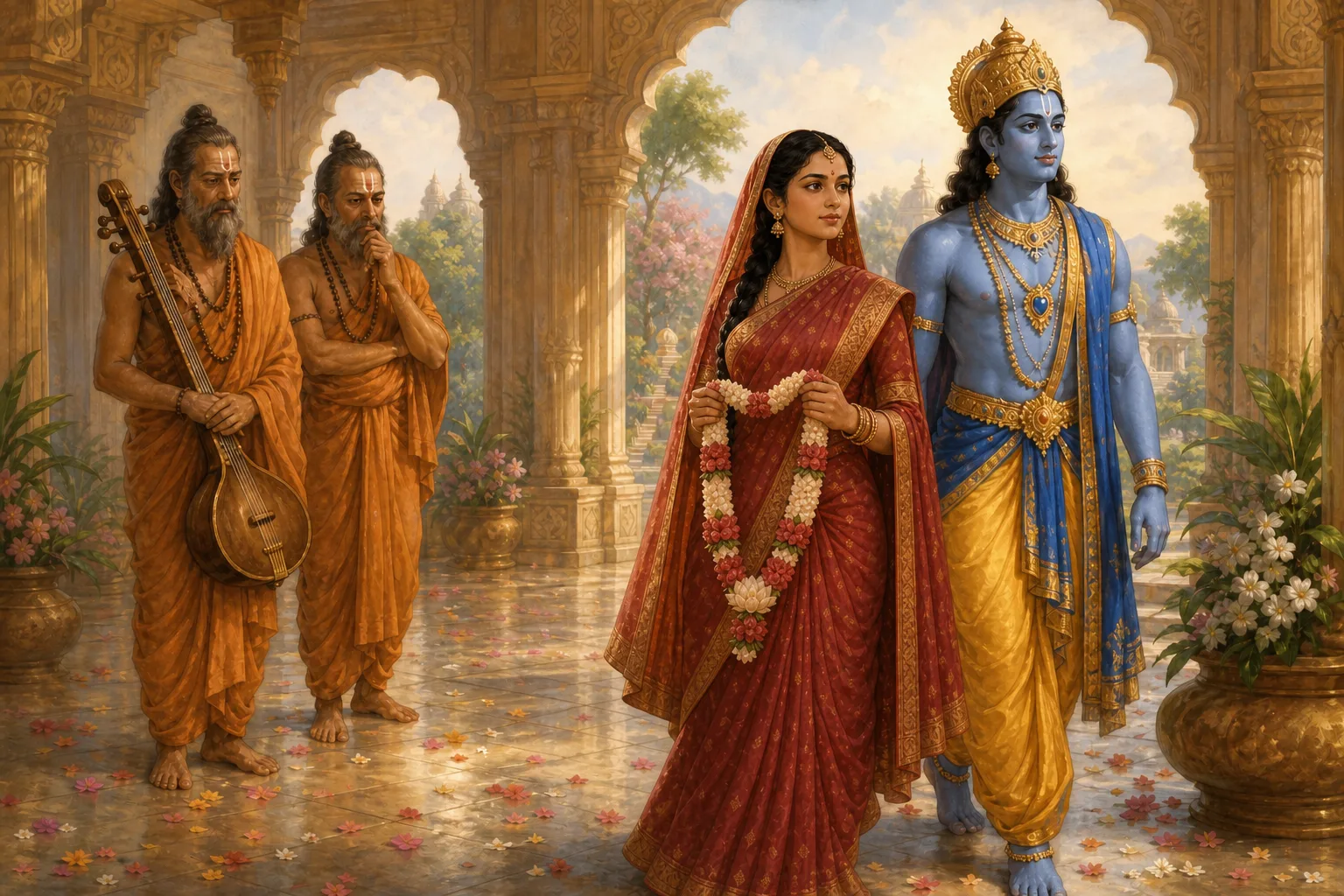
Shrimati stood beside Vishnu, still holding the end of the garland. That strange and troubling moment would one day bring Ram and Sita to the earth. It did not make the sages' anger right.
The ceremony ended, but its consequences travelled far beyond the palace. A freely placed garland, two careless curses, and Vishnu's calm acceptance had set an earthly Ramayana in motion.
“Disappointment does not give us the right to punish another person's choice.”
New stories in your inbox
One story every week, and a special tale on festivals. Free, always.
Your email goes to our newsletter provider (beehiiv) so we can send you stories. It is not linked to any child's reading on this site. Unsubscribe any time from the email footer.