The Boon of King Ambarisha
Adbhuta Ramayana
King Ambarisha ruled a prosperous land. Storehouses held grain, wells were cared for, and merchants crossed the city gates with carts from distant places. Yet the king knew that a full treasury could not protect a person's heart from pride.
Each morning, before ministers brought petitions, Ambarisha spent time remembering Vishnu. He asked himself three questions: Had he listened before judging? Had he protected those with little power? Had he used the kingdom's wealth for the people rather than for his own praise?
One day, while the king was absorbed in prayer, the room filled with a radiance brighter than sunlight. Vishnu stood before him, bearing the conch, discus, mace, and lotus.
"Ambarisha," Vishnu said, "your devotion has pleased me. Ask for a boon."
The king's mind raced. With one request he might secure a reign without rivals. He might ask for treasure that never diminished, freedom from illness, or a name remembered for thousands of years.
Then he pictured a ruler who could never be challenged. Such a king might stop listening. Endless treasure might make him careless about the labour that produced it. Even a famous name could become empty if people remembered only monuments and not justice.
Ambarisha bowed. "May my mind remain anchored in you," he said. "Let success not make me careless and difficulty not make me cruel. Give me the wisdom to recognize sincere devotion and the courage to protect those who seek refuge."
Vishnu's expression brightened. "You have asked not for freedom from responsibility, but for the strength to carry it. Let my Sudarshana discus protect you when you act with devotion and justice."
A circle of light appeared for a moment near the king. Ambarisha understood that this protection was not permission to behave recklessly. The discus would not turn every personal wish into righteousness. He would still have to investigate disputes, hear unwelcome advice, and admit mistakes.
The next morning the court looked unchanged. No new jewel shone on the crown, and no army of divine guards stood at the doors. Yet the ministers noticed that Ambarisha interrupted less often.
When two farmers disputed the water from a canal, he sent officers to examine the fields instead of trusting the wealthier speaker. When a traveller sought shelter, he did not first ask what gift the stranger could offer. When poets praised him extravagantly, he thanked them but directed their attention toward the workers repairing the city's wells.
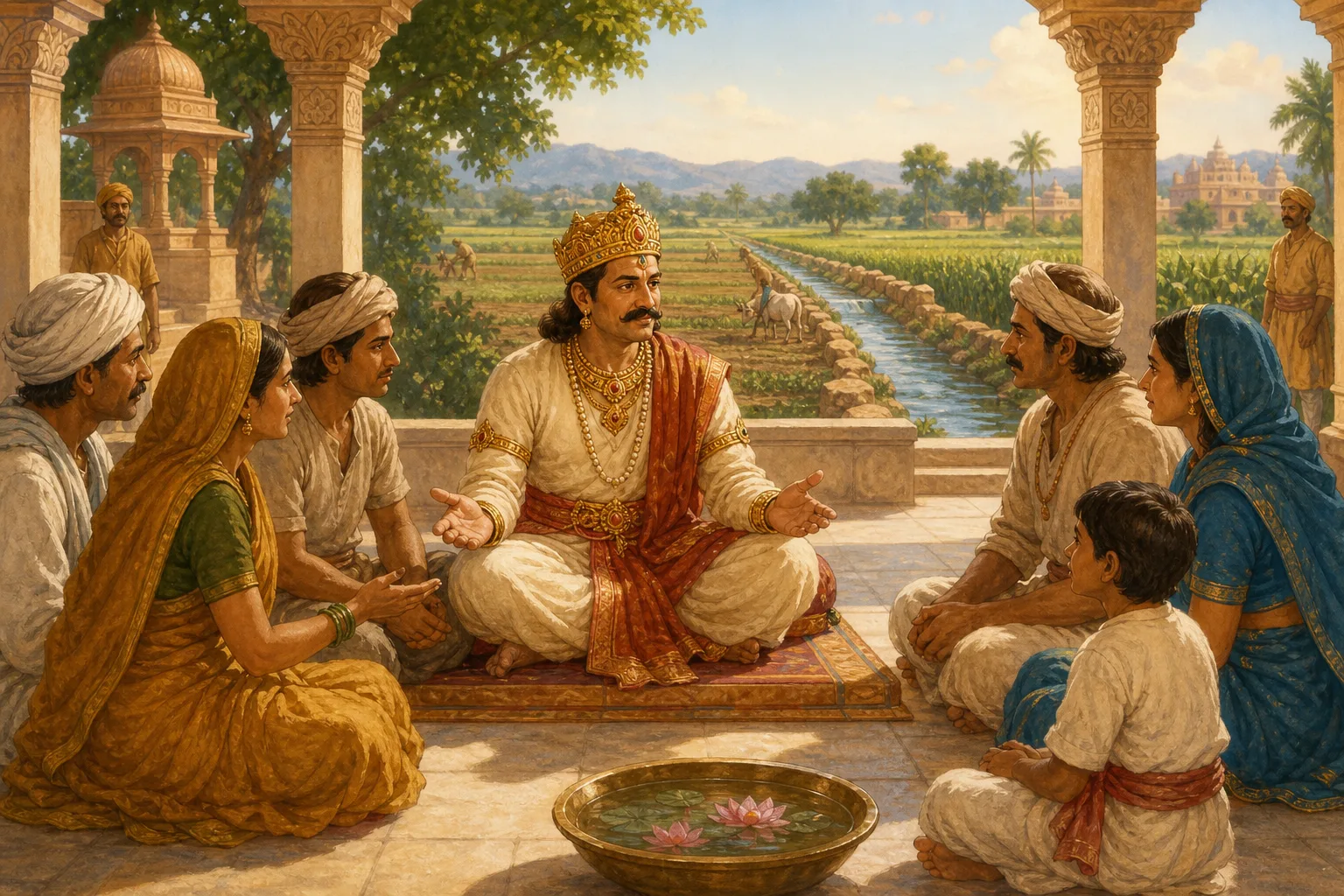
The boon lived through these ordinary choices.
In time, Ambarisha's household would become part of a larger chain of events involving his daughter Shrimati, the sages Narada and Parvata, and Vishnu himself. The king could not yet see how a ceremony in his palace would reach all the way to the births of Ram and Sita.
For now, he had chosen the foundation upon which that wondrous story would rest: devotion expressed not only through prayer, but through the careful and compassionate use of power.
“The finest gift is the wisdom to remain faithful to what is good.”
New stories in your inbox
One story every week, and a special tale on festivals. Free, always.
Your email goes to our newsletter provider (beehiiv) so we can send you stories. It is not linked to any child's reading on this site. Unsubscribe any time from the email footer.