Knowledge and Practice
Adbhuta Ramayana
The next day Hanuman returned to Ram with another question. "If hearing the truth were enough, everyone who heard wise words would immediately be free from confusion. Why does understanding fade?"
Ram picked up a seed from the forest floor. "A seed may contain the possibility of a tree," he said, "but it still needs earth, water, light, and time. In the same way, teaching must be joined with practice."

He described knowledge as clear recognition and yoga as disciplined integration. One without the other could become unbalanced. Ideas without practice might feed pride. Practice without understanding might become empty habit or a contest in endurance.
Hanuman asked what practice should look like for someone whose life was filled with action.
"Begin where you are," Ram replied. "Act carefully. Notice the motive beneath an action. Train attention. Speak truthfully. Serve without making another person's need into a stage for your own importance."
He explained that the senses were not enemies. Sounds, sights, and feelings carried useful knowledge. The problem arose when the mind was dragged helplessly by every attraction or aversion.
"A charioteer does not destroy the horses," Ram said. "The charioteer learns their strength and guides them toward the destination."
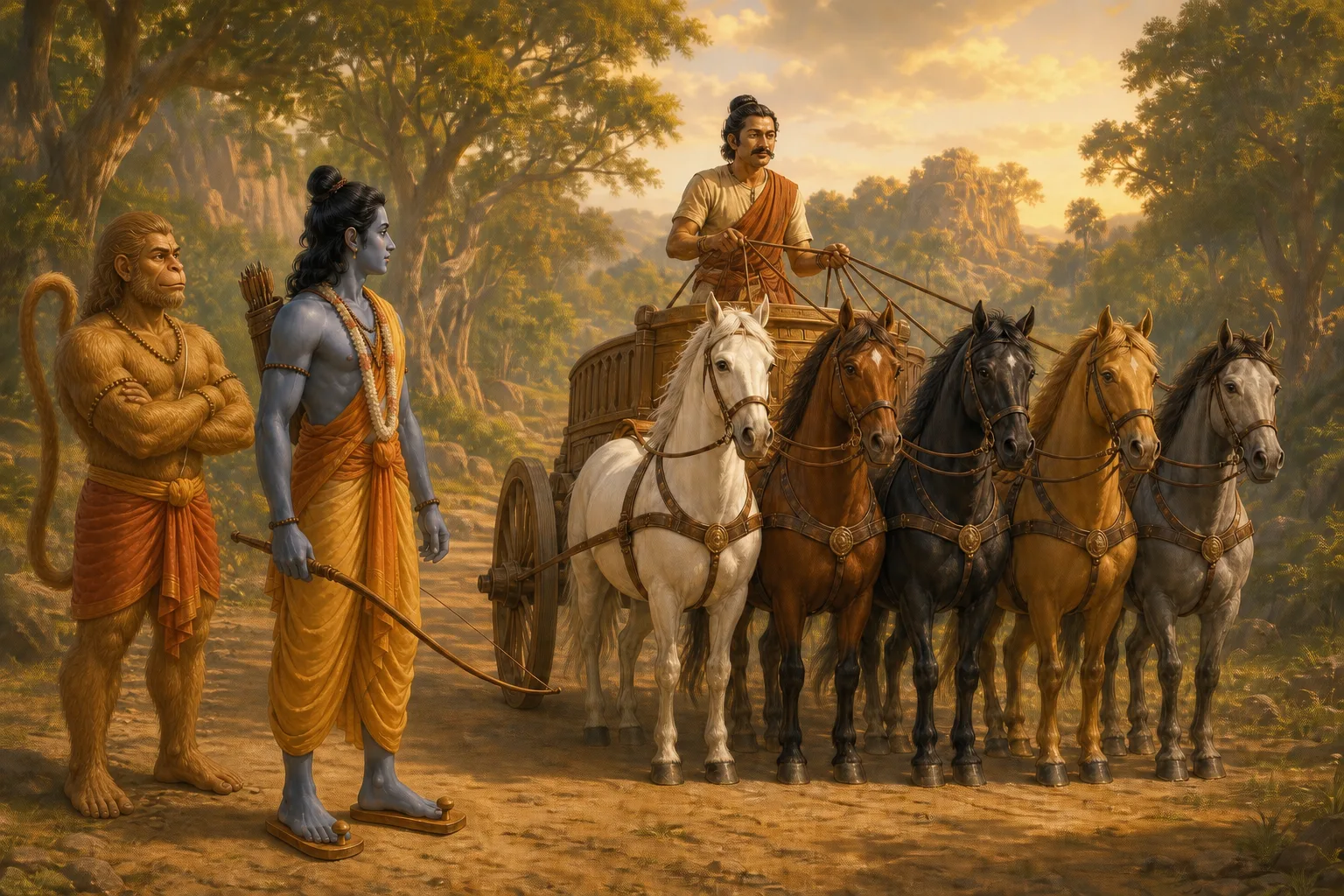
Hanuman thought of his own energy. Strength could rescue someone in danger, but the same strength without judgment could damage what he meant to protect.
Ram also warned him against measuring spiritual practice only by unusual experiences. A peaceful vision might come and go. The deeper test was whether a person became more truthful, steady, compassionate, and free from the need to dominate.
"What if I fail?" Hanuman asked.
"Then notice honestly, repair what you can, and return to practice. Shame that makes you hide is not the same as responsibility that helps you change."
They spoke about study, reflection, meditation, and selfless work as paths that support one another. Different people might begin from different temperaments, but no path justified contempt for others.
By evening, Hanuman understood that Ram was not giving him an escape from the world. He was teaching a way to move within it without being ruled by every passing impulse.
Soon Hanuman would carry messages, make alliances, cross an ocean, and face danger in Lanka. Knowledge would not perform those deeds in his place. Practice would help his courage remain connected to wisdom while he performed them.
“Understanding becomes wisdom when it changes how we live.”
New stories in your inbox
One story every week, and a special tale on festivals. Free, always.
Your email goes to our newsletter provider (beehiiv) so we can send you stories. It is not linked to any child's reading on this site. Unsubscribe any time from the email footer.