The First Ravana Falls
Adbhuta Ramayana
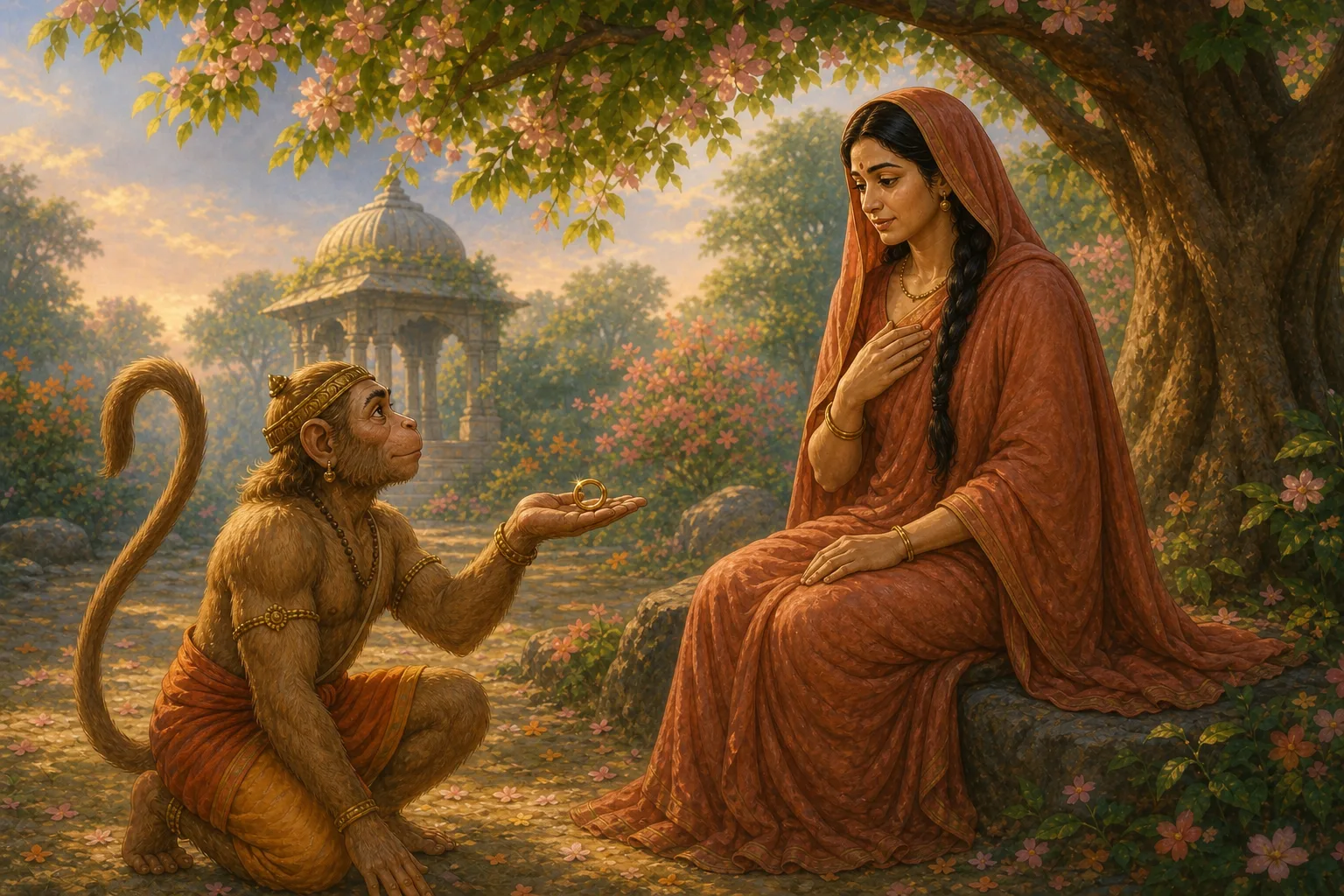
The months that followed moved quickly. Ram and Lakshman formed an alliance with Sugriva. Hanuman crossed the ocean, found Sita in Ashoka grove, and gave her Ram's ring as proof that hope had reached her. The vanaras built a passage toward Lanka, and a great struggle followed.
Ravana, the ten-headed ruler of Lanka, had treated another person's freedom as something his power could seize. Ram's allies did not fight merely to add land to a kingdom. They fought to end the captivity and the violence that sustained it.
The battle carried loss as well as courage. Warriors protected companions, made errors, changed plans, and faced consequences that fell on everyone the war had drawn in.
At last Ram drew the arrow, spoke a prayer over it, and let it fly. It struck the ten-headed Ravana, and he fell from his chariot. Sita was freed, and the long road through exile and separation led back toward Ayodhya.
People celebrated the victory. Sages praised Ram's courage, Hanuman's devotion, Lakshman's loyalty, and the effort of the many allies whose names could easily disappear behind one hero's fame.
But something waited beyond it that no one in Ayodhya yet suspected.
One day in Ayodhya, learned visitors spoke of Ravana as though no greater danger had ever existed. Ram listened to their praise. Sita listened too, carrying knowledge from her childhood that none of the speakers had mentioned.
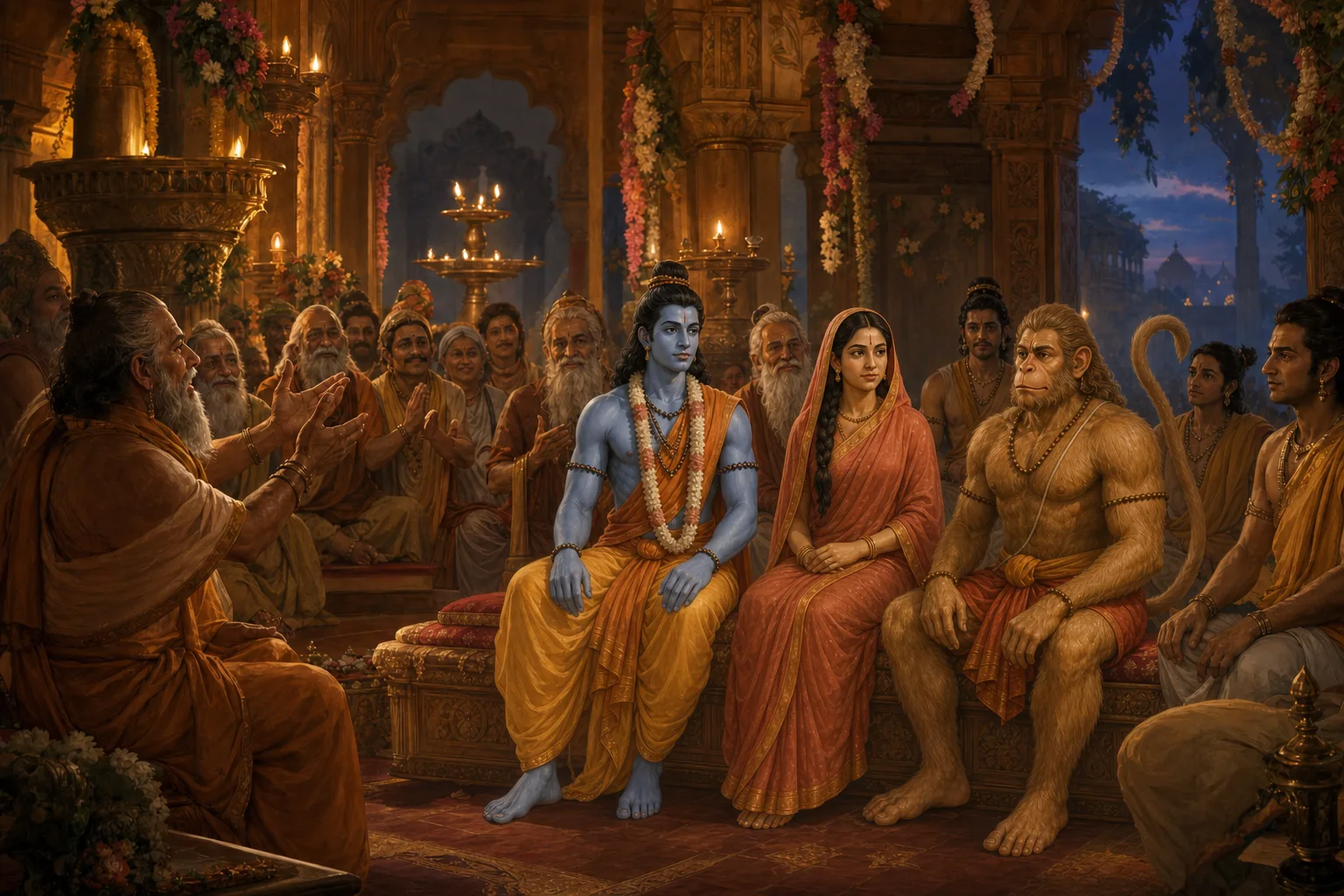
The victory over Lanka's Ravana was real, but it was not the last one Sita knew of. Far beyond Lanka, on Pushkara Dvipa, lived another ruler called Sahasra Ravana—the thousand-headed Ravana—whose power surpassed that of the enemy already defeated.
Sita did not interrupt in order to diminish Ram. She understood that praise becomes dangerous when it closes the mind to what remains unknown.
The court believed the long war had settled everything. Sita knew there was more still to face.
“Even a great victory may be one step, not the end of the work.”
New stories in your inbox
One story every week, and a special tale on festivals. Free, always.
Your email goes to our newsletter provider (beehiiv) so we can send you stories. It is not linked to any child's reading on this site. Unsubscribe any time from the email footer.