The Battle at Pushkara
Adbhuta Ramayana
The battle at Pushkara began with a roar of movement. Sahasra Ravana's commanders expected their size and weapons to break Ram's allies at the first charge.
Instead, the vanaras fought in groups. They warned one another of danger, used speed to draw attacks away from slower companions, and carried the injured out of the fiercest ground. Ayodhya's warriors held their formations rather than chasing every challenge. Vibhishana's companions countered strategies they recognized from rakshasa warfare.
Dust covered the sky. Weapons struck shields, feet shook the earth, and signals were sometimes lost in the noise. The danger was real.
A young fighter froze when an enormous opponent rushed toward him. An experienced companion did not shame him. She called his name, showed him where to move, and together they returned to their group. Fear had not disappeared; cooperation gave it direction.
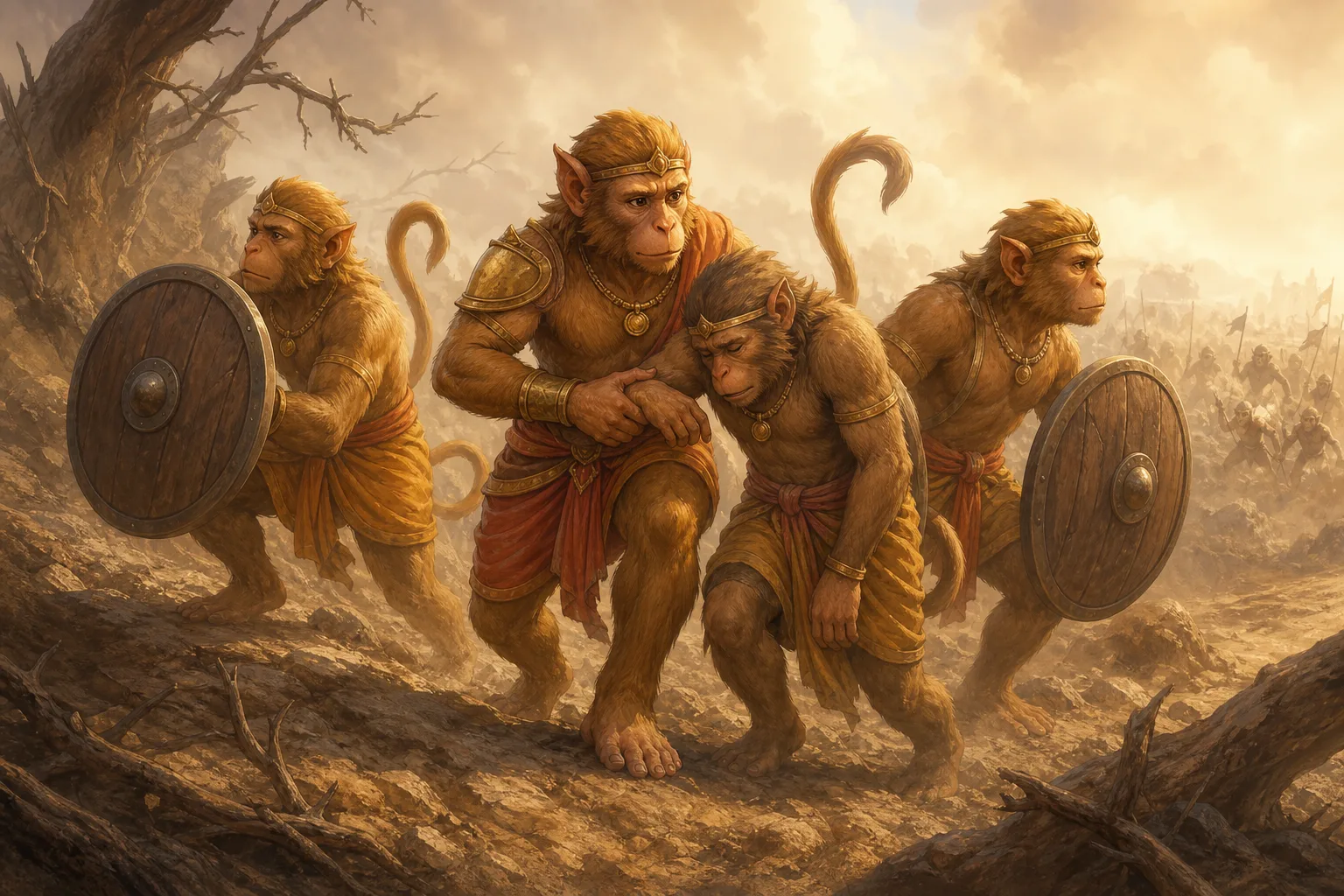
Again and again, an attack that no single hero could stop was broken by shared effort. A smaller warrior noticed what a stronger one could not see. A commander changed a failing plan instead of sacrificing more lives to protect his reputation.
From his high position, Sahasra Ravana watched parts of his army lose ground. He had expected the fame of his thousand heads to defeat Ram's force before the struggle truly began.
His commanders sent reports, but he heard every difficulty as a personal insult. Anger replaced observation.
Ram's allies felt hope as the opposing line withdrew. Their leaders warned them not to mistake an early advantage for final victory. Sahasra Ravana had not yet entered the field himself.
Sita watched the thousand-headed ruler rise. The scale of his form altered the horizon. She remembered the traveller's story in Mithila and understood that the battle was about to change.
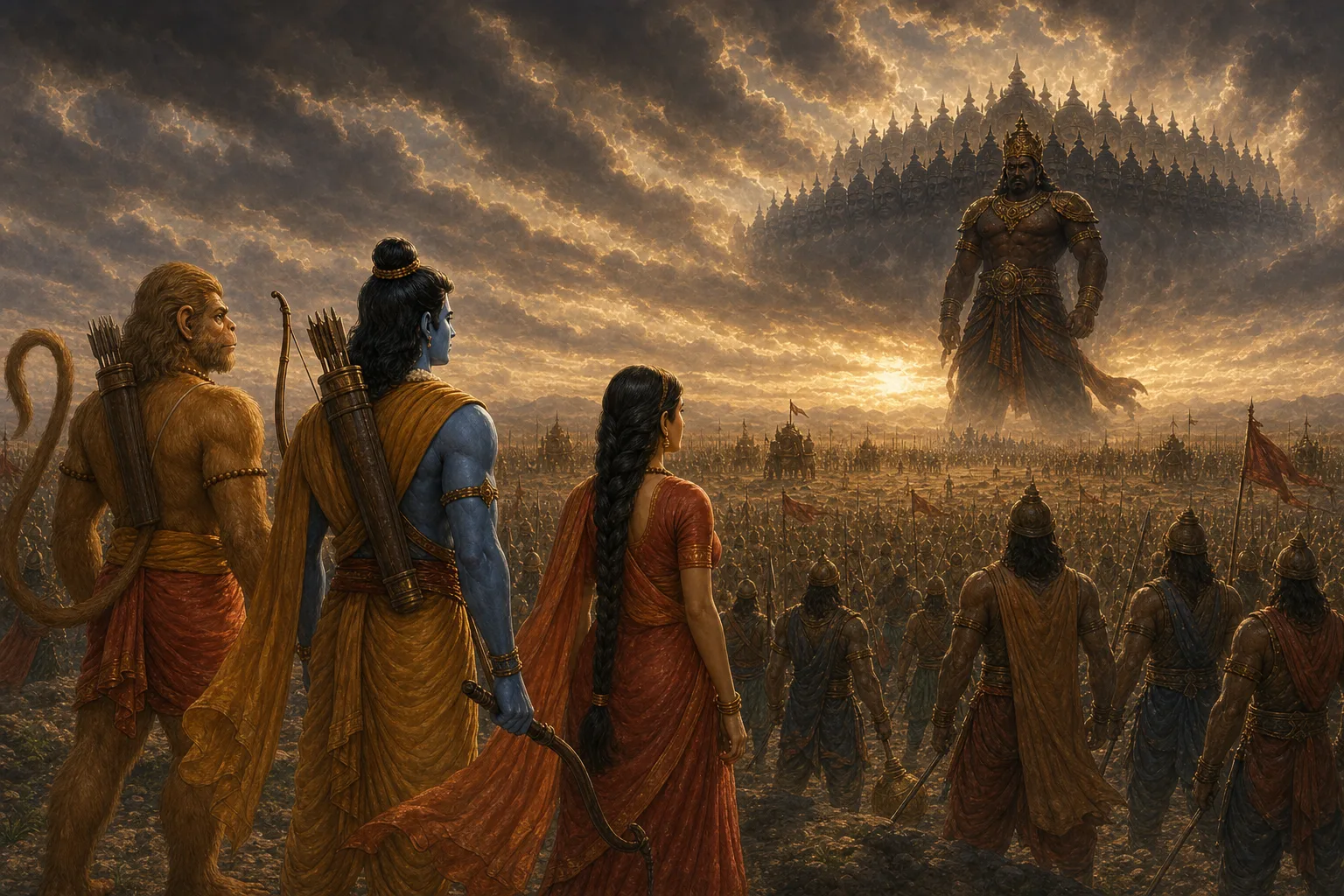
Ram tightened his grip upon his bow. He had seen cooperation succeed where reputation failed. Yet he too would soon be tested by the desire to answer overwhelming power with one decisive display of his own.
The allies closed their ranks. Their first success had shown the strength of courage shared among companions. It had not yet shown how they would respond when even companionship was suddenly taken away.
“Courage is strongest when companions protect one another.”
New stories in your inbox
One story every week, and a special tale on festivals. Free, always.
Your email goes to our newsletter provider (beehiiv) so we can send you stories. It is not linked to any child's reading on this site. Unsubscribe any time from the email footer.