Sita Speaks of the Greater Ravana
Adbhuta Ramayana
Ayodhya's hall was filled with sages and honoured guests. They spoke warmly of Ram's victory in Lanka and called the ten-headed Ravana the greatest terror the worlds had known.
Sita listened for a while. Then a small smile appeared on her face—not because Ravana's violence was amusing, but because the certainty of the praise reminded her of something she had heard as a child.
One sage noticed. "Mother Sita, why do you smile?"
Sita answered respectfully. "The Ravana of Lanka was terrible, and his defeat brought relief to many. But he was not the only ruler of that name."
She told them of a visiting Brahmin who had once stayed in King Janaka's household. As a young girl, Sita had served the guest and listened to accounts of distant regions. He described Pushkara Dvipa, a wondrous island encircled by unusual seas and landscapes, and a ruler called Sahasra Ravana.
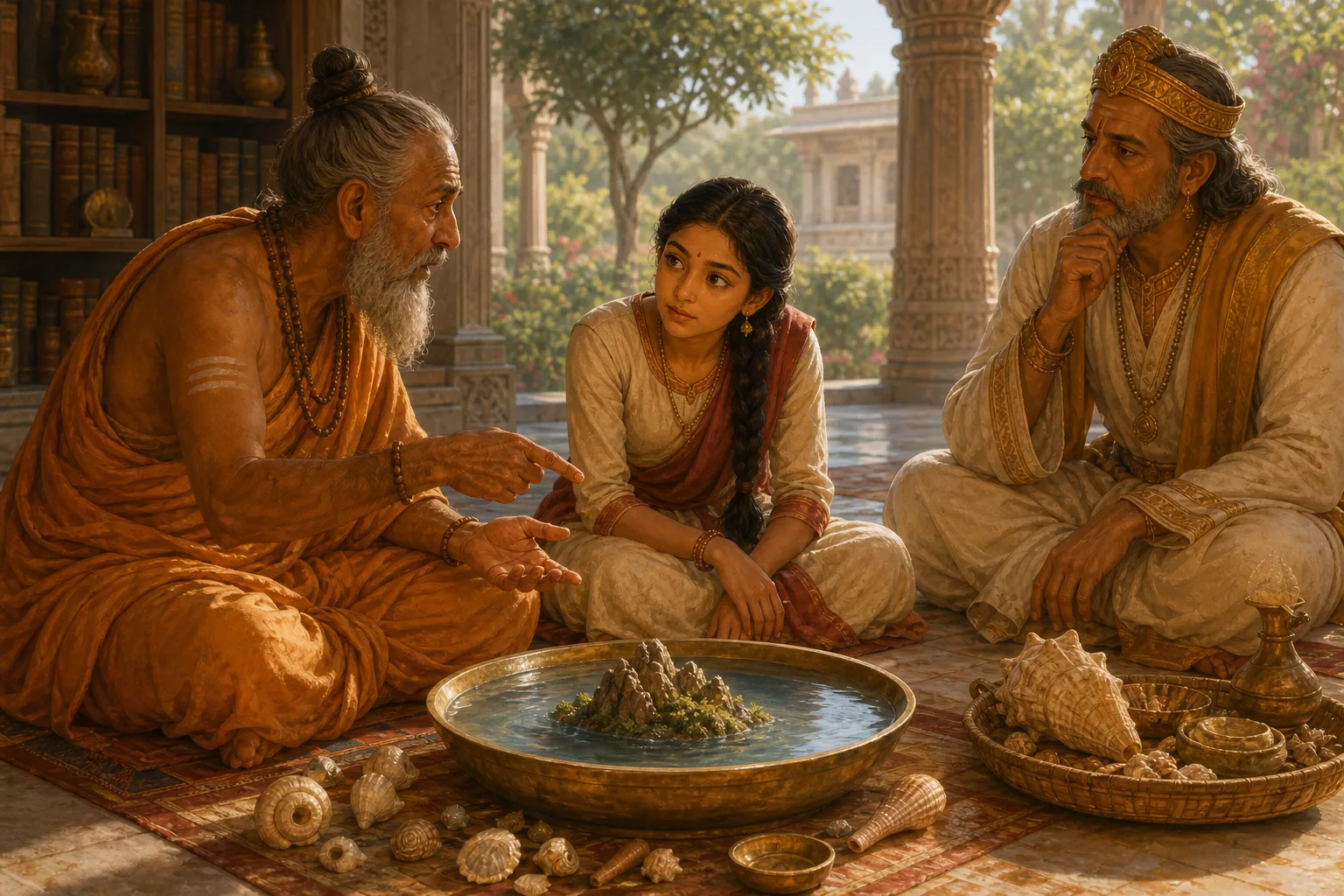
This Ravana possessed a thousand heads and commanded forces greater than those of Lanka. The ten-headed Ravana, the visitor had said, was the younger and less powerful of the two.
The court became still. Ram did not dismiss Sita's memory as a childhood tale. "Tell us everything you remember," he said.
Sita described the scale of Sahasra Ravana's rule and the fear it cast across distant worlds. She did not pretend to know every detail. She separated what she had heard directly from what others might only infer.
Ram felt the pull of challenge. Part of him wanted to prove immediately that no Ravana could remain beyond his reach. Sita recognized that response.
"Knowledge of danger is not an insult to your earlier victory," she said. "But we should not travel only to defend a reputation. We must understand whom this ruler harms and what our arrival may set in motion."
Vibhishana agreed. A name shared with Lanka's fallen king did not guarantee identical strategies. Scouts, counsel, and preparation would matter.
The gathering that had begun in celebration changed into a council. Maps were brought, messengers questioned, and allies considered. Sita remained the source of the knowledge that opened the new path.
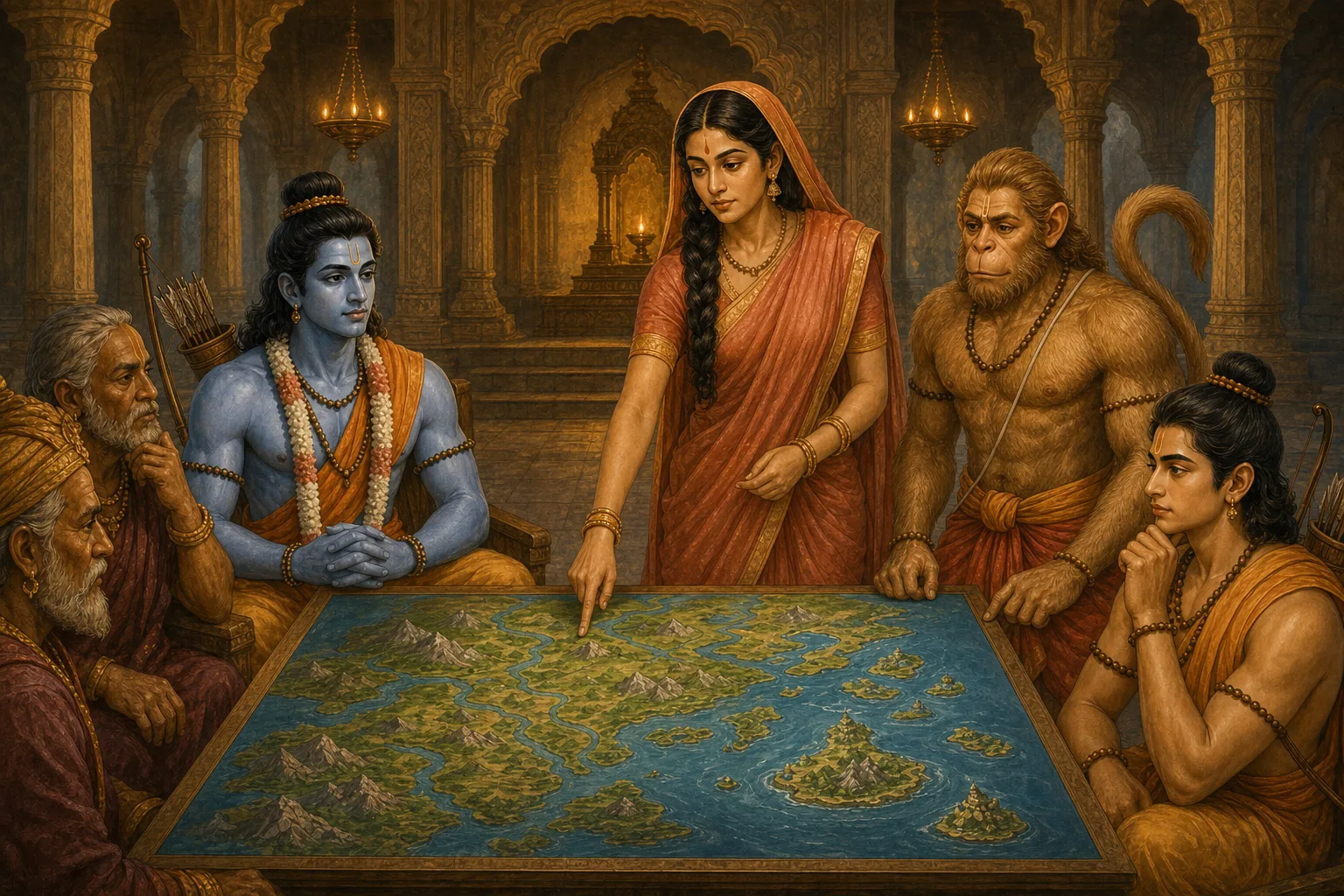
This mattered. She was not simply carried into the next adventure after warriors made the decision. Her memory challenged the court's certainty and revealed the danger.
By evening, Ram had resolved to confront Sahasra Ravana. Yet Sita's warning travelled with that resolve: courage must serve protection, not the hunger to add another victory to one's name.
“Wisdom sometimes begins with listening to the person others have overlooked.”
New stories in your inbox
One story every week, and a special tale on festivals. Free, always.
Your email goes to our newsletter provider (beehiiv) so we can send you stories. It is not linked to any child's reading on this site. Unsubscribe any time from the email footer.