The Weaver Who Loved a Princess
Panchatantra
In Sugarcane City lived a gifted young weaver and his closest friend, a clever carpenter. The weaver could make cloth shimmer like water. The carpenter could build toys that moved as if they were alive.
At the spring festival, the weaver saw the princess admiring the work of village artists. He was impressed by the thoughtful questions she asked. Yet when he looked at his plain clothes and the guarded palace, he believed she would never notice a craftsman like him.
His friend found him sighing beside the loom. “Let your skill speak,” the carpenter said.
Together they built a great wooden Garuda with painted wings, hidden pedals and a strong frame. When the weaver pressed the pedals, its wings moved and it glided along a high rope.
The weaver was thrilled, but fear muddled his judgment. He dressed like a mysterious messenger from the sky and flew toward the palace balcony. He told the princess that the court of the heavens had chosen his cloth.
The princess examined the beautiful fabric. Then she noticed the dye beneath his fingernails and the tiny marks made by years at a loom.
“A messenger from the sky knows a surprising amount about village weaving,” she said. “Who are you really?”
The weaver’s heart sank. He could invent another tale, or he could tell the truth.
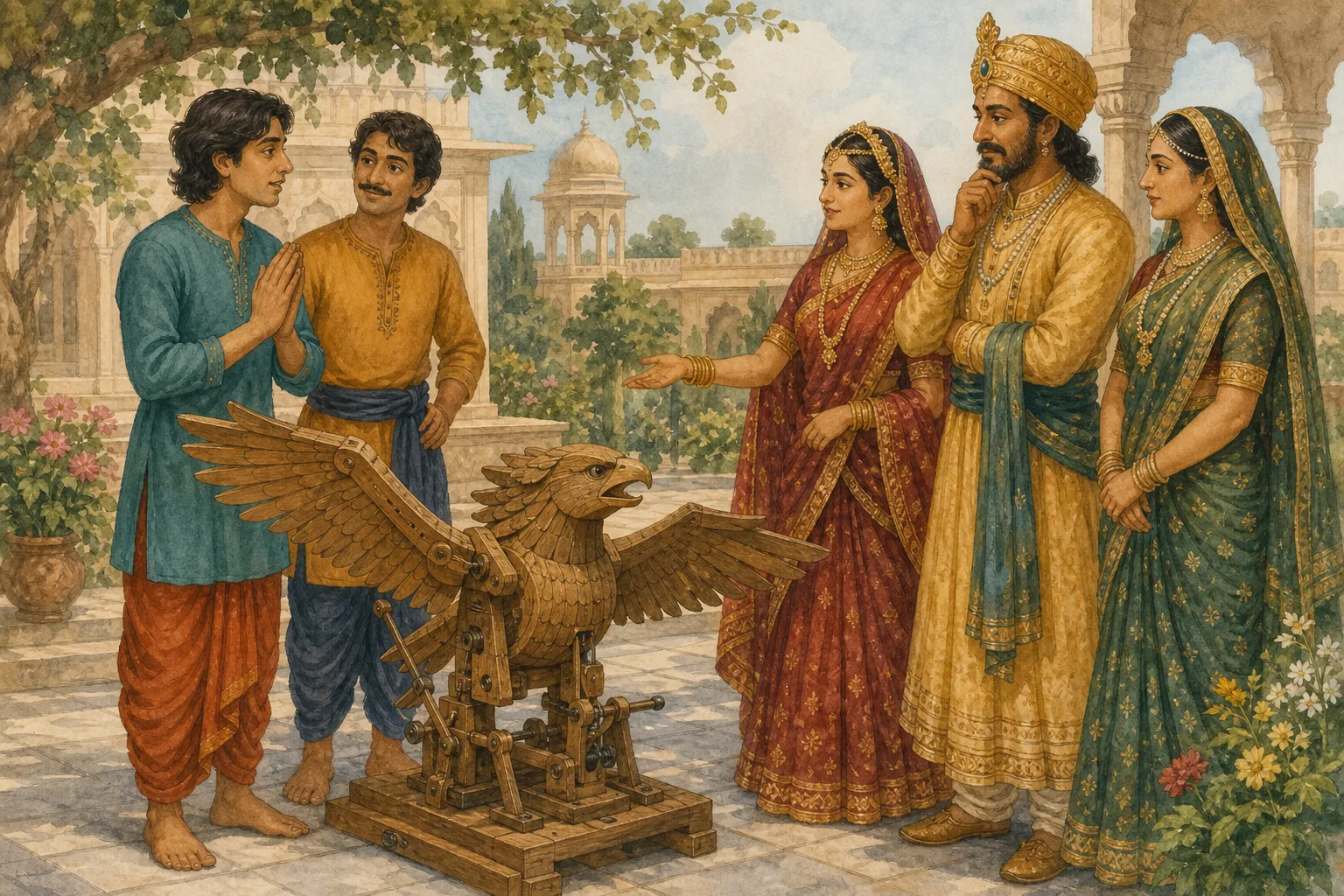
He removed his bright headpiece. “I am only a weaver,” he admitted. “I admired your respect for artists, but I feared my own name was not important enough. My friend and I built this Garuda.”
The princess was hurt by the deception. “Your work is remarkable,” she said, “but your false story made it difficult to trust you.”
The next morning, the weaver and carpenter entered through the palace gate like ordinary visitors. They apologized and demonstrated every wheel, rope and pedal. The king’s engineers marvelled at the machine, while the princess studied the cloth.
“Bring your Garuda and your finest weaving to the public festival,” she said. “Let everyone see the people who truly made them.”
At the festival, the two friends received cheers not because they pretended to be heavenly visitors, but because their hands and minds had created something wonderful.
The weaver and princess became good friends through many honest conversations about art. He learned that a humble name joined to truthful work needed no disguise.
“Skill may open a door, but only honesty can keep it open.”
New stories in your inbox
One story every week, and a special tale on festivals. Free, always.
Your email goes to our newsletter provider (beehiiv) so we can send you stories. It is not linked to any child's reading on this site. Unsubscribe any time from the email footer.