1.1 The Monkey And The Wedge
Panchatantra
A merchant was having a small temple built in his garden. Every morning, masons set stones in place while carpenters cut and shaped heavy wooden beams. At noon, the workers put away their tools safely and left together for lunch.
One day, as soon as the workers were gone, a troop of monkeys climbed down from the trees. The younger monkeys bounced around the building site while the older ones watched them carefully.
One young monkey noticed a thick beam that had been split partway down the middle. A carpenter had driven a red-brown wooden wedge into the opening to keep the two sides apart.
“Look!” cried the young monkey. “I can pull that out.”
An older monkey warned him, “That is not a toy. The workers put it there for a reason. We should leave work alone when we do not understand it.”
The young monkey paused, but curiosity got the better of him. He sat astride the beam and tugged at the wedge with both hands. At first it did not move. He pulled harder. Little by little, it began to loosen.
The other monkeys returned to the trees. The young monkey did not notice that his long tail had slipped into the open split. With one final heave, he pulled the wedge free.
The two sides of the beam sprang together and caught his tail between them. The monkey gasped. He tried to wriggle away, but the older monkey called, “Keep still. Pulling may hurt you. We will wait for help.”
When the carpenters returned from lunch, they saw the trapped monkey and understood at once. One worker slowly opened the split with another wedge while the second helped the monkey stay calm. In a moment, his tail was free. He had no wound, but he had received a great fright.
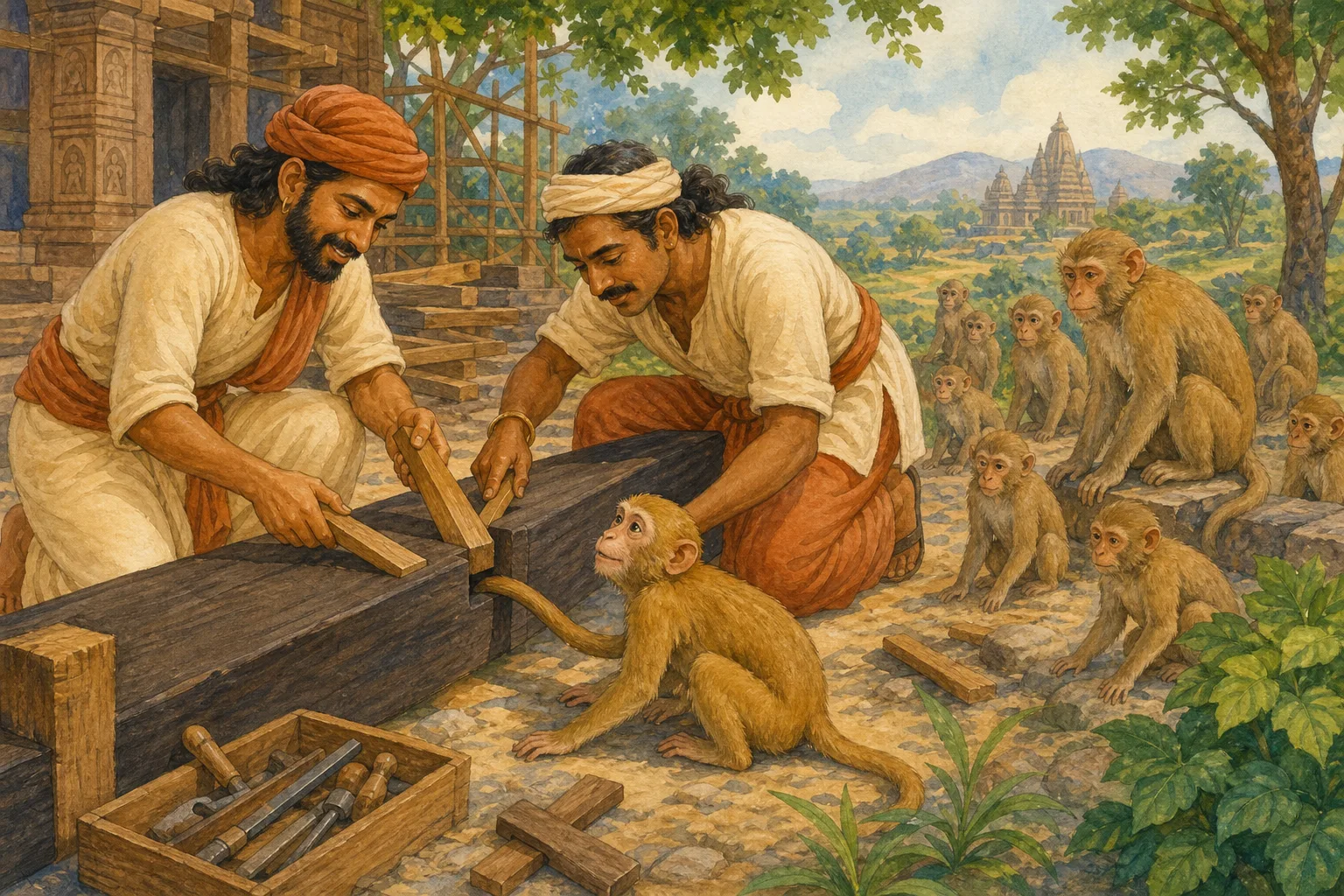
The young monkey climbed back into the tree. From a safe branch, he watched the carpenters replace the wedge and finish their work. Now he understood that the wedge was not merely a piece of wood. It was a tool doing an important job.
“My curiosity led me into trouble today,” he told the older monkey. “Next time, I will understand first and act afterward.”
Karataka finished his tale and said to Damanaka, “That is why we should not enter another’s affairs before we understand them.”
Damanaka considered this. “You are right,” he replied. “Yet sometimes help is needed. We should first learn what is happening, and then act with care.”
Moral: Curiosity is valuable when guided by care. Never tamper with tools or work you do not understand.
“Curiosity becomes wisdom when it is guided by care. Never tamper with tools or work you do not understand.”
New stories in your inbox
One story every week, and a special tale on festivals. Free, always.
Your email goes to our newsletter provider (beehiiv) so we can send you stories. It is not linked to any child's reading on this site. Unsubscribe any time from the email footer.