The Bride and the Serpent Prince
Panchatantra
In Palace City lived a kind Brahmin couple who longed for a child. In time, a baby came to them in the form of a small green serpent. Neighbors were afraid, but the mother saw gentle eyes and a living being who needed care. She fed him milk, kept his basket clean and loved him as her son.
Years passed, and the serpent grew. His parents hoped he would not always be lonely. A family friend had a thoughtful adult daughter named Anandi. Her father explained the unusual proposal honestly. ‘You must choose for yourself,’ he said. Anandi visited the household, saw their kindness and agreed only after receiving the serpent’s promise that she would always be safe and free to leave.
After the simple wedding, Anandi entered the flower-decorated room. The serpent rested quietly in a basket. When moonlight touched him, he slipped from his green skin and became a gentle young prince. Around his neck shone the same golden crescent that marked the serpent’s hood.
‘I was born under an enchantment,’ he explained. ‘By day I wear the serpent form. At night I become myself. Your courage and freely given trust have brought the spell close to its end, but I did not want you to agree without knowing my nature.’ Anandi was surprised, yet his honesty eased her fear.
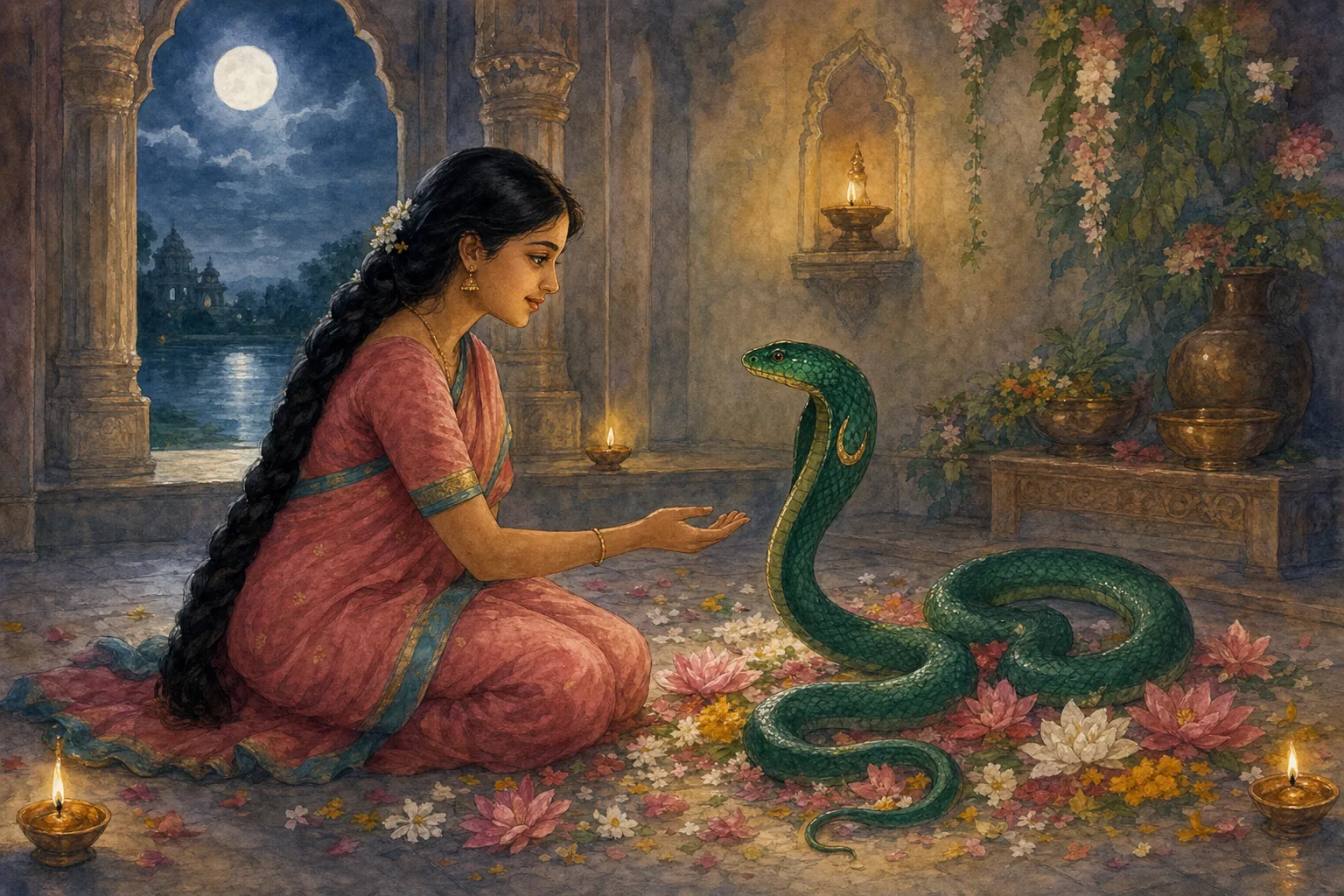
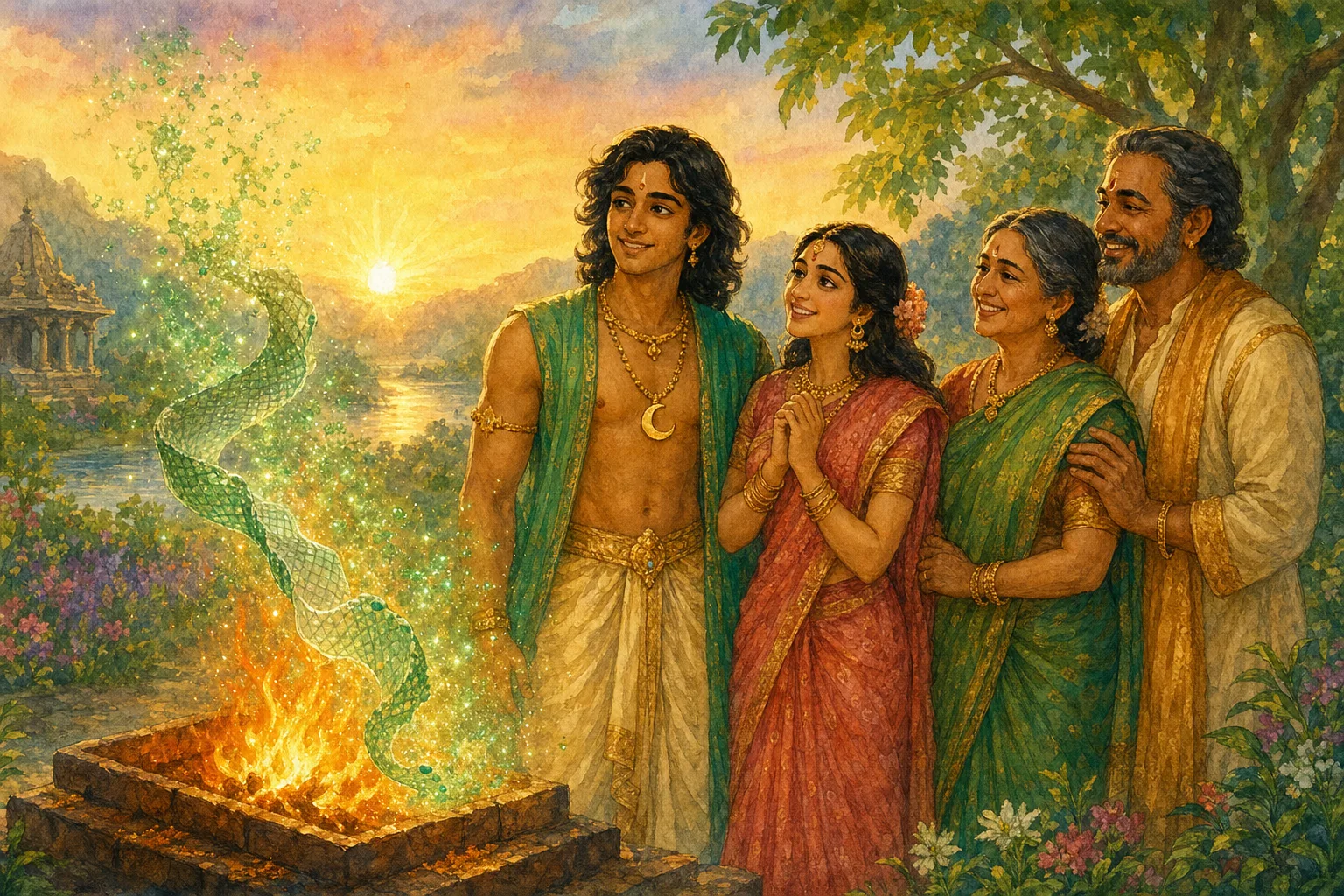
The prince’s father happened to see the empty serpent skin beside the moonlit doorway. Understanding that his son was not trapped inside it, he placed it in the sacred fire. The skin glowed like a green leaf and vanished. At sunrise the prince remained human; the enchantment had ended.
The family celebrated, but Anandi reminded everyone what mattered most: the serpent had deserved care even before his shape changed. The prince thanked her for seeing his character rather than a frightening appearance. Together they built a home where every guest was heard honestly and every important promise was made freely.
__Moral: __Character is revealed by kindness and truth, not by outward appearance.
“Character is revealed by kindness and truth, not by outward appearance.”
New stories in your inbox
One story every week, and a special tale on festivals. Free, always.
Your email goes to our newsletter provider (beehiiv) so we can send you stories. It is not linked to any child's reading on this site. Unsubscribe any time from the email footer.