Loss of Gains: The Monkey and the Crocodile
Panchatantra
Beside the sea, a rose-apple tree bent over the shining water.
A cheerful monkey named Red-Face lived in that tree. One day a crocodile named Ugly-Mug rested beneath it. Red-Face welcomed the visitor and tossed down sweet fruit. The crocodile returned often, and the two spent many afternoons talking. Red-Face even sent fruit home for the crocodile's family.
After tasting the fruit, the crocodile's wife became curious. "A monkey who eats such sweetness must have a wonderfully sweet heart," she said. She demanded that her husband bring Red-Face home. Ugly-Mug knew the request was wrong, but he was afraid to refuse. He invited his friend to dine across the water and offered to carry him.
Halfway across the sea, guilt overcame the crocodile. He confessed the truth. Red-Face felt frightened, but he kept his voice calm. "My dear friend," he said, "why did you not tell me sooner? Monkeys leave their hearts safely in their trees. Turn back, and I will fetch mine."
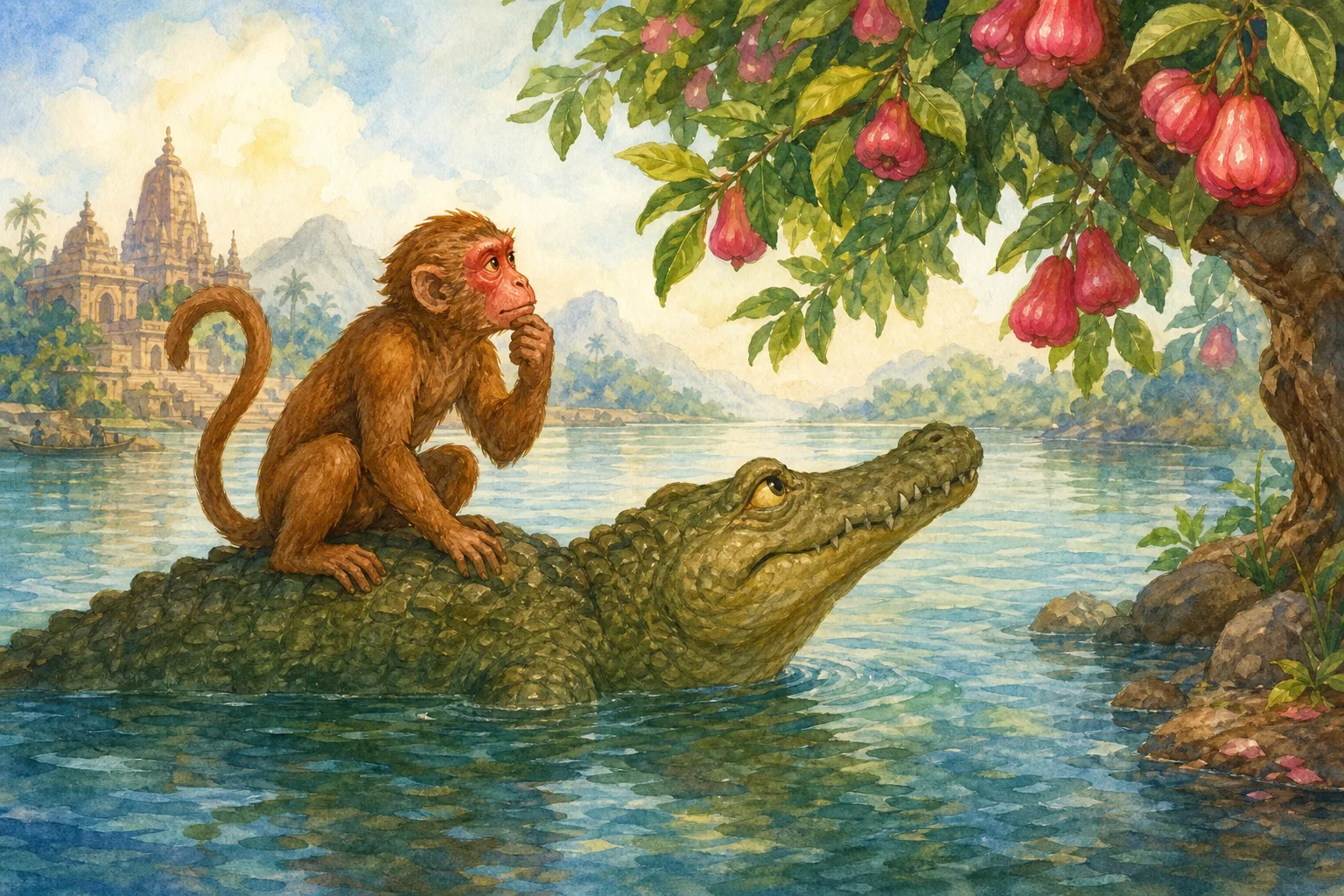
Ugly-Mug believed him and swam back. The moment they reached the bank, Red-Face sprang into the branches. "No creature can leave its heart behind," he called. "I shared my home and food with you, but you carried me toward danger. Friendship cannot live without trust."
The crocodile apologized and begged him to return. Red-Face refused. He had recovered his life through quick thinking, and he would not risk it a second time. Ugly-Mug swam away ashamed, while Red-Face stayed safe among the rose-apples. He had nearly lost everything, yet wisdom helped him keep the greatest gain of all—his life and good judgment.
“Quick thinking can protect what trustlessness puts at risk.”
New stories in your inbox
One story every week, and a special tale on festivals. Free, always.
Your email goes to our newsletter provider (beehiiv) so we can send you stories. It is not linked to any child's reading on this site. Unsubscribe any time from the email footer.