Hang-Ball and Greedy
Panchatantra
A strong bull named Hang-Ball wandered freely through a green forest. An old harness still circled his broad shoulders, and two round feed bags swung from its straps.
Beside the river lived two jackals. Their little territory offered berries, fallen fruit and small roots throughout the year.
One afternoon Hang-Ball came to drink. Greedy stared at the two bags.
“They are bulging with grain,” he whispered to his companion. “The straps look loose. If we follow him, the bags will soon fall and we will feast for months.”
His companion studied the harness. “Perhaps they will fall, and perhaps they will not. Here we already have enough. Why abandon something certain for a guess?”
But Greedy imagined mountains of grain. Day after day he spoke of nothing else until both jackals left the riverbank and followed the bull.
They crossed hot plains in summer and muddy paths during the rains. Whenever a strap bounced, Greedy cried, “Today is the day!”
The bags never fell.
Seasons passed. Other animals settled beside the river and gathered the fruit the jackals had left behind.
Still Greedy followed. He became so focused on the uncertain feast that he stopped noticing real food along the path.
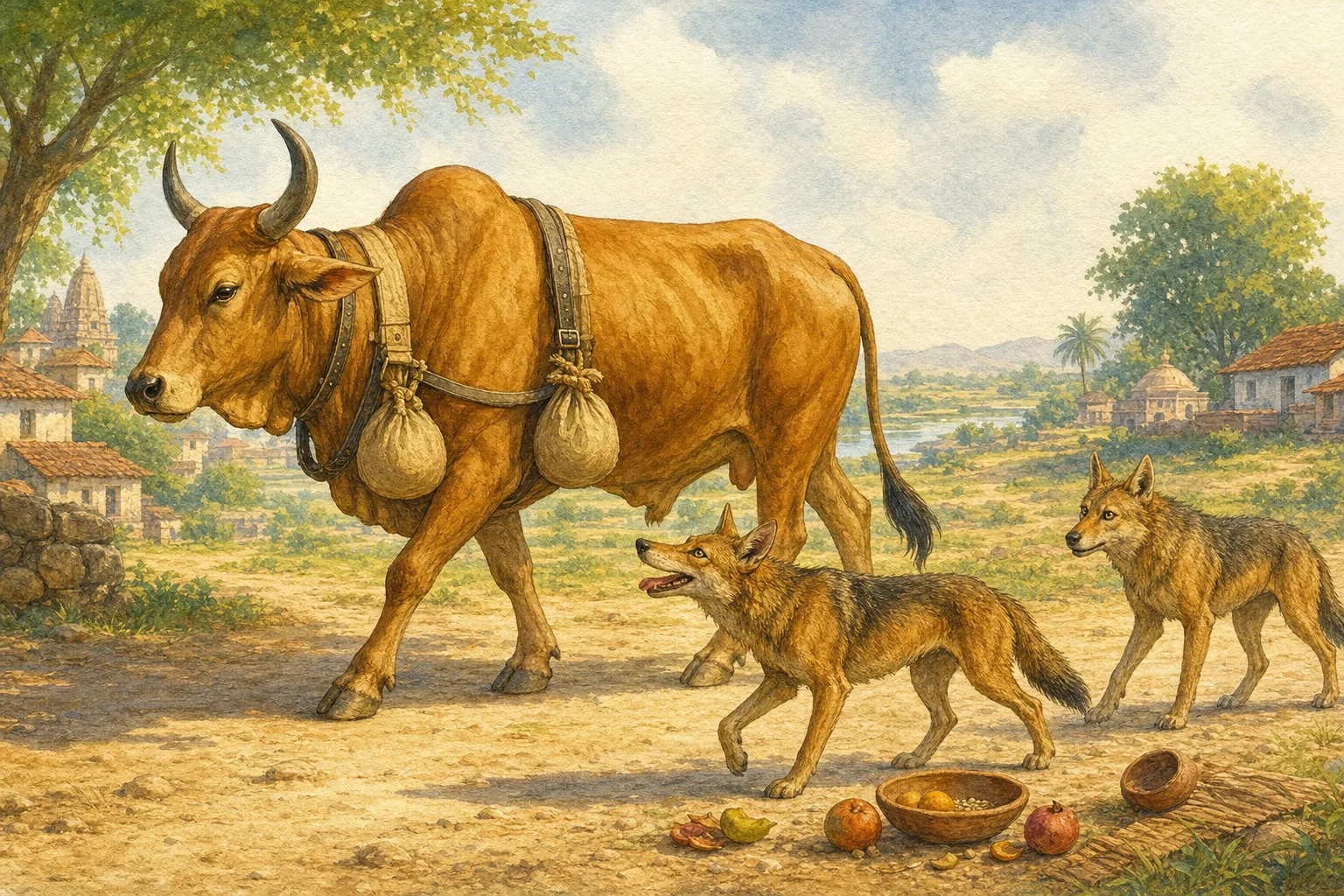
At last, many years later, Hang-Ball rested near a village. A herder calmly removed the feed bags, filled the bull's manger and carried the empty bags home.
Greedy blinked. The imagined treasure had never belonged to him and had never been waiting to fall.
His companion said gently, “Effort is valuable when it serves a sensible goal. Chasing a wish without new evidence is not effort—it is refusing to reconsider.”
The jackals returned toward the river. Their old territory was occupied, but they apologised for leaving without care and found a smaller home nearby.
Greedy learned to notice the food, friendship and honest opportunities already within reach. He still dreamed boldly, but now he checked whether a dream rested on fact before following it.
“Do not abandon a dependable good for a reward that exists only in your imagination.”
New stories in your inbox
One story every week, and a special tale on festivals. Free, always.
Your email goes to our newsletter provider (beehiiv) so we can send you stories. It is not linked to any child's reading on this site. Unsubscribe any time from the email footer.