The Kind Traveler and the Broken Promise
Panchatantra
Long ago, in a small town beside a wide forest, lived a gentle Brahmin named Yajna. He earned very little, and some days there was hardly enough food for his family. Still, whenever someone needed help, Yajna shared whatever he could.
One morning, he set out to find work in another town. The summer sun climbed high, and before long he was tired and thirsty. While searching for water, he noticed an old stone well hidden beneath grass and vines.
Yajna leaned over the rim. Far below were four trapped creatures: a tiger, a monkey, a cobra and a goldsmith.
“Please help us!” they called.
Yajna stepped back. The tiger was powerful, and the cobra could bite. Yet all four were helpless.
“If I can save a life, I must try,” he said.
He tied his strong cotton shawl to a hanging vine and lowered it into the well. First the tiger climbed out. Then came the monkey, followed by the cobra. Each thanked Yajna warmly.
Before leaving, the animals spoke quietly to him.
“The man below has made many promises,” said the tiger, “but promises matter only when actions support them. Be careful.”
The goldsmith heard them and cried, “Yajna, please do not leave me! I will always remember your kindness.”
Yajna could not ignore someone in danger. He lowered the shawl once more and pulled the goldsmith to safety.
“I work in the royal city,” said the man. “If you ever need help with gold or jewels, come to my shop.”
The four new acquaintances went their separate ways. The tiger invited Yajna to a cave on the northern hill. The monkey told him to visit the mango grove beside the waterfall. The cobra said, “If trouble finds you, remember me.”
Yajna continued his journey, but he found no work. Hungry and discouraged, he remembered the monkey’s invitation and went to the waterfall.
The monkey greeted him with delight. He gathered ripe mangoes, bananas and rose apples, then placed them in a broad leaf basket.
“You gave me another day beneath the sun,” said the monkey. “A friend should never forget such a gift.”
After Yajna had eaten, the monkey led him to the tiger’s hill. The tiger lowered his great head in welcome.
“After a storm, I found a royal travel chest caught among the rocks,” the tiger explained. “Most of it washed away, but this necklace remained. I cannot return it myself, and it may help your family. Please take it to the royal city.”
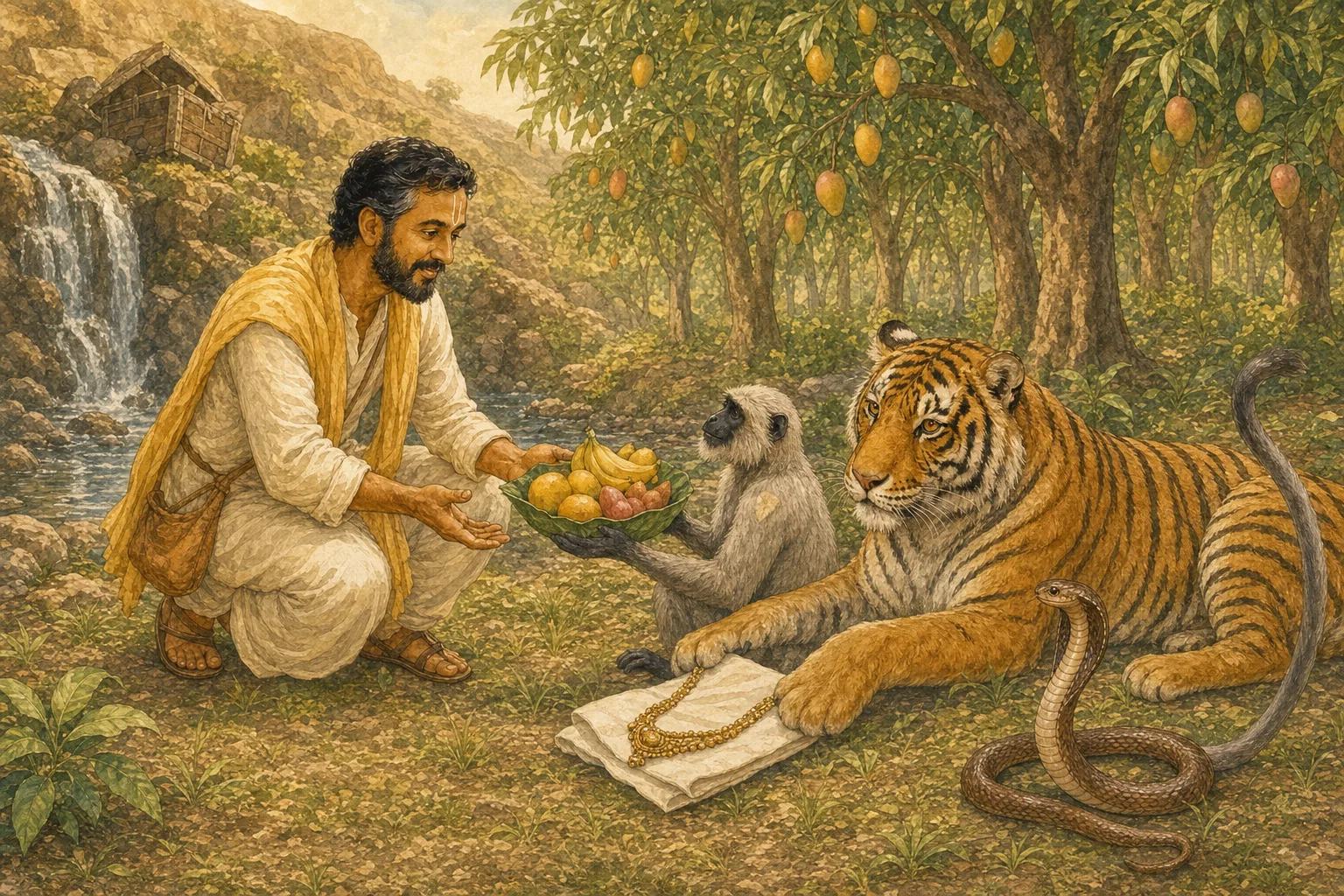
Yajna wrapped the necklace carefully. He remembered the goldsmith and took it to the man’s shop.
At first, the goldsmith welcomed him. But the moment he saw the necklace, his smile disappeared. He recognized it as a jewel once made for the royal family.
“Wait here,” he said. “I know someone who can value this properly.”
Instead, the goldsmith hurried to the palace. He hoped the king would reward him for finding the missing necklace. To make his story sound important, he claimed that Yajna had stolen it.
Palace guards brought Yajna before the king. Yajna told the truth about the well, the tiger and the storm, but the tale sounded so unusual that the worried king did not believe him. He ordered Yajna to remain in a guarded room until the matter could be examined.
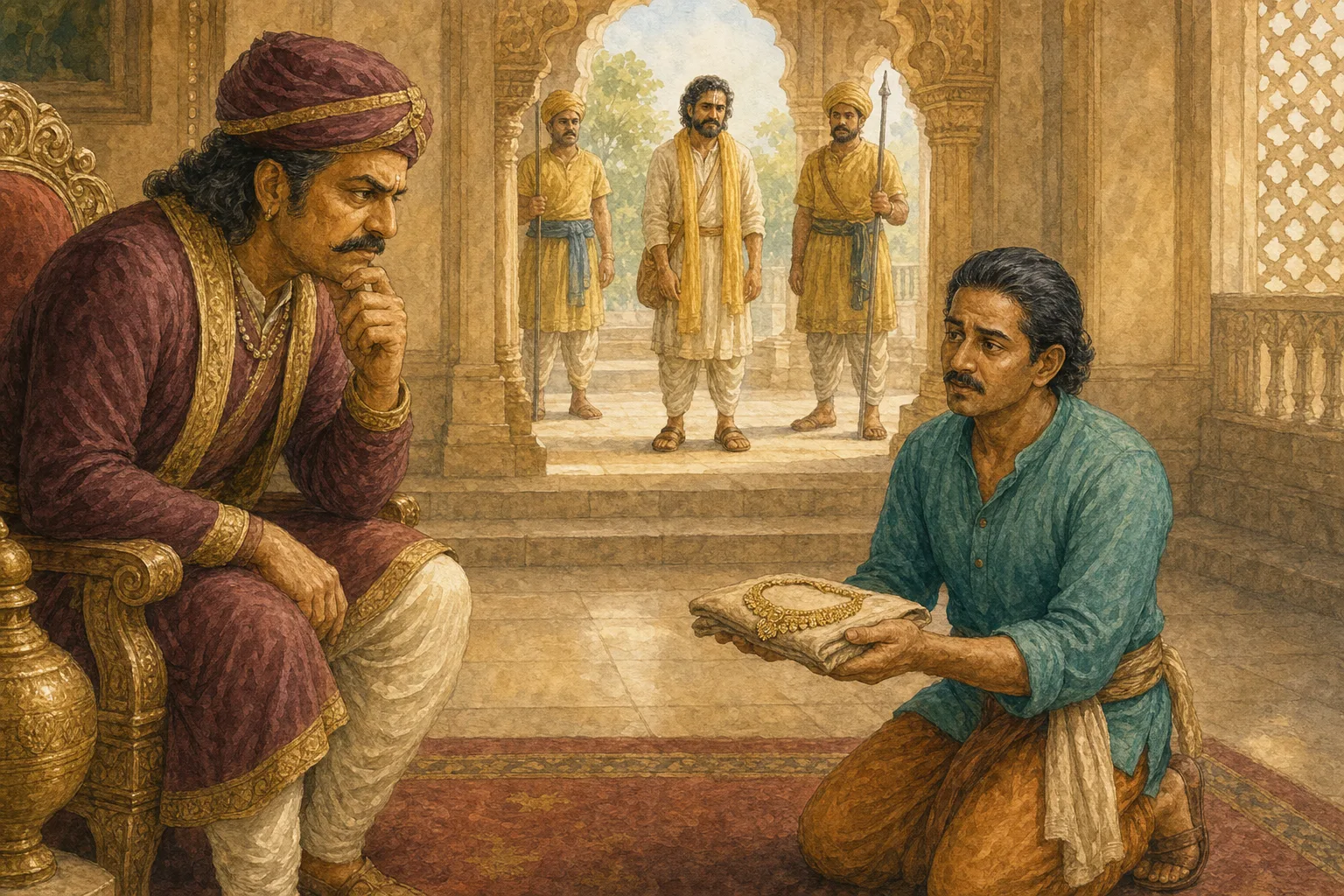
Yajna sat alone. Then he remembered the cobra’s words.
“Friend,” he whispered, “I need your help.”
The cobra appeared through an open garden window. Yajna explained everything.
“Do not lose courage,” said the cobra. “Truth sometimes travels slowly, but we can help it arrive.”
That same evening, the queen became ill with a sudden fever. Palace physicians tried many remedies, but she grew weaker. The cobra knew of a healing herb that grew only inside a narrow cleft on the northern hill. He brought its silver-green leaves to Yajna and explained how to prepare them safely.
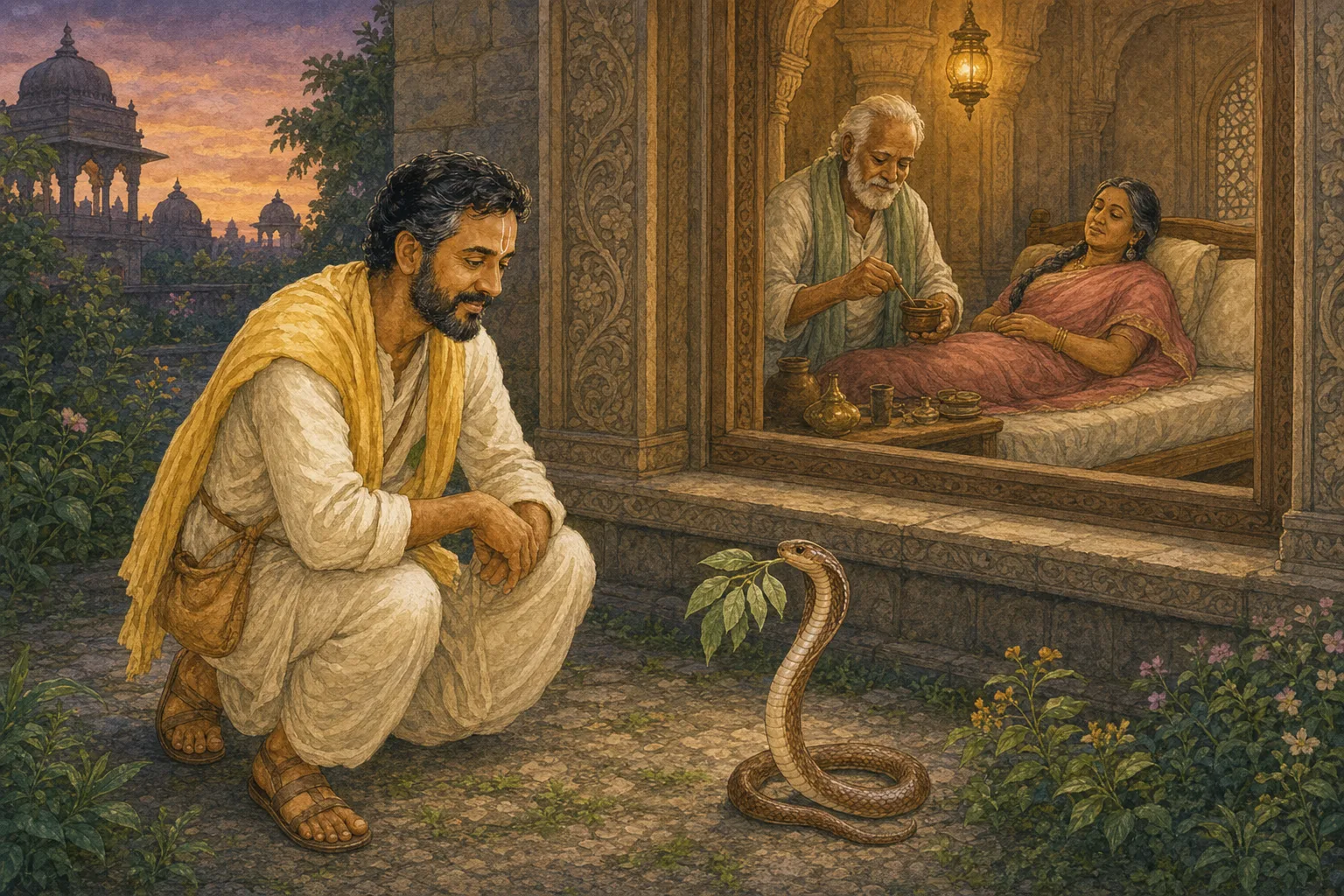
Yajna called the guard. “I may know something that can help the queen. Please take me to the royal physician.”
The physician examined the leaves, recognized the rare herb and brewed a careful medicine. By sunrise, the queen’s fever had broken.
The grateful king asked Yajna to tell his story again. This time, he listened patiently. He sent trusted guards to the waterfall and the northern hill. They found signs of the storm-damaged chest among the rocks, just as Yajna had said. The monkey and tiger watched peacefully from a distance.
When questioned again, the goldsmith lowered his eyes. “Yajna saved my life,” he admitted. “I broke my promise because I wanted a reward. I am ashamed.”
The king returned the necklace to the royal treasury and released Yajna with an apology. He required the goldsmith to repay Yajna for the harm his false words had caused and to serve the town honestly.
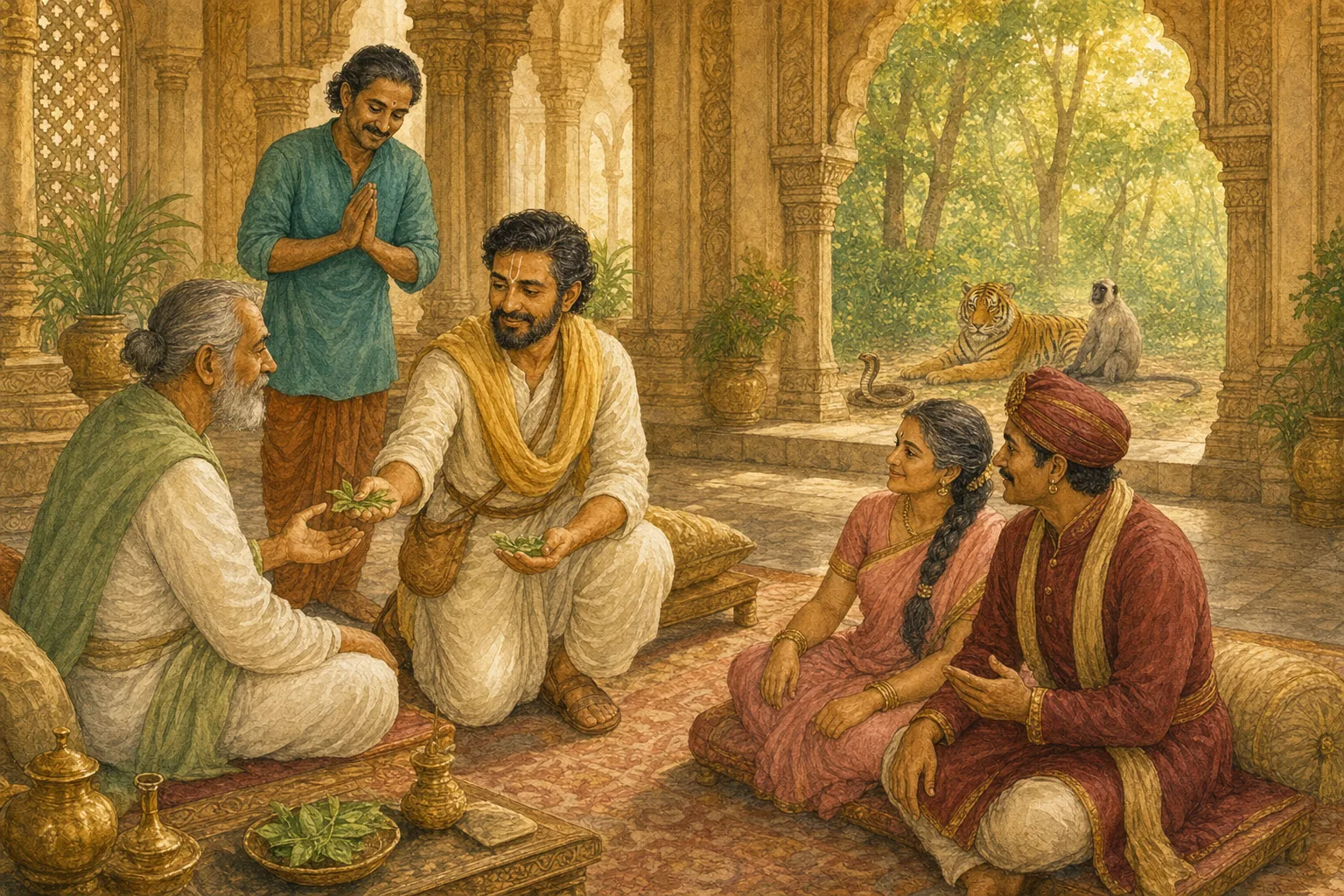
The king offered Yajna a place among his advisers, for he had shown courage, compassion and wisdom. Yajna brought his family to the city, but comfort did not change his gentle nature.
He often returned to the forest. The monkey still saved the sweetest fruit for him. The tiger greeted him beside the hill, and the cobra rested in the warm grass nearby.
Yajna had learned that kindness should be given freely, but trust should be guided by careful attention. The animals had remembered a good deed. The goldsmith had forgotten—and nearly lost the chance to become a better man.
From then on, the goldsmith worked hard to keep every promise. Slowly, through honest actions, he began to earn back the trust he had broken.
Moral: Gratitude is proved by our actions, and trust must be protected with honesty.
“Gratitude is proved by our actions, and trust must be protected with honesty.”
New stories in your inbox
One story every week, and a special tale on festivals. Free, always.
Your email goes to our newsletter provider (beehiiv) so we can send you stories. It is not linked to any child's reading on this site. Unsubscribe any time from the email footer.