Soft, the Weaver
Panchatantra
In a busy town lived a weaver named Soft. His cloth was smooth, colourful and beautiful enough for a palace, yet he earned only what his family needed for food and clothing.
When he saw other weavers becoming wealthy from simpler cloth, he decided to try his fortune in Growing City.
His wife said, “Effort matters, but money alone does not make a good life.”
Soft worked patiently for three years and saved three hundred gold coins. On his journey home, he rested beneath a banyan tree.
That night he dreamed of two mysterious figures named Effort and Result.
Effort said, “Soft worked hard. He has earned a reward.”
Result replied, “But he has not yet learned how to use it.”
Soft awoke and discovered that his purse was gone. He returned to the city, worked another year and saved five hundred coins. Once again he slept beneath the banyan, dreamed of the two figures and woke without his savings.
Soft felt crushed. He sat beneath the tree until sunrise, unable to imagine beginning again.
Then Effort appeared in his dream once more. “Do not give up,” the figure said. “Before asking for wealth, learn what kind you truly want. Visit Penny-Hide and Penny-Fling.”
Penny-Hide had full storerooms but greeted guests with suspicion. Every lamp was kept dim and every grain was counted twice.
Penny-Fling owned less, yet welcomed Soft with food, a clean bed and kind conversation. He spent carefully but never let fear close his door.
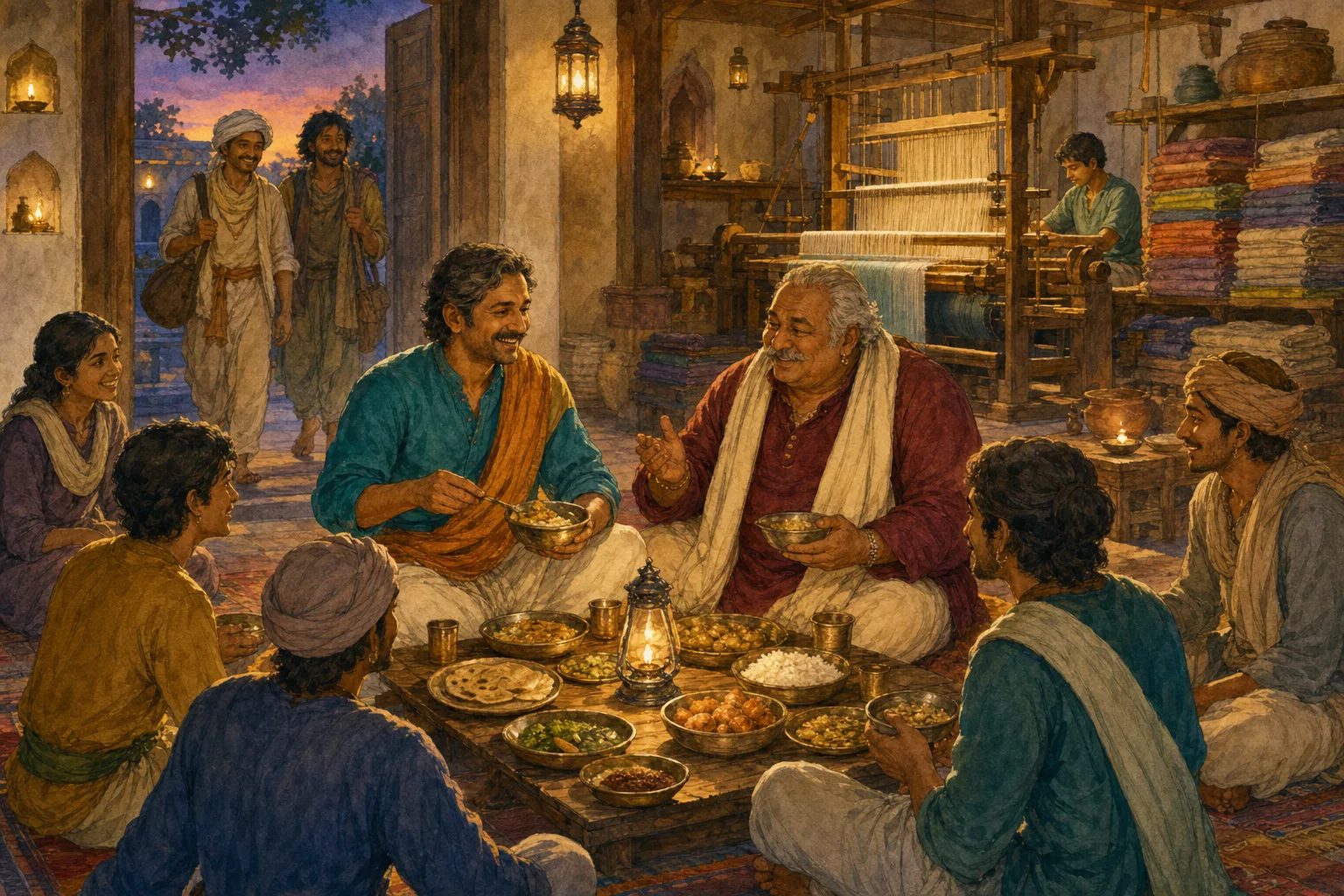
The next morning a royal messenger paid Penny-Fling for cloth supplied to the palace. Soft saw that generosity and wise work could live together.
He returned to the banyan and said, “I do not want money that must be guarded every moment. I want enough to work well, care for my family, welcome others and share.”
Soft went home and opened a cooperative workshop. He taught young weavers, improved his designs and kept a fair portion for difficult seasons. The rest supported his family and community.
His wealth did not sit silently in a locked jar. It moved through useful work, warm meals and helping hands.
“Wealth is most valuable when it supports a good life and can be shared with others.”
New stories in your inbox
One story every week, and a special tale on festivals. Free, always.
Your email goes to our newsletter provider (beehiiv) so we can send you stories. It is not linked to any child's reading on this site. Unsubscribe any time from the email footer.