Self-Defeating Forethought
Panchatantra
Deep in a forest, a hunter startled a great wild boar beside a rocky path.
The boar charged. The hunter leapt aside, his bow flew from his hands, and both hunter and boar tumbled down opposite sides of the slope. Bruised and frightened, they limped away in different directions, leaving the hunter's bundle and bent bow behind.
Near sunset a hungry jackal entered the clearing.
He found flatbread, dried fruit and roasted grain scattered from the bundle. There was enough food for many days.
“What wonderful luck!” he cried. “I must make this treasure last.”
The jackal gathered the food into a dry hollow and carefully counted every piece.
Then he noticed the bow. A strip of animal sinew was tied tightly around one end.
“I should eat the bread first,” he thought. “But if I save the best food and chew this tough little strip today, my feast will last even longer.”
The bow was bent under great tension. The jackal did not understand how much force it held.
He gripped the sinew and pulled. It stretched but did not break.
“Just one harder bite,” he told himself.
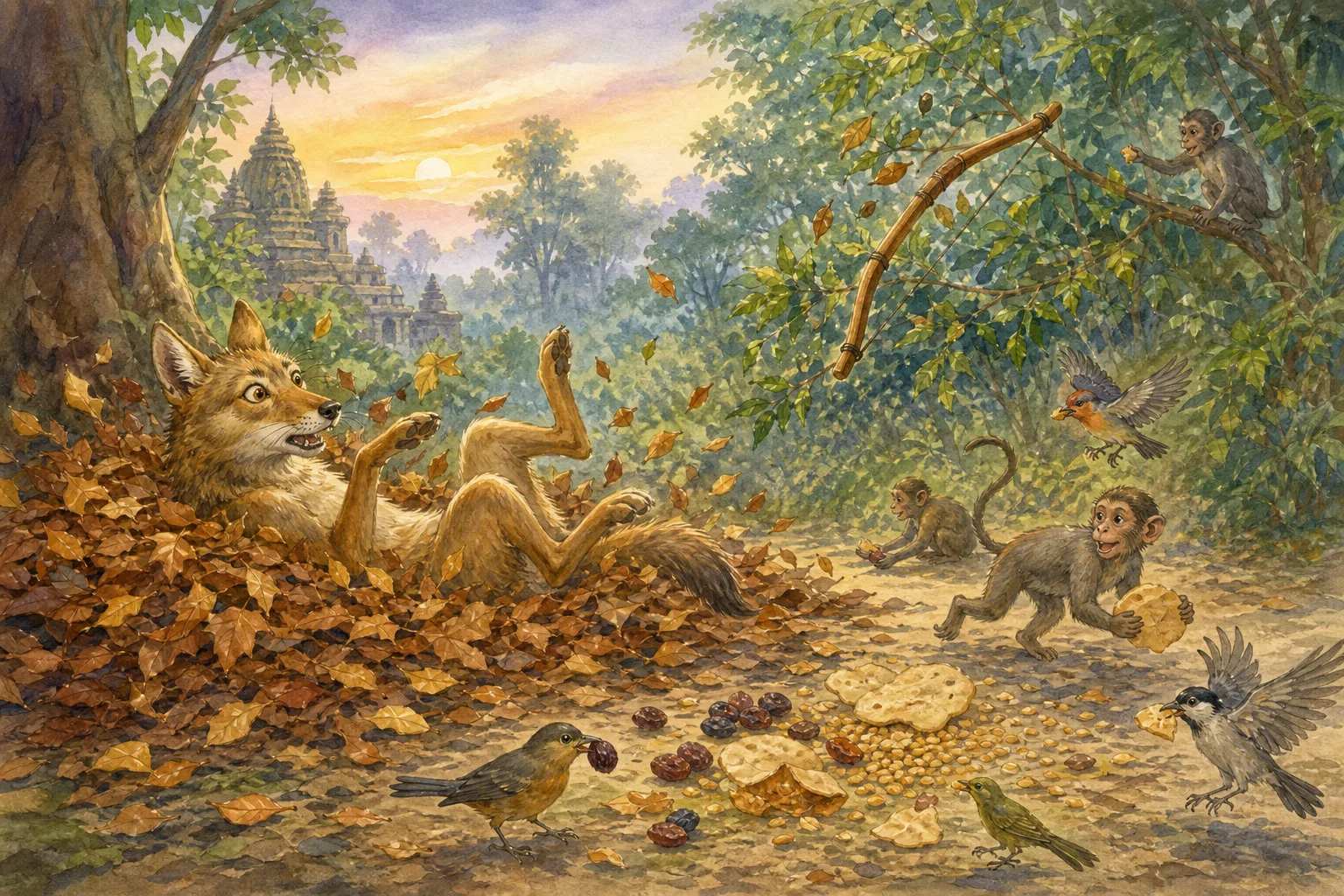
With a sudden twang, the knot slipped. The bow sprang straight, knocked the jackal into a pile of leaves and scattered his carefully stored food across the clearing.
Startled birds swooped down for the grain. Monkeys carried off the fruit. By the time the jackal crawled from the leaves, only crumbs remained.
He was sore but safe. Looking at the empty hollow, he finally understood.
“I already had more than enough,” he said. “My plan to save one extra bite cost me the whole meal.”
The jackal left the dangerous bow alone and went searching for honest food he could use wisely.
Thoughtful planning protects what we have. Greedy planning can defeat itself.
“Greedy plans can destroy the very reward they are meant to secure.”
New stories in your inbox
One story every week, and a special tale on festivals. Free, always.
Your email goes to our newsletter provider (beehiiv) so we can send you stories. It is not linked to any child's reading on this site. Unsubscribe any time from the email footer.