Why the Vindhya Mountain Bowed
Kāśī Majilī Kathalu
One morning, Manisiddhu and Shounaka reached a steep mountain path. They rested where cool water trickled over stone while a line of travellers squeezed past a fallen boulder.
Shounaka looked up at the enormous slope. “A mountain is already taller than everyone,” he said. “Could it still want to be taller? Could a mountain become proud?”
“There is a traditional sacred story about that,” Manisiddhu said. “It is not a lesson in how mountains were formed. It is a story people have told about greatness and making space for others.”
Long ago, the Vindhya mountain range stood strong and beautiful across the heart of India. Forests covered its slopes. Streams tumbled from its rocks. Birds nested in its trees, and travellers crossed its passes to visit distant communities.
Vindhya heard people praise other mountains.
“That peak touches the clouds,” someone said.
“Those snowy heights shine like silver,” said another.
Vindhya began to compare.
“Am I not strong?” the mountain wondered. “Are my forests not green? Why should anyone speak of another height before mine?”
So Vindhya began to grow.
At first, the trees were delighted to rise closer to the clouds. Eagles found higher winds. Vindhya admired its lengthening shadow.
But the mountain did not stop.
Its slopes spread across paths used by farmers and traders. Carts could no longer pass between neighbouring towns. Families who visited one another found their journeys blocked.
Still Vindhya grew.
Sunlight reached some fields for fewer hours each day. Birds flying north or south had to travel far around the rising heights. Clouds gathered strangely against the slopes, bringing too much rain to one place and too little to another.
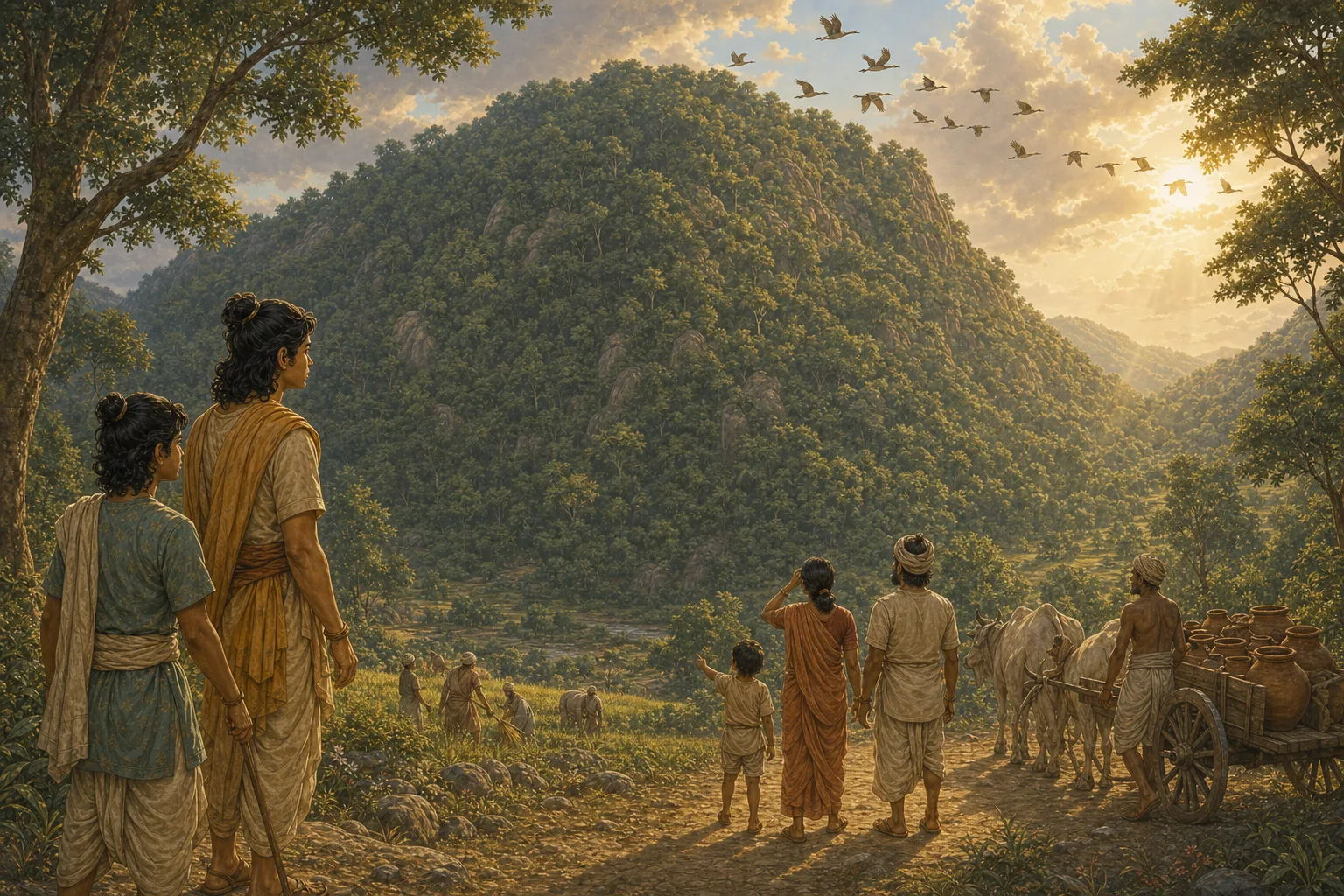
“Please leave a path,” called the travellers.
“Please let the morning light through,” asked the farmers.
Vindhya heard them, but pride answered first. “When I am the greatest mountain, everyone will admire me. Then I will consider their requests.”
The people and the devas wondered how to help. They did not want a battle that would shake forests and homes. At last, they went to Sage Agastya.
Agastya was respected not because he made a loud display of power, but because he listened carefully and acted with steady purpose. He was preparing to journey south.
“I will speak with Vindhya,” he said.
The sage walked toward the mountain in simple robes, carrying only what a traveller needed. People expected thunder or a mighty challenge. Instead, Agastya approached calmly.
Vindhya saw him and remembered his wisdom. The mountain bowed low in respect.
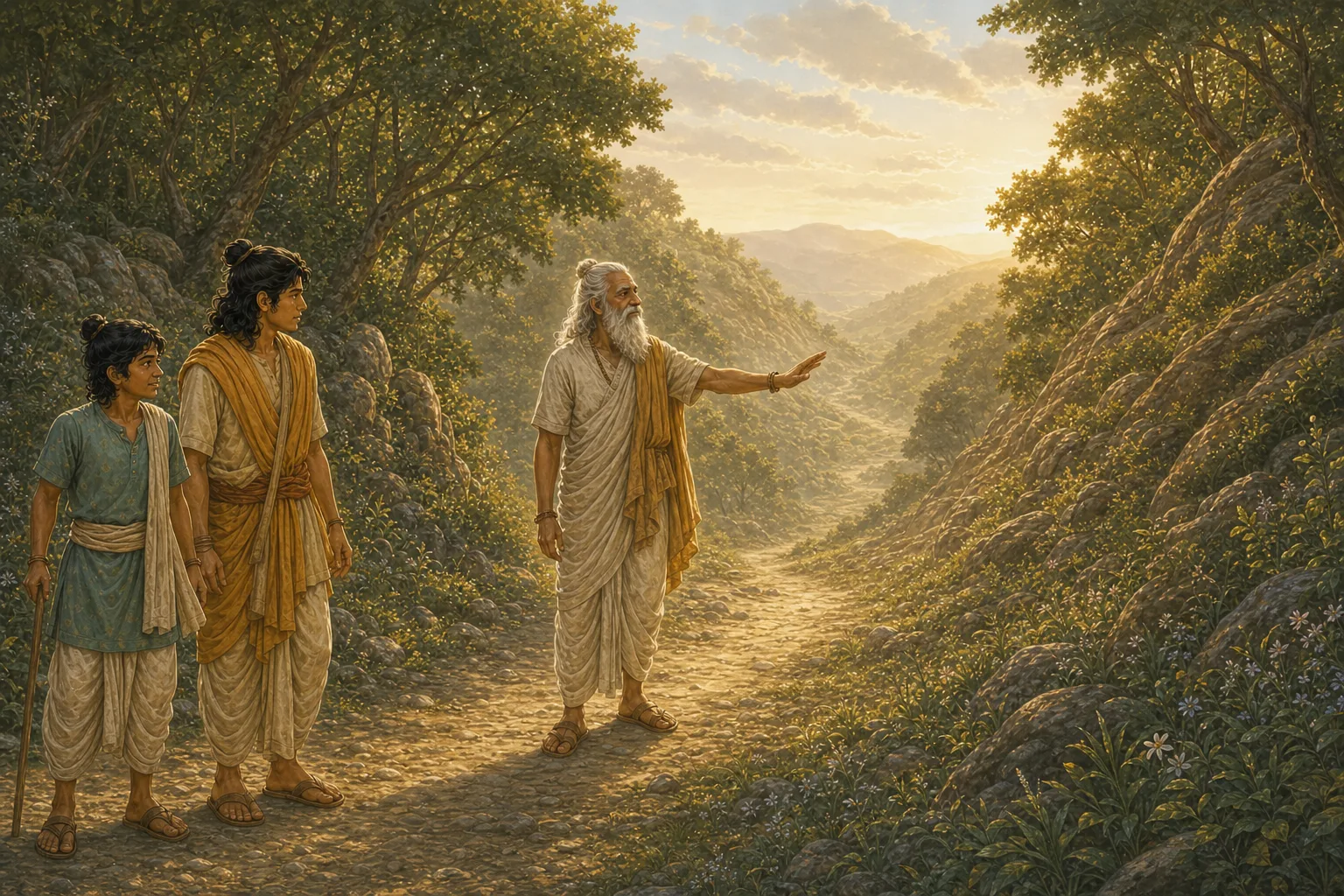
“Great sage,” said Vindhya, “how may I honour you?”
“I am travelling south,” Agastya replied. “Please remain bowed so I and those who follow this road may pass safely. Keep the way open until I return.”
Vindhya had offered respect and could not take it back at the first inconvenience. The mountain remained low enough for Agastya to cross.
Behind him came other travellers: a grandmother visiting her family, a potter carrying bowls, children walking with their parents, herders guiding animals, and birds returning to familiar skies.
As they passed, Vindhya noticed something pride had hidden.
The mountain’s greatness had never depended only on height. Its streams gave water. Its forests gave shelter. Its passes joined communities. When Vindhya made room, life moved across it like a bright woven cloth.
Agastya continued south. In the story, he did not return by that road, and Vindhya kept its promise.
The mountain did not become small. It remained vast, strong, green, and worthy of wonder. But it no longer tried to prove its greatness by blocking everyone else.
Manisiddhu finished the tale as the last travellers passed the boulder.
Shounaka watched two of them stay behind to roll smaller stones from the path. “Growing is not the problem,” he said. “Forgetting everyone around you is.”
Manisiddhu nodded. “A person can learn more, become stronger, or take on greater work—and still leave room for others.”
Together they helped move a loose branch away from the narrow trail. Then they crossed the mountain path, making way when another group approached.
The road beyond curved northward, toward Kāśī.
New stories in your inbox
One story every week, and a special tale on festivals. Free, always.
Your email goes to our newsletter provider (beehiiv) so we can send you stories. It is not linked to any child's reading on this site. Unsubscribe any time from the email footer.