The Empty Golden Tray
Kāśī Majilī Kathalu
On the road to Kāśī, Shounaka and Manisiddhu reached a village filled with the clack of looms.
“Fine cloth needs good thread,” Shounaka said.
“And a good truth needs courage,” Manisiddhu replied. Then he began a story about a young palace page named Tara.
One day, two travellers arrived at a king's court.
“We weave a marvellous cloth that can be seen only by people who are wise and honest,” they said. “We will make ceremonial robes for your festival.”
The king gave them a room, a loom, and gold to buy silk. But the travellers hid the silk and moved their hands over the empty loom.
The minister came to inspect their work. He saw nothing. Yet he thought, “If I tell the truth, people may call me foolish.”
“What beautiful colours!” he said.
Other courtiers said the same. Soon the palace was buzzing about cloth that no one had seen.
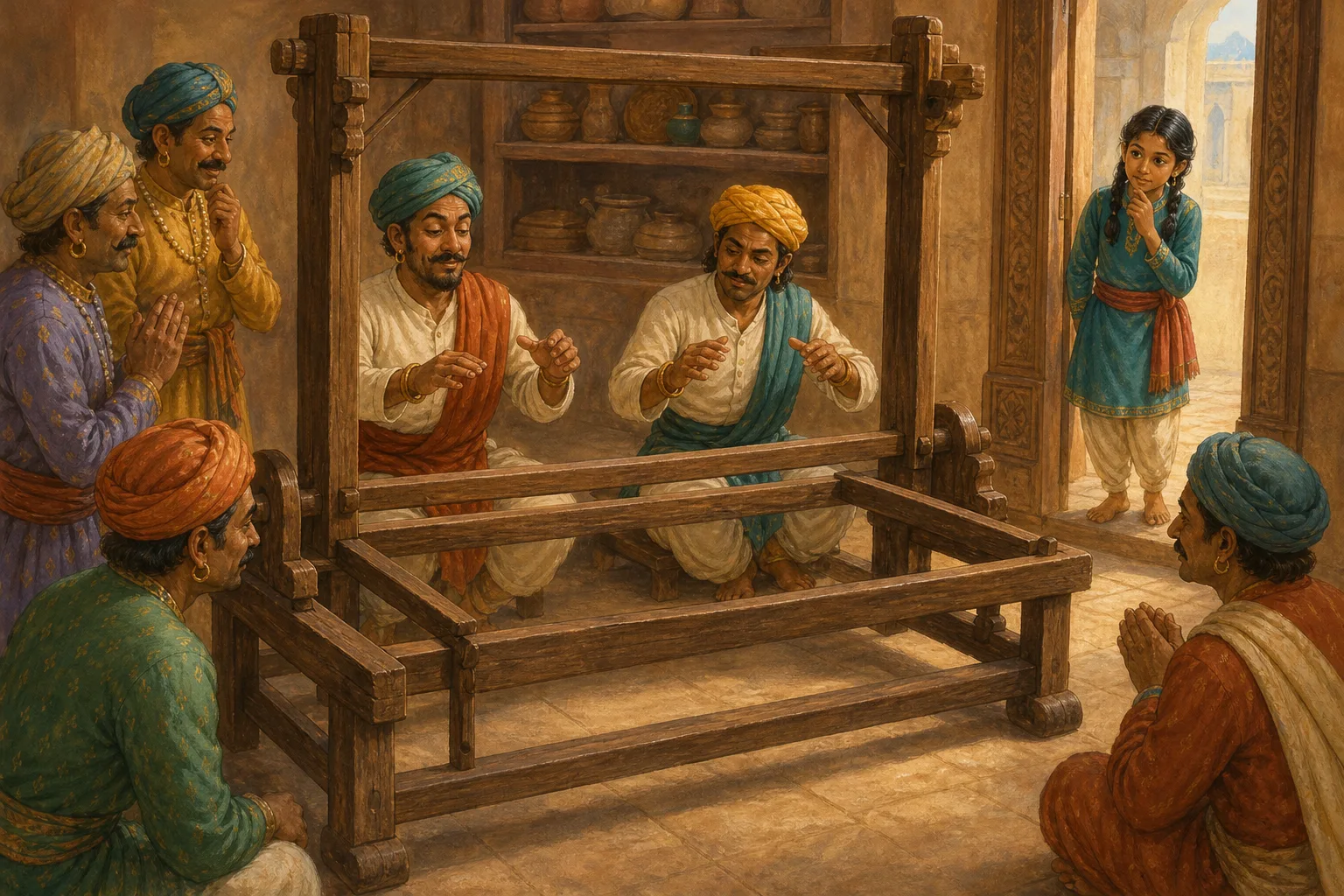
Tara brought water and fruit to the workshop. She studied the loom. There was no thread on it and no cloth beneath it.
On the morning of the festival, the travellers pretended to lift folded robes from the air. With great care, they placed nothing at all upon a golden tray.
“Ready for the great king,” they announced.
The king saw nothing. He felt every eye upon him and searched for something grand to say.
Tara stepped forward and bowed. “Your Majesty, the tray is empty.”
The courtyard fell silent.
Tara took a breath. “The loom was empty too. Being afraid does not turn emptiness into cloth.”
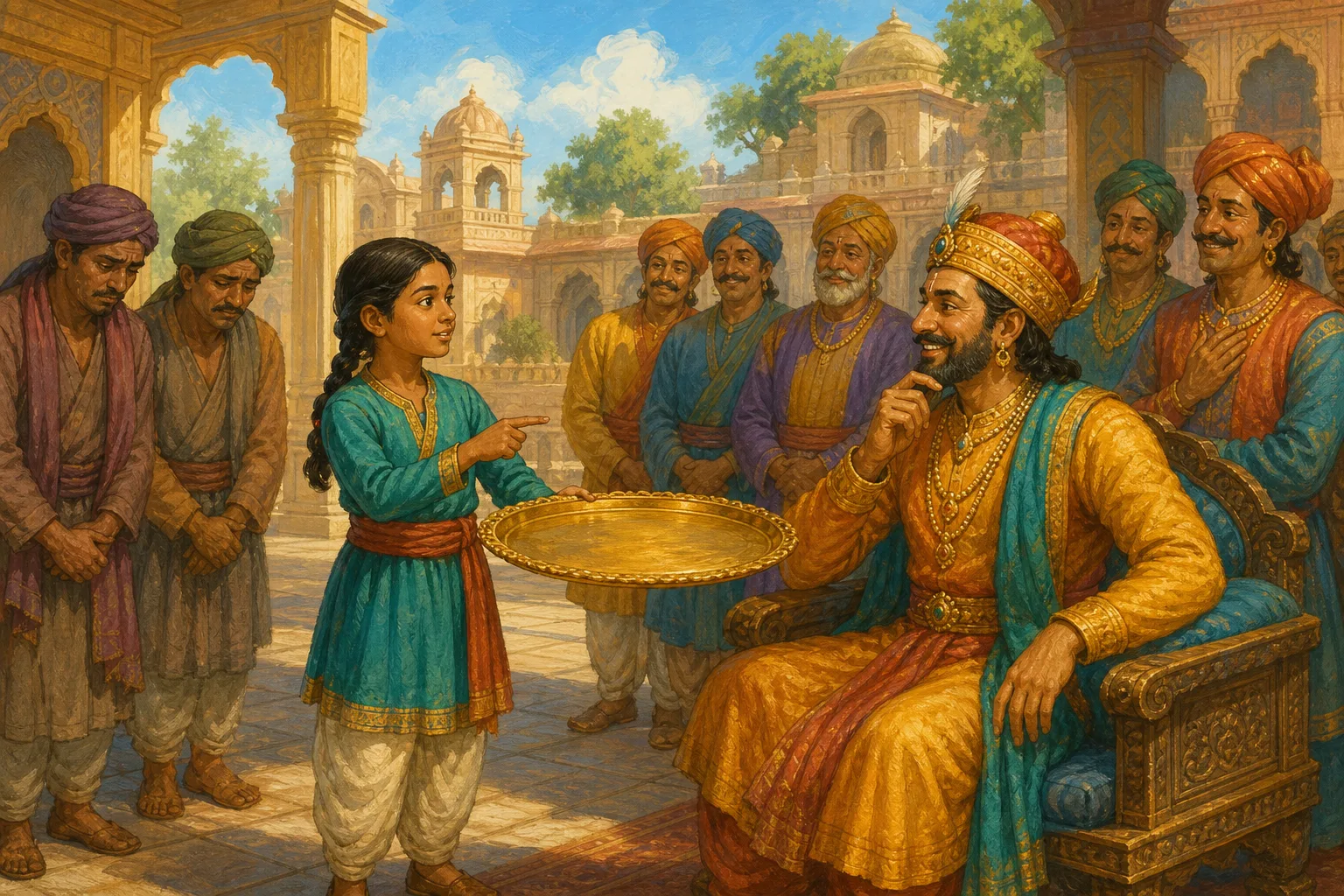
The king looked again. Then he laughed—not at Tara, but at his own mistake.
“You spoke the truth that all of us were afraid to say,” he told her.
One by one, the courtiers admitted that they had seen no cloth. The travellers returned the gold and the hidden silk, then left the palace. The king gave them no cruel punishment, but no one trusted their hollow claims again.
At that year's festival, the kingdom's real weavers displayed their work. Each craftsperson was named and paid fairly. Tara did not choose the most glittering cloth. She chose the one that had been woven strongly and honestly.
When the tale ended, Shounaka said, “Sometimes truth is as plain as an empty tray.”
“Yes,” said Manisiddhu. “But someone still needs the courage to say it first.”
New stories in your inbox
One story every week, and a special tale on festivals. Free, always.
Your email goes to our newsletter provider (beehiiv) so we can send you stories. It is not linked to any child's reading on this site. Unsubscribe any time from the email footer.