Krishnadevaraya and the Difficult Question
Kāśī Majilī Kathalu
On the road to Kāśī, Manisiddhu and Shounaka passed a stone-carver's yard where a half-finished figure stood among the chips. "How does a carver know when a statue is finished?" Shounaka asked. Manisiddhu smiled. "Let me tell you about a king who asked a harder question than that."
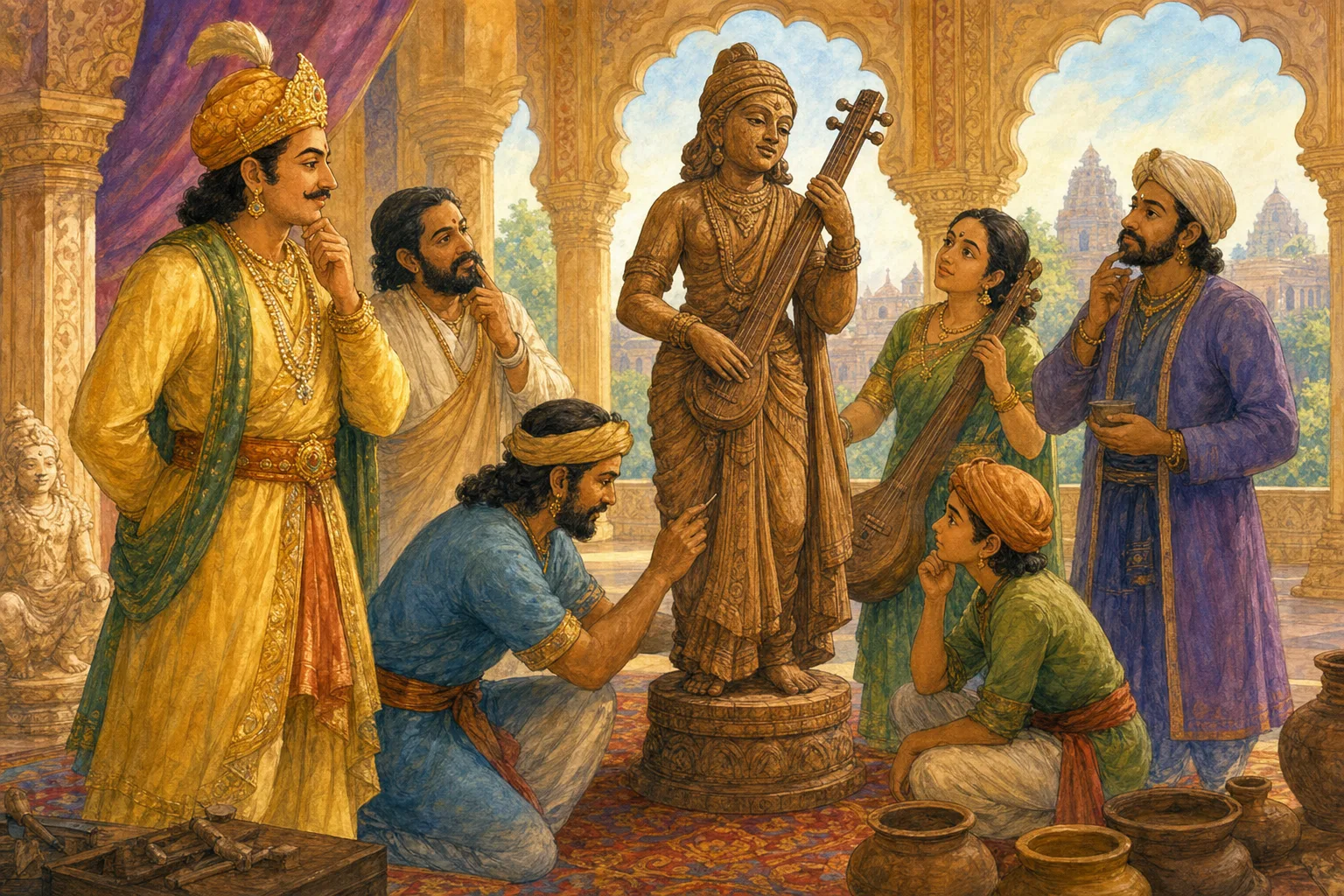
An artist arrived at Krishnadevaraya's court with a remarkable figure. Its painted skin, resting hands, and gentle expression looked so lifelike that visitors lowered their voices, afraid to wake it.
The king praised the artist's skill. Then he asked, "If shape, colour, and shadow are all perfect, what does a living person have that no figure can show?"
The court poet answered, "Speech."
The musician said, "Breath."
The physician suggested, "A heartbeat."
"All are good answers," said Krishnadevaraya, "but let us keep the question open."
Among the visitors was a potter's daughter who had delivered a tray of clay lamps.
"May I answer?" she asked.
The king nodded.
"A living person can choose what to do next," she said. "A figure cannot notice a crying child and reach out a hand. It cannot learn that it was mistaken and choose differently tomorrow."
The king smiled. "Then life is not only something we see. It is also the ability to notice and respond."
Instead of declaring one winner, Krishnadevaraya arranged a public exhibition. The sculptor explained form. The physician showed how joints moved. The musician demonstrated breath and rhythm. The poet explored voice. The potter's daughter invited children to imagine the choices each painted face might make.
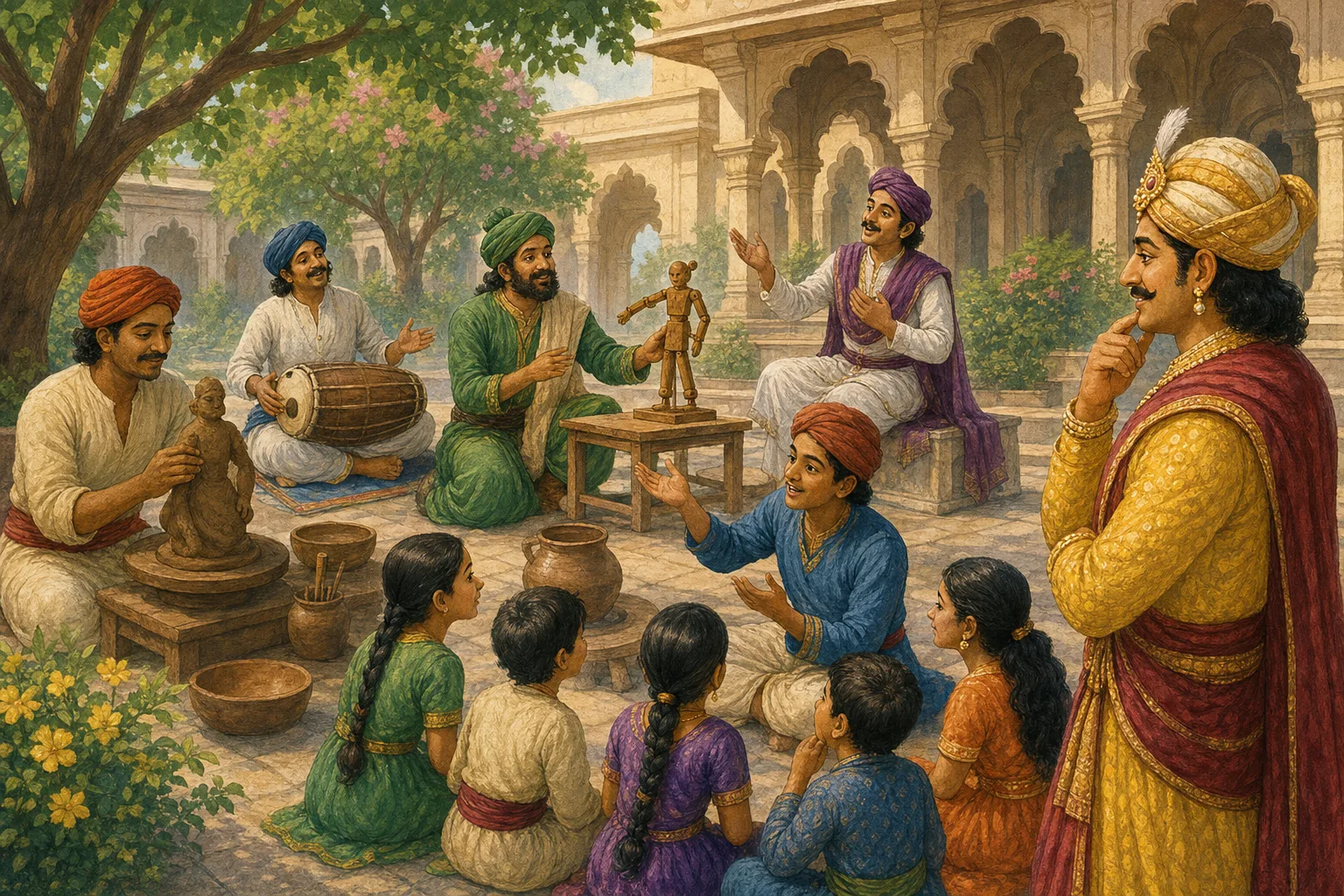
The visitors discovered that no single craft held the whole answer. Each revealed a different part.
"The difficult question had more than one answer," Shounaka said when the story ended.
"Yes," Manisiddhu replied. "Sometimes a good ruler's task is not to end a question quickly, but to make room for people to understand it together."
New stories in your inbox
One story every week, and a special tale on festivals. Free, always.
Your email goes to our newsletter provider (beehiiv) so we can send you stories. It is not linked to any child's reading on this site. Unsubscribe any time from the email footer.