The Mystery of Krouncha Island
Kāśī Majilī Kathalu
One evening, Manisiddhu and Shounaka camped where the road ran beside the sea. Far out on the dark water, a faint light flickered and went out. "What is out there?" Shounaka asked. "I do not know what that light is," said Manisiddhu, "but I know a story about one like it."
From a fishing village, people could see Krouncha Island far across the water. On moonless nights, a blue glow trembled along its shore.
"Treasure," some whispered.
But experienced boaters warned of hidden rocks, and no one knew what the light truly was.
Two young mapmakers, Meera and Neel, asked an elder boatwoman to guide them during a calm morning tide. Before leaving, they agreed on a return time, marked the safe channel, and promised not to disturb nests.
The island held no palace and no chest of jewels. They found long-legged tracks in the sand, broken shells, and thousands of pale feathers caught among reeds.
At dusk, flocks of krouncha cranes swept home across the orange sky. As the birds stepped through the shallows, tiny living creatures in the water glimmered blue. Each footstep scattered light like a handful of stars.
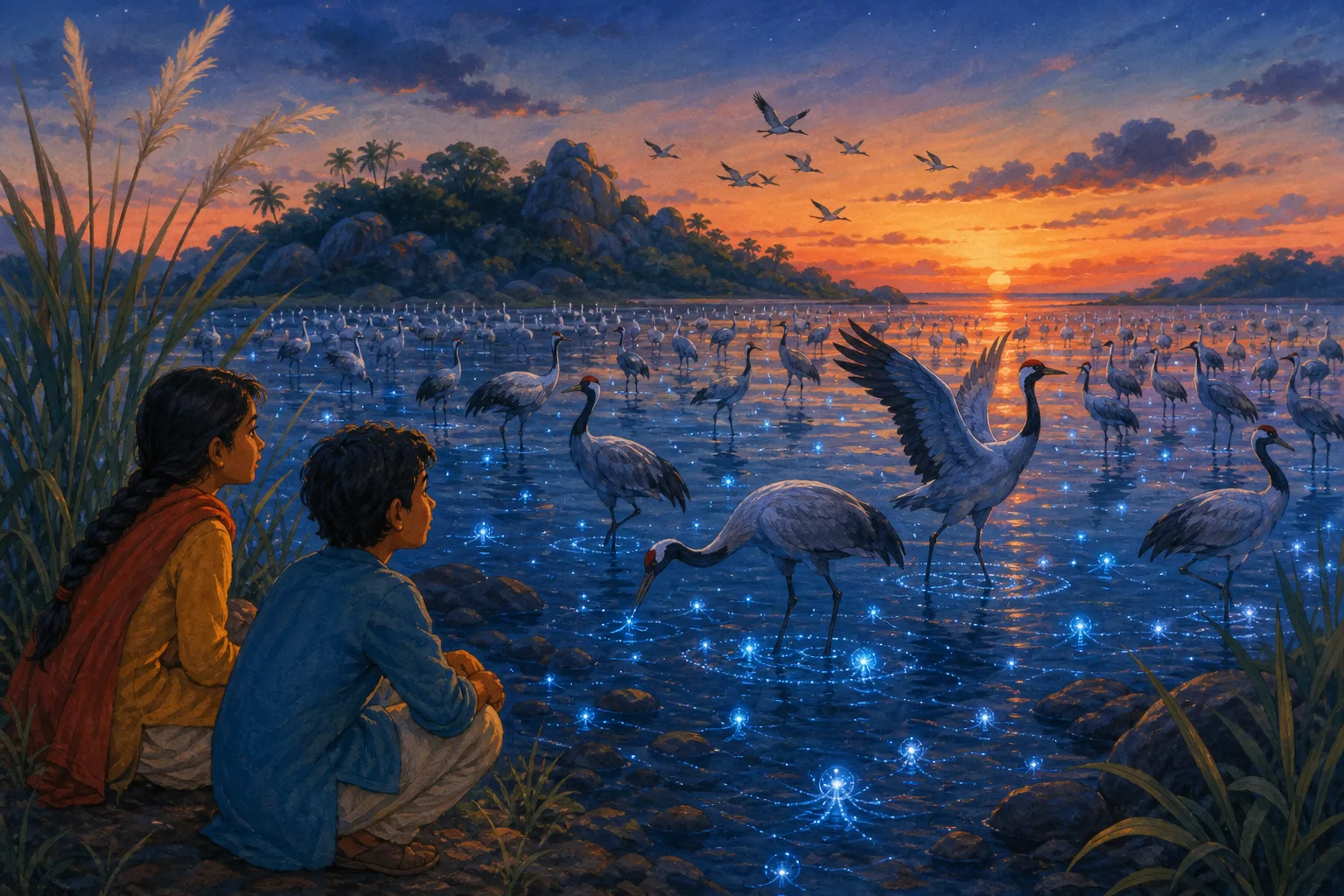
Neel reached for a glowing shell.
Meera stopped him. "If we carry the mystery home, we may destroy the very thing we came to understand."
They drew careful pictures, recorded the tides, and left every shell where it lay.
Back in the village, they did not announce treasure. They described a living sanctuary. Fishers agreed to avoid the island during nesting season and to keep bright lamps away from its shore at night. The boatwoman added the safe boundary to the village map.
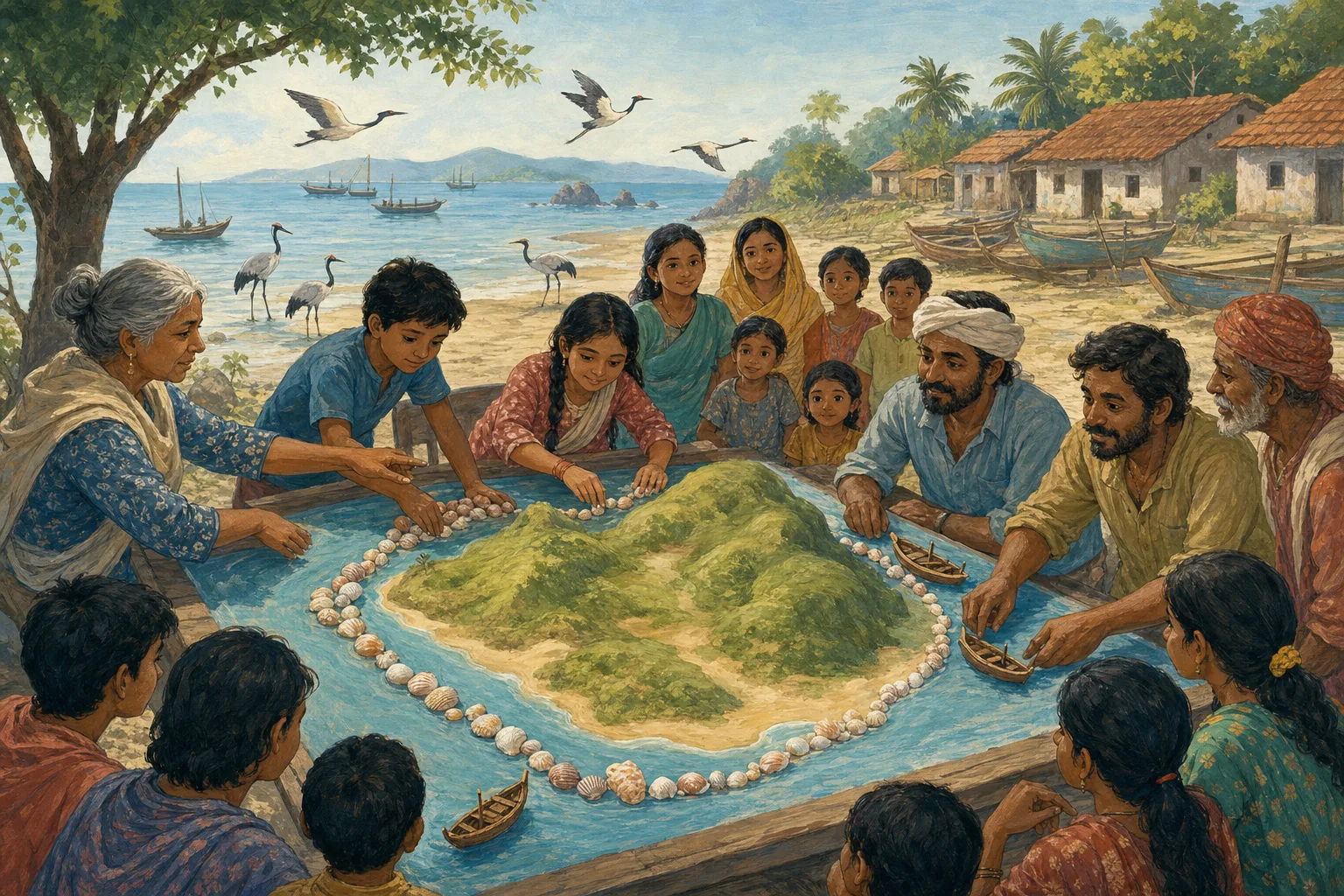
On the next moonless night, the blue light appeared again—visible to everyone, owned by no one.
"The best answer to a mystery was protection," Shounaka said when Manisiddhu ended the tale.
"Understanding gives us responsibility," Manisiddhu replied.
New stories in your inbox
One story every week, and a special tale on festivals. Free, always.
Your email goes to our newsletter provider (beehiiv) so we can send you stories. It is not linked to any child's reading on this site. Unsubscribe any time from the email footer.