The Thoughtful Minister
Kāśī Majilī Kathalu
In a village on the road to Kāśī, two farmers argued over a narrow irrigation channel. Each wanted to guide its water toward a different field.
“When both people say their need is greatest, who should decide?” Shounaka asked.
Manisiddhu told him about Minister Mangala.
During a dry year, messengers from two districts arrived at Mangala’s court. Each bowed to the king and made the same request.
“Open the reservoir and send all its water to us.”
The commander suggested tossing a coin. The treasurer favoured the district that paid more tax. Several advisers spoke at once, each offering a quick answer.
Mangala did not.
He invited farmers, potters, herders, well keepers, and canal workers from both districts. Around a clay map, he asked, “Where does the water begin? Which crops need it now? How much disappears before it reaches either district?”
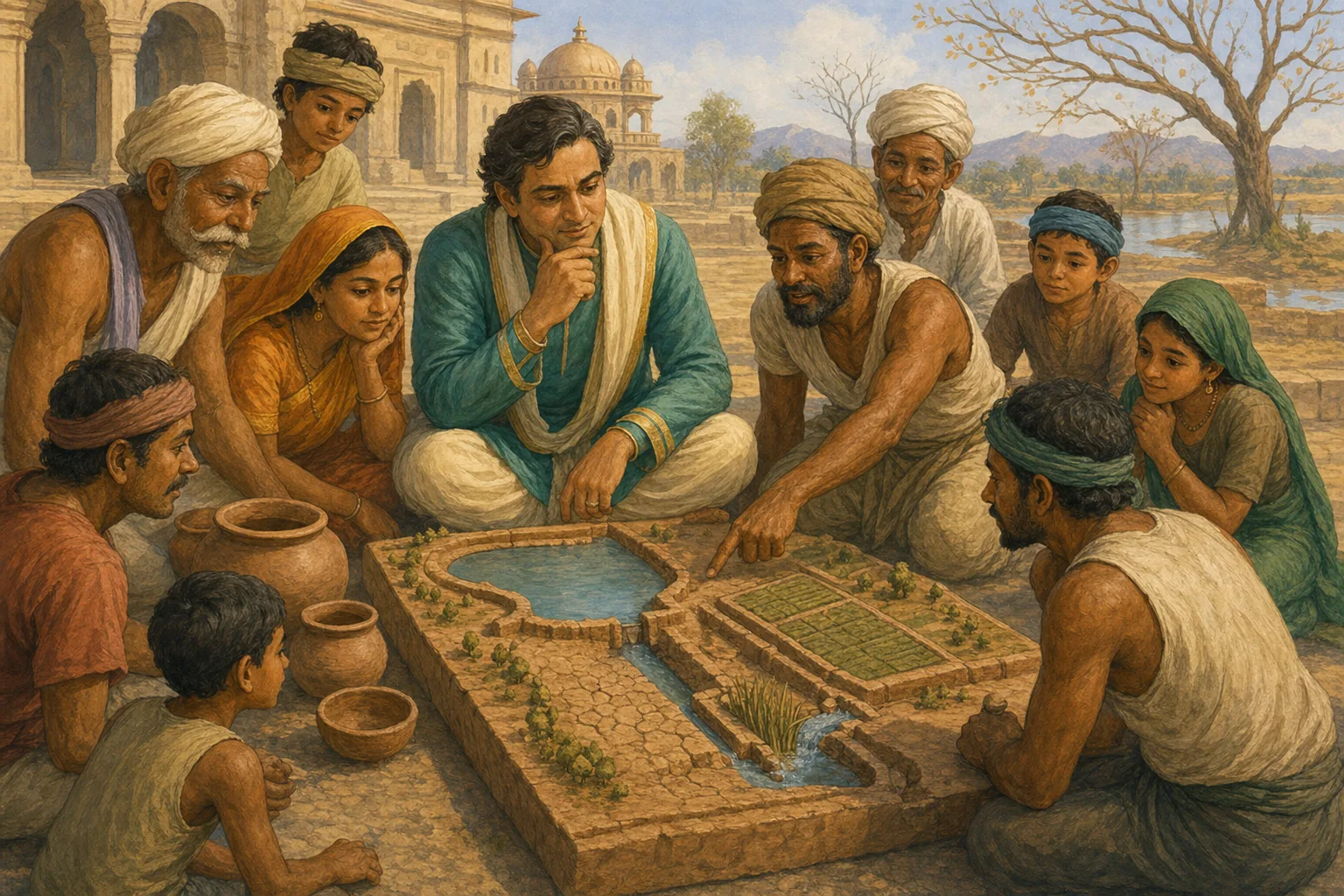
The canal workers showed him an old crack hidden by reeds. Nearly half the water escaped into stony ground before reaching anyone.
Mangala proposed three steps. First, both districts would repair the canal together. Next, water would flow east in the morning and west in the evening, when less would vanish in the heat. Finally, a protected share would fill village ponds for drinking and animals.
People who had arrived as rivals worked side by side packing the crack with stone and clay.
Within weeks, young crops stood upright in both districts. The ponds held enough water for cattle and birds.
“Your answer was not the fastest,” the king observed.
“That is why it had room for everyone’s knowledge,” Mangala replied.
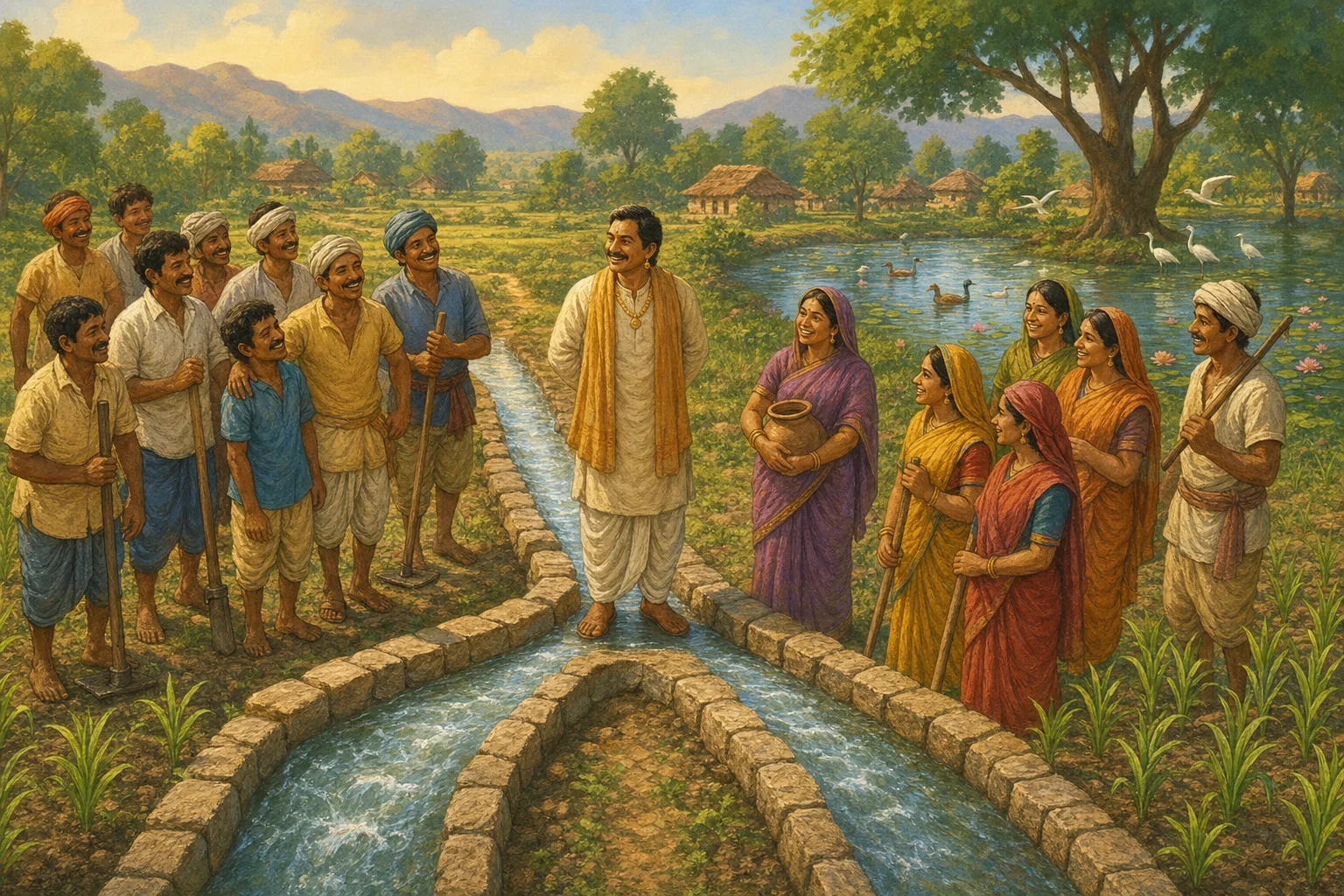
Back beside the village channel, Shounaka helped the two farmers clear a knot of leaves.
“A wise decision is not only a clever answer,” he said. “Sometimes it begins with better questions.”
New stories in your inbox
One story every week, and a special tale on festivals. Free, always.
Your email goes to our newsletter provider (beehiiv) so we can send you stories. It is not linked to any child's reading on this site. Unsubscribe any time from the email footer.