The Frog King's Daughter
Mahabharata
Part 1: Music beside a forest pool
Long ago, a king named Parikshit ruled Ayodhya. One day, while hunting, he followed a swift deer far from his companions. His horse grew tired, and the king stopped beside a clear forest pool.
After drinking and resting, Parikshit heard a song among the trees. A young woman stepped into view. Her name was Sushobhana, and she seemed to know the forest as well as a heron knows the edge of a lake.
They spoke for a long time. Sushobhana was clever, observant, and unafraid to disagree with a king. Parikshit admired her.
“Come to Ayodhya,” he said. “If you freely choose it, become my queen.”
Sushobhana hesitated. “I will come only if you promise never to show me water.”
Parikshit was puzzled. Water filled rivers, cups, wells, and clouds. Yet he wanted her answer so much that he agreed without asking enough questions.
They married and returned to Ayodhya.
Part 2: A palace without water
Parikshit ordered his attendants to keep every bowl, fountain, and jar out of Sushobhana's sight. He built a beautiful garden around a hidden pavilion. Its trees offered shade, but no visible pool or stream crossed its paths.
For a time the unusual arrangement seemed to work.
But promises built around secrecy make ordinary life difficult. Servants had to hide drinking water. Gardeners worked only when Sushobhana was away. No one could explain why the queen was never invited to the river festivals.
Sushobhana herself carried a secret. She was the daughter of Ayu, king of a magical frog community that lived in and around the forest waters. She could move between the human world and her father's realm through a pool.
She had made similar agreements before, leaving each husband as soon as he showed her water. Instead of speaking honestly about her home or her fear of remaining away from it, she had turned secrecy into a test.
One scorching afternoon, Sushobhana and Parikshit walked through the garden. The air was still and hot.
“I am terribly thirsty,” she said.
Parikshit called for water, but the attendants had none nearby. Then he remembered the hidden pool inside the pavilion.
Worried for her, he led her to it.
Sushobhana looked at the shining water. Before Parikshit could speak, she stepped into the pool and disappeared.
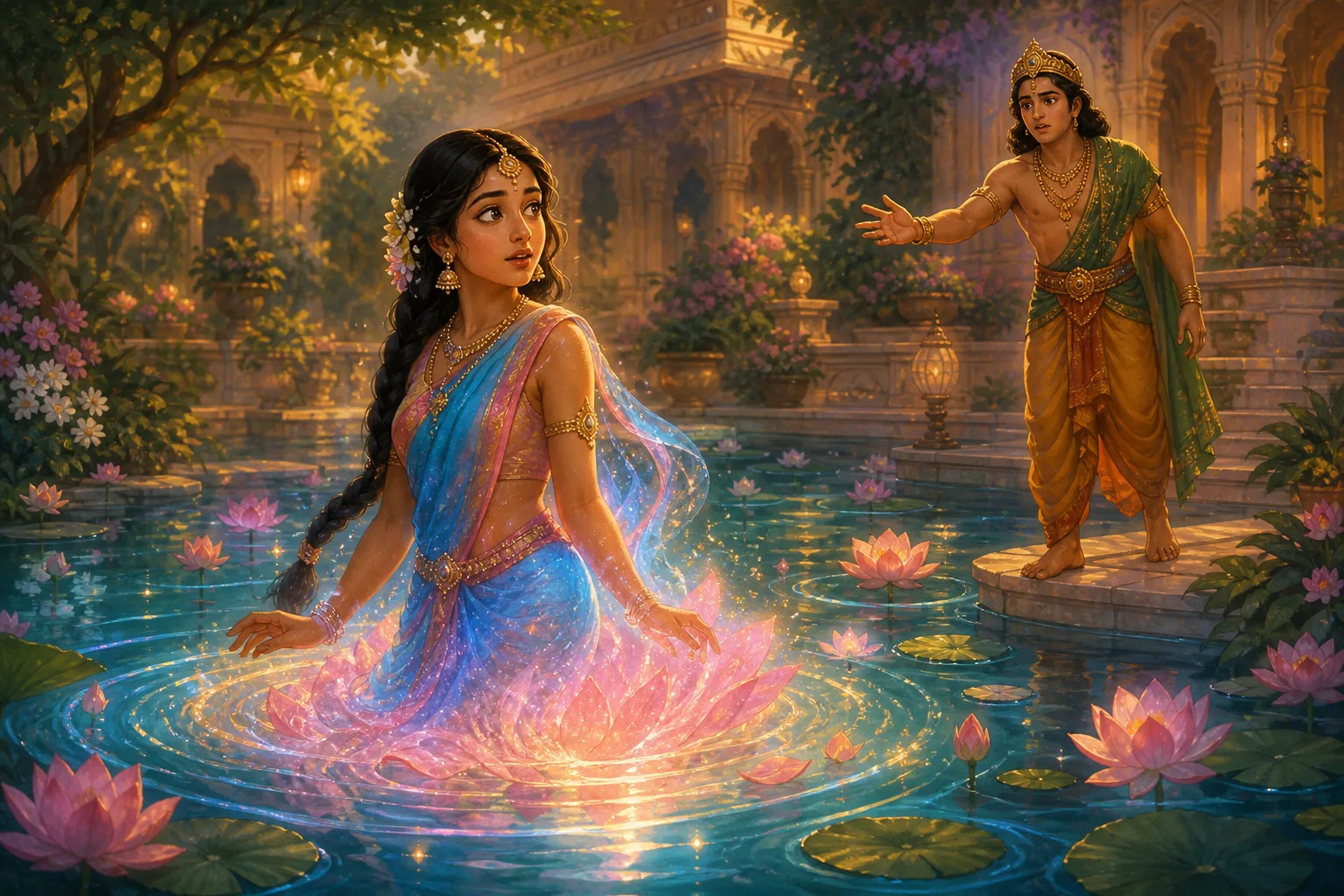
Part 3: Anger reaches the pond
Parikshit searched the pavilion and garden. Divers entered the pool but found no ordinary passage. The king felt confused, frightened, and betrayed.
When workers drained part of the pool, they found a frog near a hidden opening. Parikshit's fear turned into anger.
“The frogs have taken Sushobhana!” he declared. He ordered people to capture frogs throughout the kingdom and threatened to punish the whole community unless the queen was returned.
The order spread quickly. Children who once listened to frogs calling after rain now saw frightened animals hiding in the reeds. Farmers worried because frogs helped keep insects from devouring crops.
An elderly visitor came to the palace. It was King Ayu in a simple disguise.
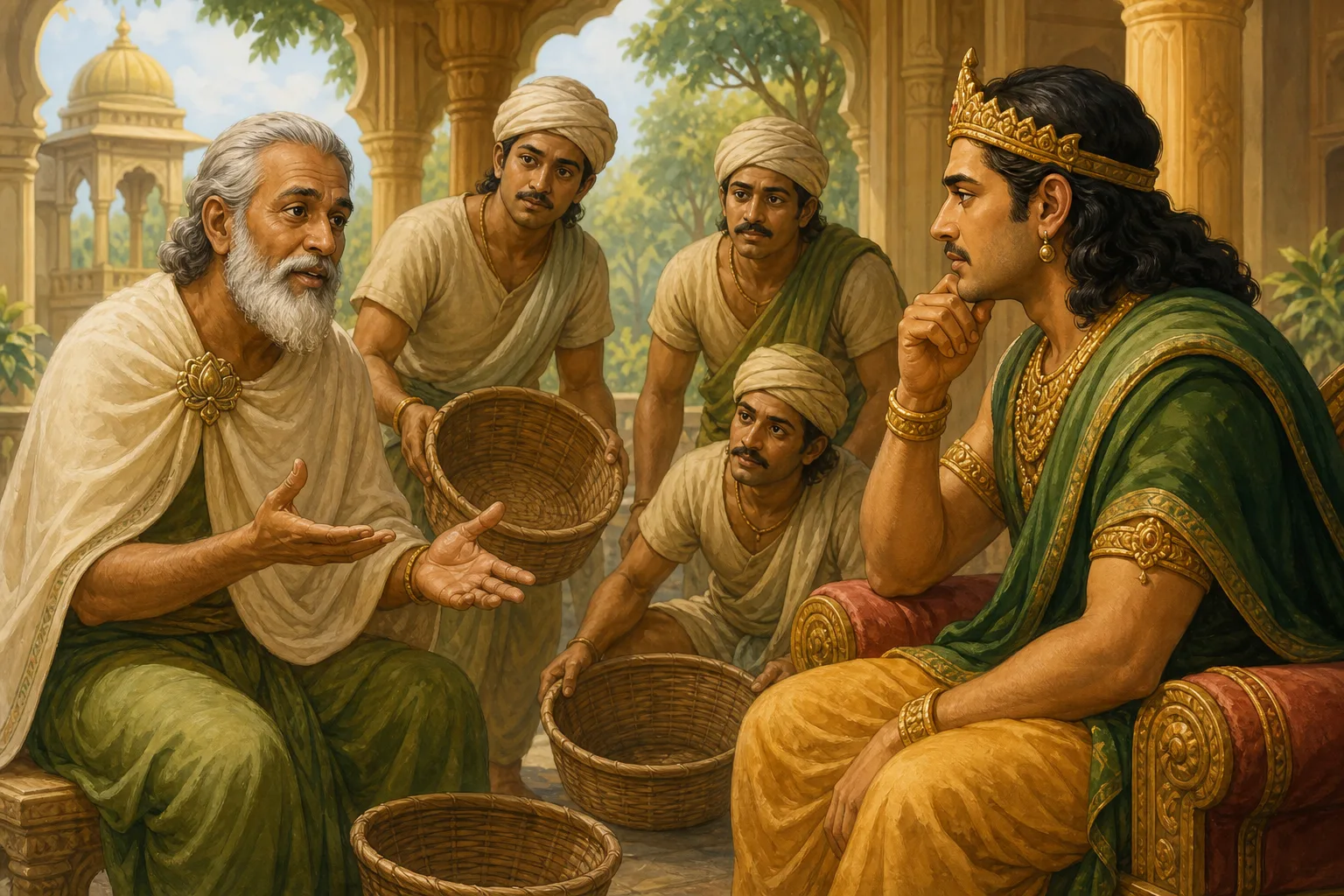
“Why punish every frog?” he asked. “Did each one make an agreement with you? Did each one lead the queen away?”
“Their king's daughter vanished into their water,” Parikshit replied. “Someone must answer.”
“Yes,” said the visitor, “the people responsible should answer. But a ruler who cannot distinguish responsibility from resemblance creates a new wrong.”
The words unsettled Parikshit. He suspended the order while the visitor promised to bring news.
Part 4: The truth in Ayu's court
King Ayu returned to his water realm and called Sushobhana before him.
“You left without telling Parikshit who you were,” he said. “You asked for a promise that made honest life impossible, then used its breaking as a path of escape.”
Sushobhana lowered her eyes. “I feared that if I told him about our realm, he would either refuse me or try to control when I could return.”
“Fear can explain a choice,” Ayu said, “but it does not make deception fair. Parikshit's threat against innocent frogs was also wrong. Both truths must be spoken.”
Sushobhana admitted that she had used the same test before. Ayu was deeply disappointed.
“A marriage cannot be a doorway you open and close without the other person's knowledge,” he told her. “If you return, you must speak honestly. Parikshit must also promise that anger will not become punishment for our whole community.”
Sushobhana agreed.
Part 5: A new agreement
Ayu brought his daughter to Ayodhya and revealed his true identity.
Parikshit was relieved to see Sushobhana, but relief did not erase what had happened.
“You disappeared and left me fearing for your life,” he said.
“I did,” she replied. “I should have told you about my family and my ability to return through water. I was afraid, but I chose a test instead of trust.”
Then Sushobhana faced the palace court.
“The frog community did not abduct me,” she said. “No frog should be harmed for my decision.”
Parikshit withdrew his order publicly.
“I let fear become a threat against an entire people,” he admitted. “That was unjust.”
King Ayu asked whether they still wished to remain married. This time no one demanded an instant answer.
Parikshit and Sushobhana spoke privately. They agreed that she could visit her family openly and that neither would use secrecy, royal power, or sudden disappearance to control the other. If trust could not be rebuilt, they would part without harming either community.
Rebuilding took time. Sushobhana showed Parikshit the water realm, and he learned why the pools mattered to her people. She joined river celebrations in Ayodhya without hiding. Together they protected wetlands where frogs, birds, fish, and people depended on the same water.
The promise that began their marriage had forbidden them to see clearly. The agreement that repaired it asked them to look directly at the truth—and to let every innocent creature remain free of their quarrel.
“Trust grows through honest choices, not promises designed to hide the truth.”
New stories in your inbox
One story every week, and a special tale on festivals. Free, always.
Your email goes to our newsletter provider (beehiiv) so we can send you stories. It is not linked to any child's reading on this site. Unsubscribe any time from the email footer.