Eklavya and the Power of Practice
Mahabharata
Long ago, a determined young forest prince named Eklavya dreamed of becoming a skilled archer. He went to the renowned teacher Dronacharya and respectfully asked, “Will you teach me archery?”
Dronacharya did not accept Eklavya as his student. Eklavya was deeply disappointed, but he refused to abandon his dream.
Eklavya returned to the forest. He shaped a clay image of Dronacharya and placed it beneath a tree as a symbol of the teacher from whom he wished to learn.
Every morning, Eklavya bowed before the image and began practicing. He studied how the wind moved the leaves, how far a target stood, and how steadily he could hold his bow. From sunrise until evening, he repeated each lesson he had taught himself.
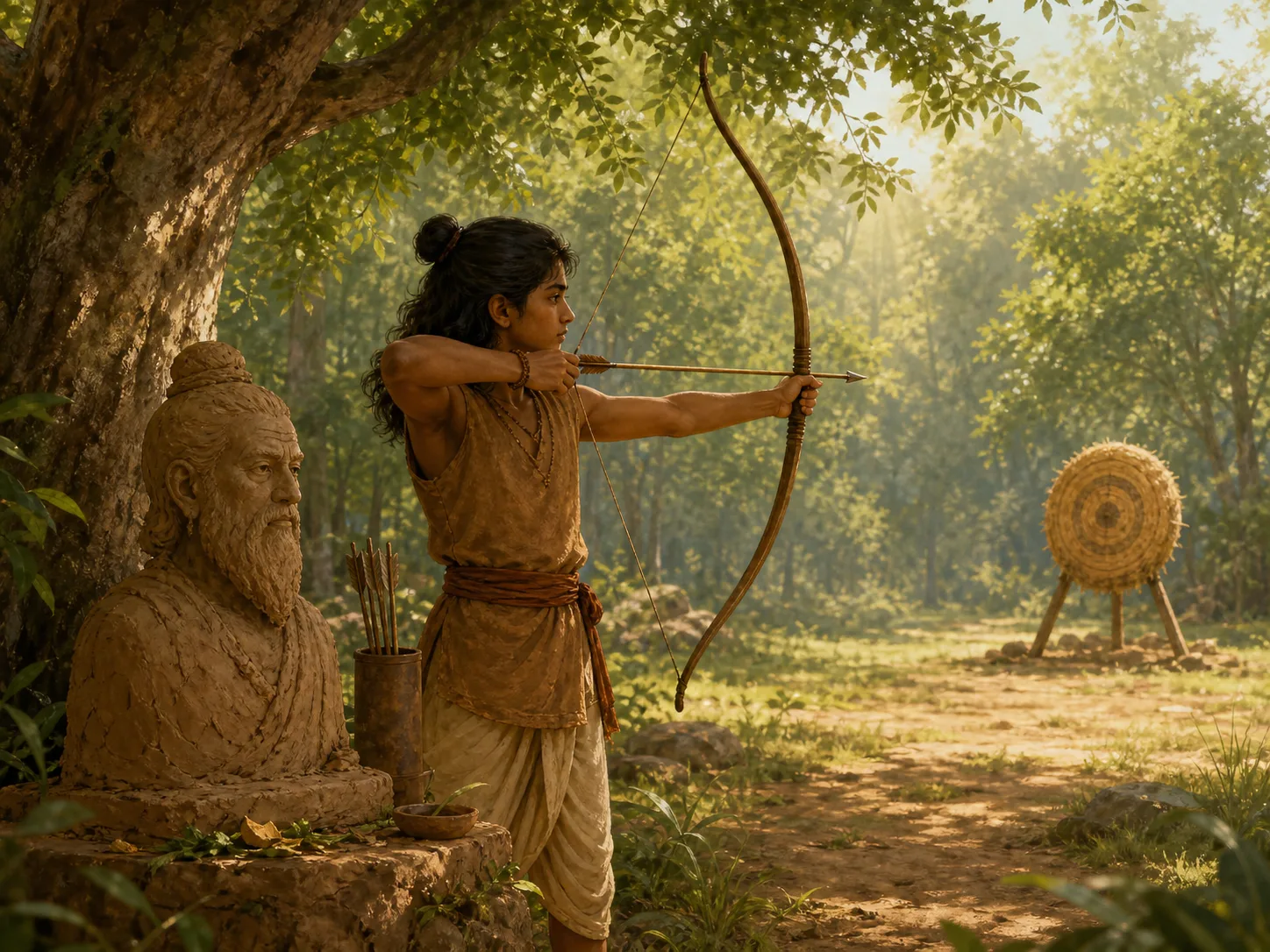
Years passed. Through patience and tireless practice, Eklavya became an extraordinary archer.
One day, Dronacharya entered the forest with his pupils, including Arjuna. They saw Eklavya’s remarkable skill and asked who had trained him.
Eklavya bowed and said, “I learned through practice while keeping you in my heart as my teacher.”
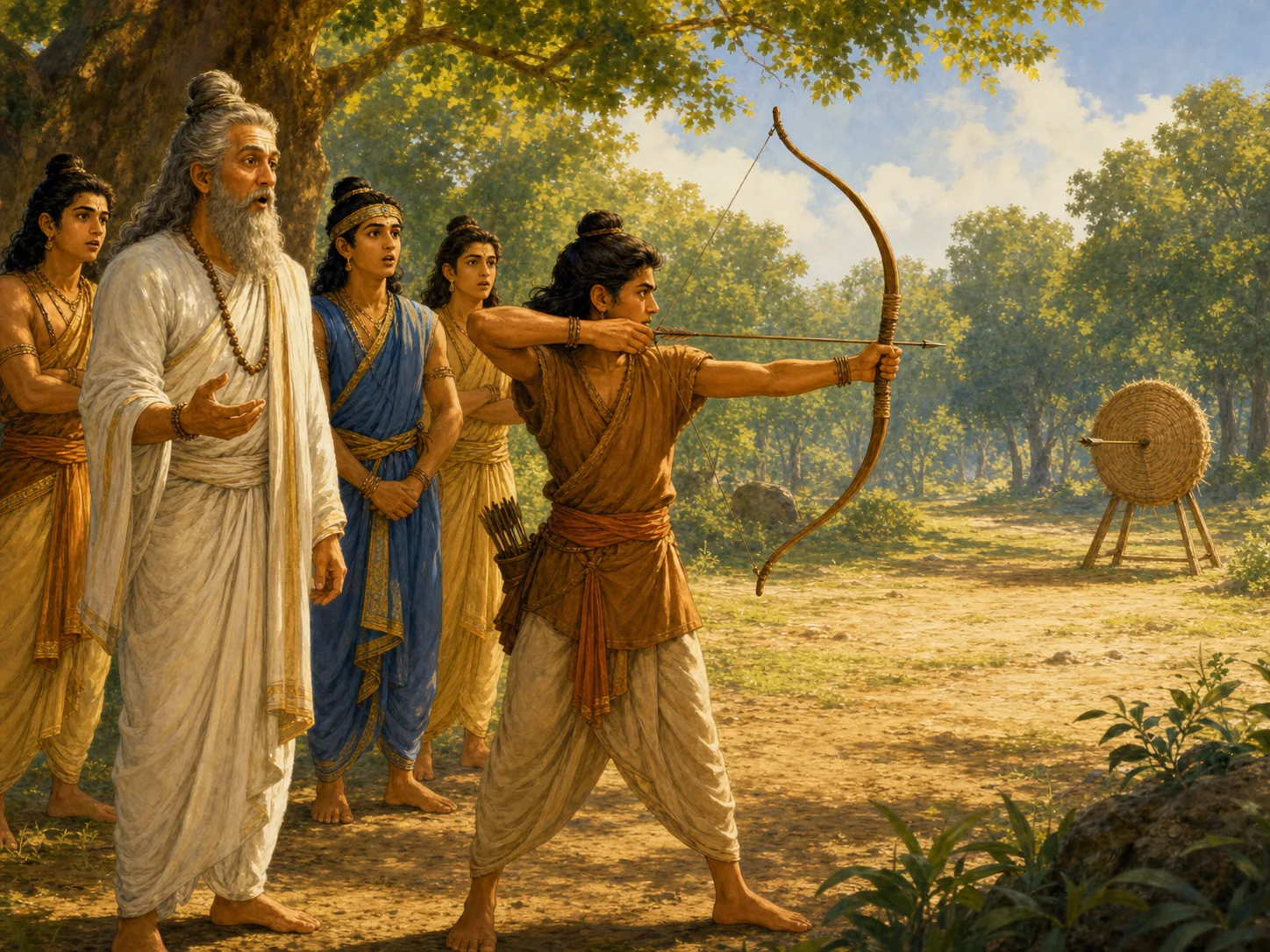
Then came a difficult and painful moment. Dronacharya asked Eklavya for guru dakshina—a traditional gift offered to a teacher—and requested the thumb of Eklavya’s right hand.
Eklavya chose to honor the request. Losing his thumb changed his life and made archery far more difficult. Many people who retell this story reflect on the unfair barriers Eklavya faced and the heavy price asked of him.
Yet Eklavya’s determination did not disappear. He learned new ways to hold his bow and continued practicing with courage. His story is remembered not only for devotion, but also for resilience, self-learning, and the importance of giving every learner a fair opportunity.
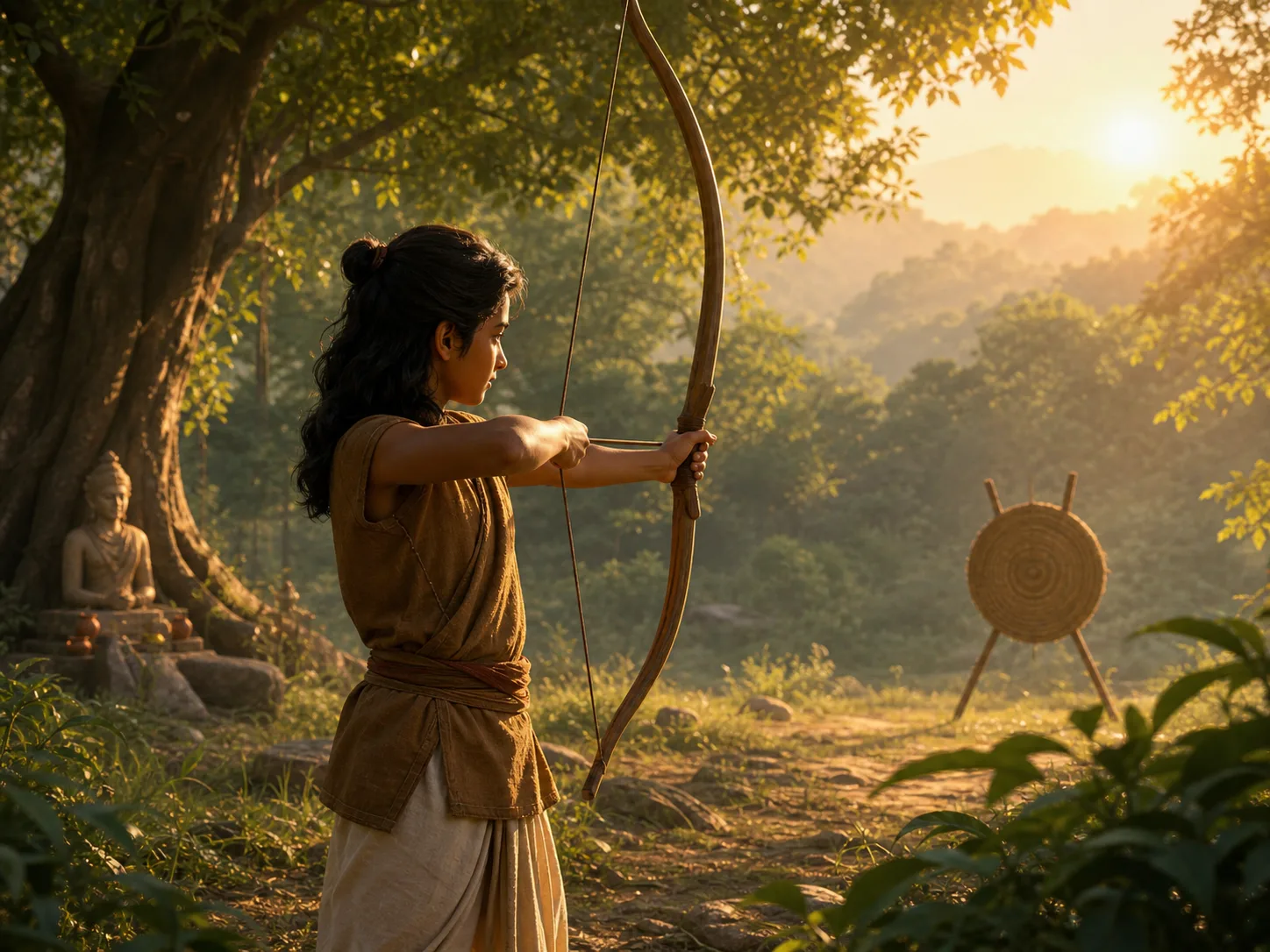
Moral: Never stop learning, even when life is difficult—and help make learning fair for everyone.
“Never stop learning, even when life is difficult—and help make learning fair for everyone.”
New stories in your inbox
One story every week, and a special tale on festivals. Free, always.
Your email goes to our newsletter provider (beehiiv) so we can send you stories. It is not linked to any child's reading on this site. Unsubscribe any time from the email footer.