Yusuf, the Dream, and the Years of Grain
This Kashmiri telling remembers Yusuf as a young man of remarkable integrity and wisdom.
In the royal household, Zulaikha tried to persuade Yusuf to betray the trust placed in him. She showed him splendid rooms and promised comfort if he would do what she asked.
Yusuf refused. “What is hidden from people is not hidden from God,” he said, and turned toward the door.
Angry at being refused, Zulaikha accused Yusuf of wrongdoing. Although he had spoken truthfully, he was sent to prison.
Yusuf did not allow unfairness to make him bitter. He helped the other prisoners, listened to their worries, and became known for understanding dreams. When two prisoners described strange dreams, Yusuf explained their meanings with honesty and compassion.
Years later the ruler woke from a troubling dream. He had seen seven strong stalks of grain followed by seven dry stalks. He had also seen healthy cattle and thin cattle. None of the court advisers could explain what these signs meant.
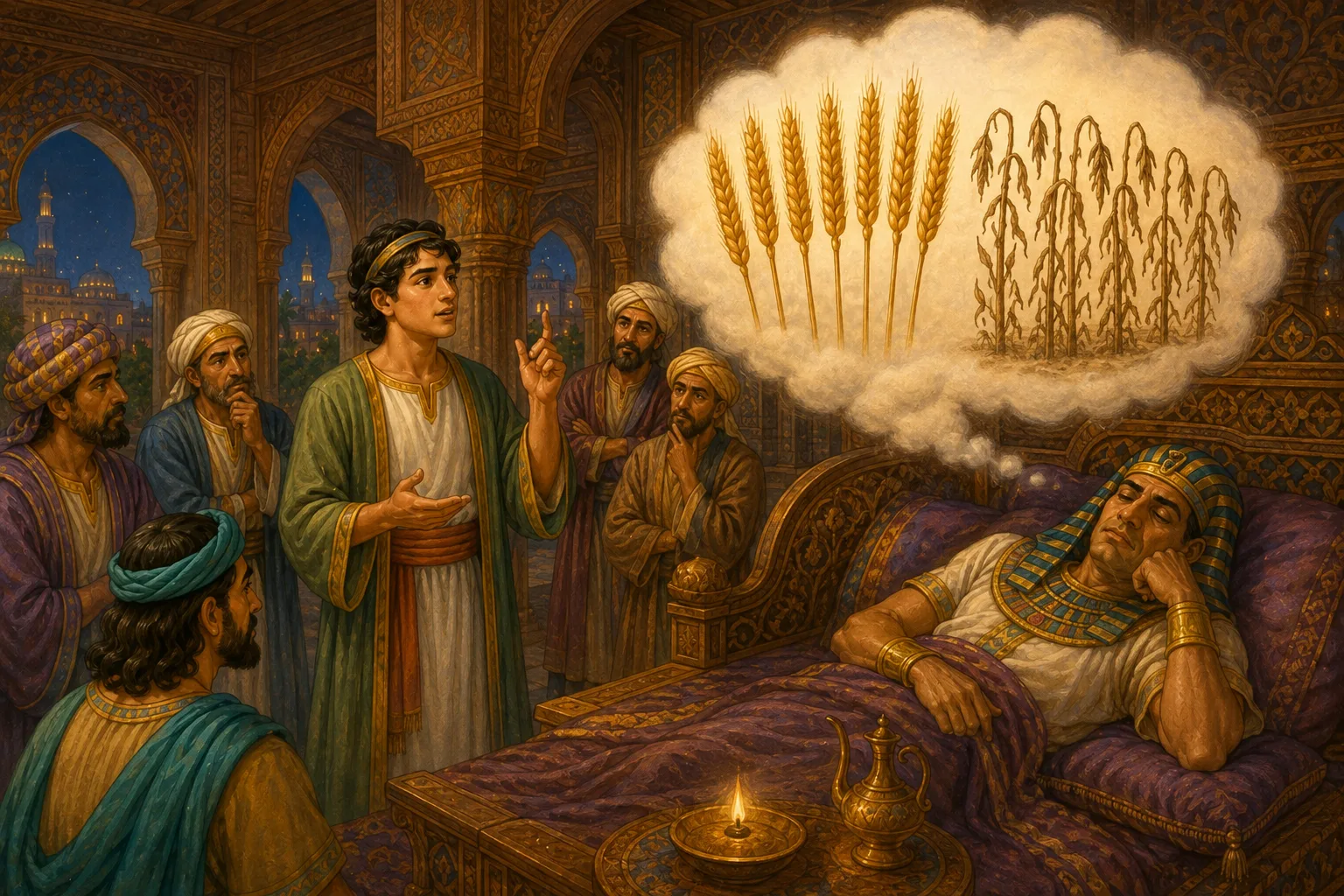
One of the former prisoners remembered Yusuf.
Yusuf was brought from prison and listened carefully. “The land will receive seven years of generous harvests,” he explained. “After them will come seven difficult years. Save grain during the plentiful seasons, and there will be food when the fields give less.”
The ruler asked questions and examined Yusuf's earlier case. The truth of the false accusation was finally recognized, and Yusuf's name was cleared.
The people followed his plan. They repaired granaries, measured the harvest fairly, saved seed for farmers, and made sure poor families were not forgotten. When the lean years arrived, the stored grain sustained the kingdom.
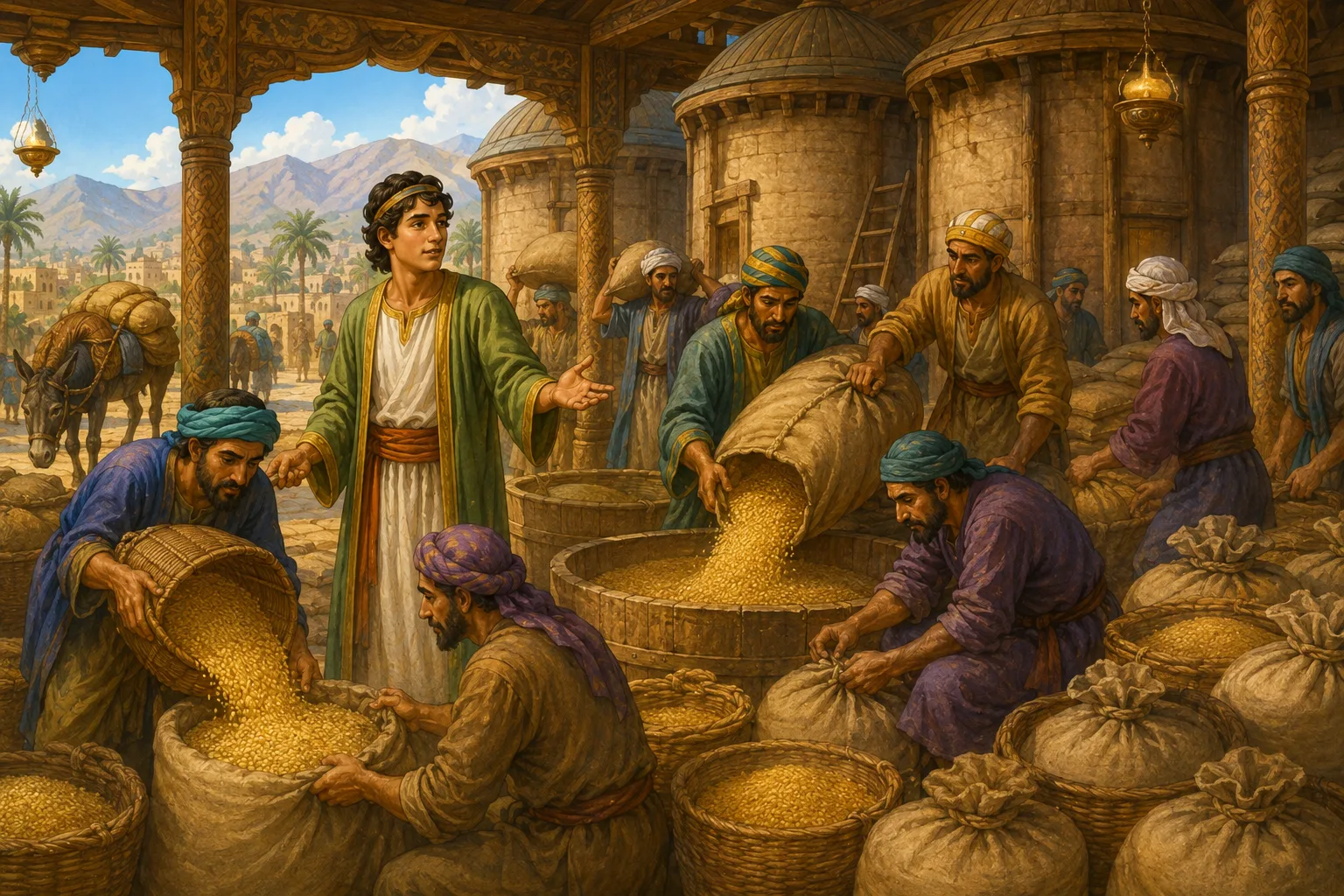
The ruler saw that Yusuf possessed more than the ability to interpret dreams. He had patience, honesty, and concern for everyone. Yusuf was therefore given responsibility for the granaries and later became a trusted leader.
His difficult years had not been wasted. He used what he had learned to protect others from hardship.
“Integrity and wisdom remain valuable even when others treat us unfairly.”
New stories in your inbox
One story every week, and a special tale on festivals. Free, always.
Your email goes to our newsletter provider (beehiiv) so we can send you stories. It is not linked to any child's reading on this site. Unsubscribe any time from the email footer.