The Reed-Flute's Song
Beside a clear stream in Kashmir grew a tall canebrake. The reeds rose together in sunlight, bent together in rain, and whispered to one another whenever the mountain wind passed.
One autumn day a flute-maker came to the stream. He chose one straight reed and carried it to his workshop.
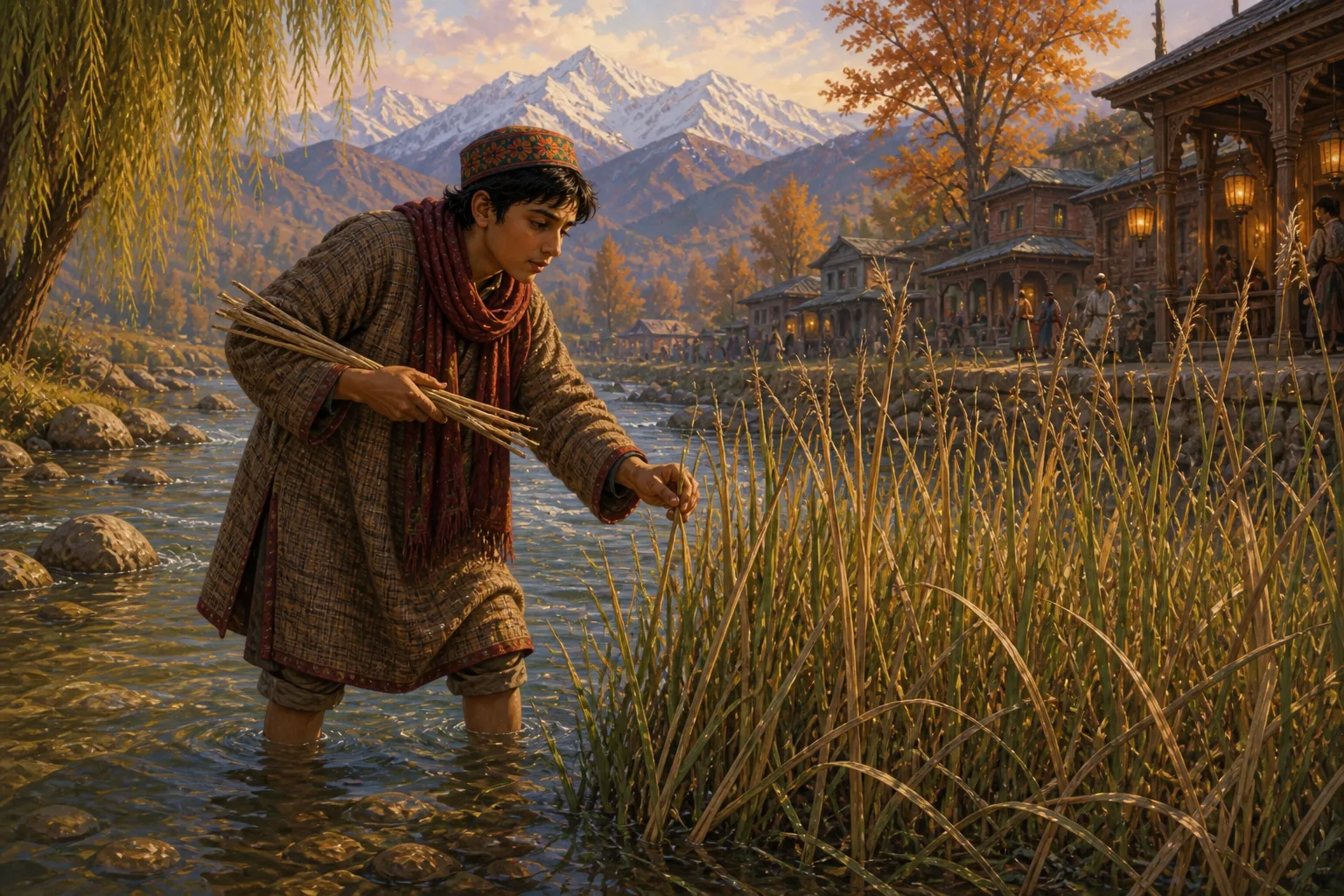
The reed was frightened. It remembered the cool mud around its roots and the birds that nested nearby. The flute-maker worked patiently, smoothing its surface and opening small holes along its length.
“Why have I been taken from my home?” the reed wondered. “Why must I be cut and changed?”
Soon a young musician bought the new reed-flute. He lifted it gently and breathed across its opening.
A low note filled the room.
The flute was astonished. The sound seemed to carry everything it remembered: running water, bending reeds, rain on leaves, and the call of birds above the stream. The musician listened and answered with another breath. A melody began.
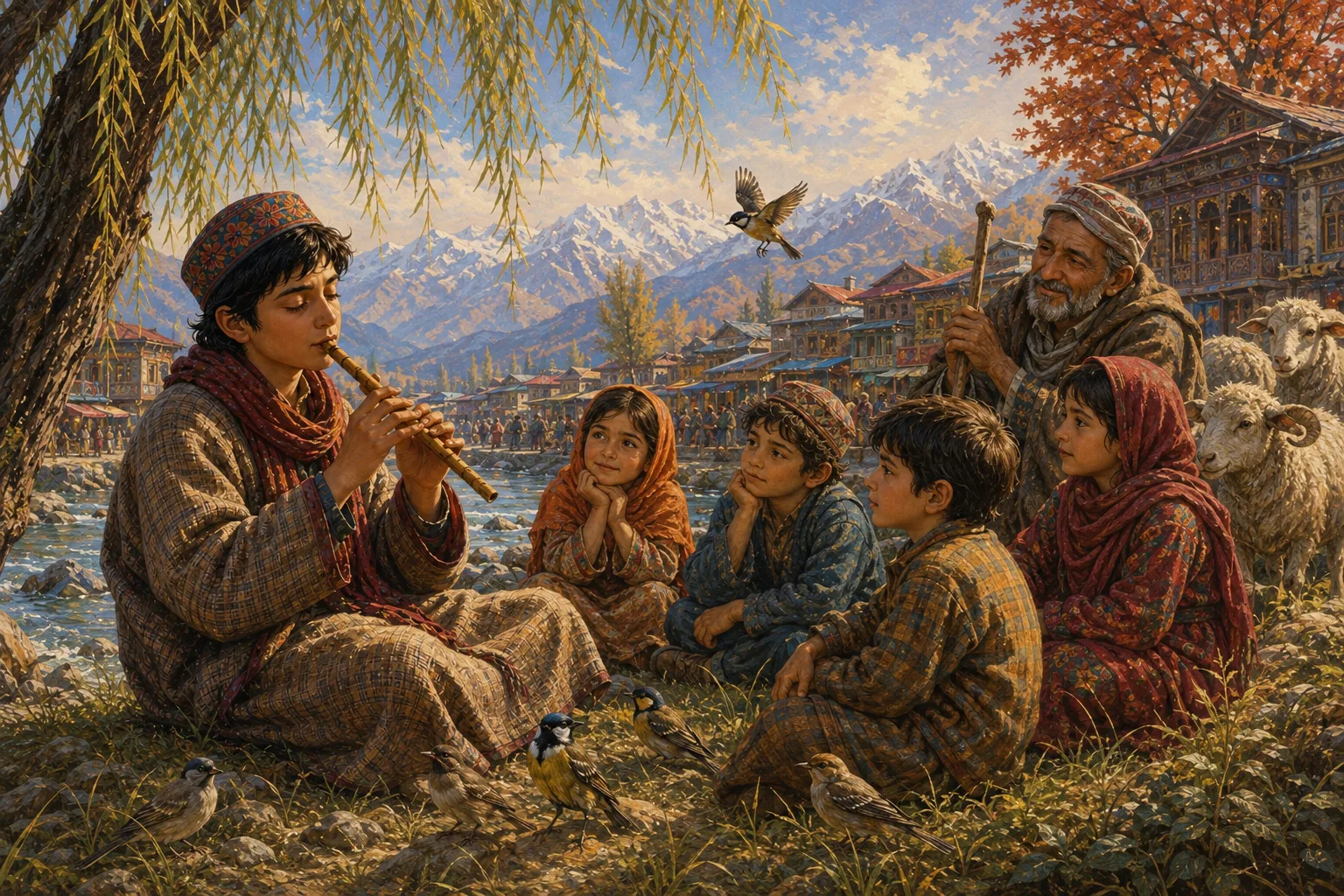
At first the music sounded sorrowful because the flute missed its canebrake. Yet the musician did not force the tune. He carried the flute back to the riverside and sat beneath a willow.
There, among the swaying reeds, he played again.
Children gathering flowers stopped to listen. A shepherd rested beside the path. Even the small birds settled on nearby branches. The flute's longing had not disappeared, but it had become a song that helped others remember places and people they loved.
The reed-flute understood that change need not erase the past. Its music was beautiful precisely because it remembered the stream.
From then on, whenever the musician played, he began with a quiet note of gratitude for the canebrake, the water, the craftsperson, and every breath that gave the flute a voice.
“Remembering where we came from can help us give our gifts with humility.”
New stories in your inbox
One story every week, and a special tale on festivals. Free, always.
Your email goes to our newsletter provider (beehiiv) so we can send you stories. It is not linked to any child's reading on this site. Unsubscribe any time from the email footer.