The Parrot and the Stolen Throne
Long ago, King Bahadur Khan ruled a prosperous land. In the palace garden, he met an old faqir who knew a strange secret: for a little while, a person's spirit could enter another living creature.
“Such knowledge must be used with great care,” the faqir warned. “A wonder becomes dangerous when trust is missing.”
The king shared the secret with his vizier, whom he believed to be loyal. One day, while they were travelling, they found a bright green parrot resting beneath a tree. Curious to see the world through a bird's eyes, the king used the secret and entered the parrot.
At once the parrot opened its wings and flew.
But the vizier had hidden an ambitious plan. While the king's body sat empty, the vizier entered it and rode back to the palace wearing the king's face.
The true king, still a parrot, flew to the old faqir.
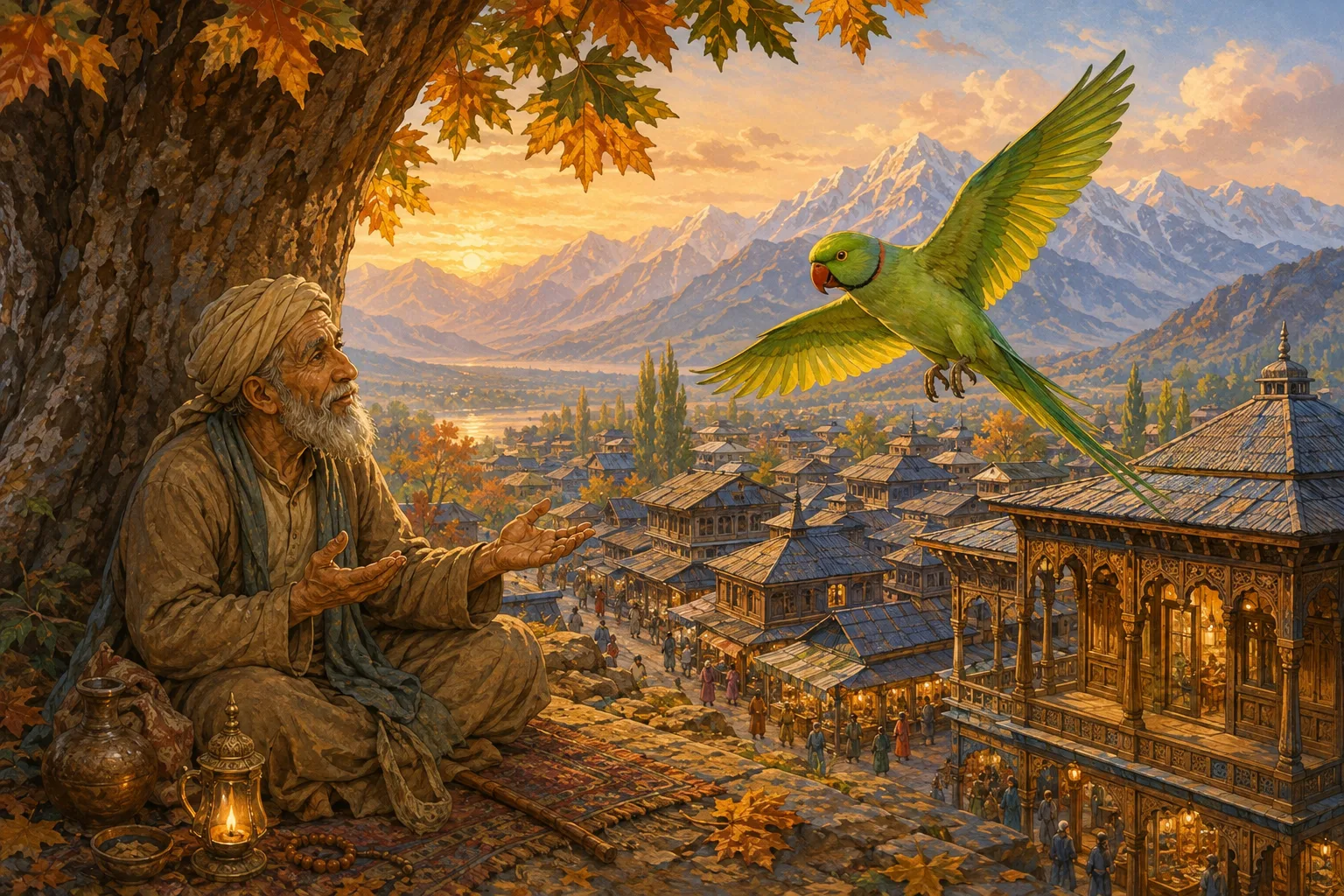
“Anger will not restore what was lost,” the faqir said. “Watch carefully. A dishonest person is often trapped by his own choices.”
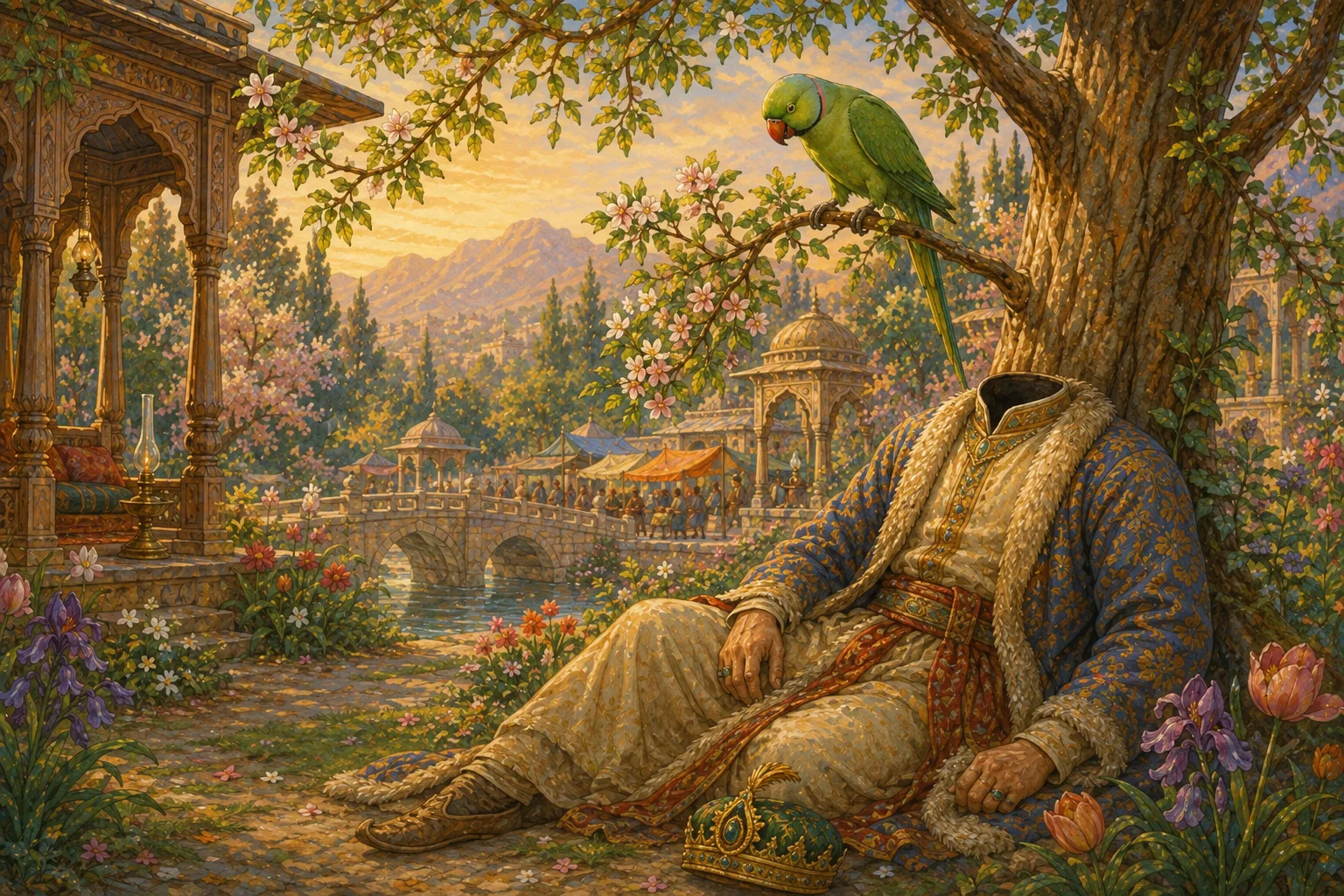
The false king soon went hunting. When a swift deer crossed the path, he wanted to chase it faster than any rider could. Forgetting caution, he used the secret to enter a forest animal and left the king's body unguarded beneath a tree.
The parrot had been watching from the branches. He flew down, returned to his own body, and called the palace guards.
The vizier could no longer hide what he had done. He confessed that he had wanted the throne more than he valued friendship. The king removed him from office and sent him away from the court, but spared his life so that he could learn from his betrayal.
Bahadur Khan thanked the faqir and kept the magic secret thereafter. In the garden, the green parrot lived safely among the flowering trees.
The king never forgot that wisdom may open a door, but only loyalty tells us whether it is safe to walk through.
“Power without loyalty cannot last.”
New stories in your inbox
One story every week, and a special tale on festivals. Free, always.
Your email goes to our newsletter provider (beehiiv) so we can send you stories. It is not linked to any child's reading on this site. Unsubscribe any time from the email footer.