The Farmer's Wife and the Honey-Bee
In a Kashmir village, a farmer's wife worked from the first thaw of spring until the last golden days of autumn. She prepared the soil, scattered seed, guided water through narrow channels, and gathered grain for winter.
The village officers had promised to measure every harvest fairly. But when the crop was ready, they took far more than the agreed share. The farmer's wife saved what she could for her family and still gave a small bowl of grain to neighbours who had none.
Feeling weary and unheard, she walked to the edge of the forest. There she sat among wildflowers beside an old beehive.
A honeybee circled her and said, “Friend, why are you sad?”
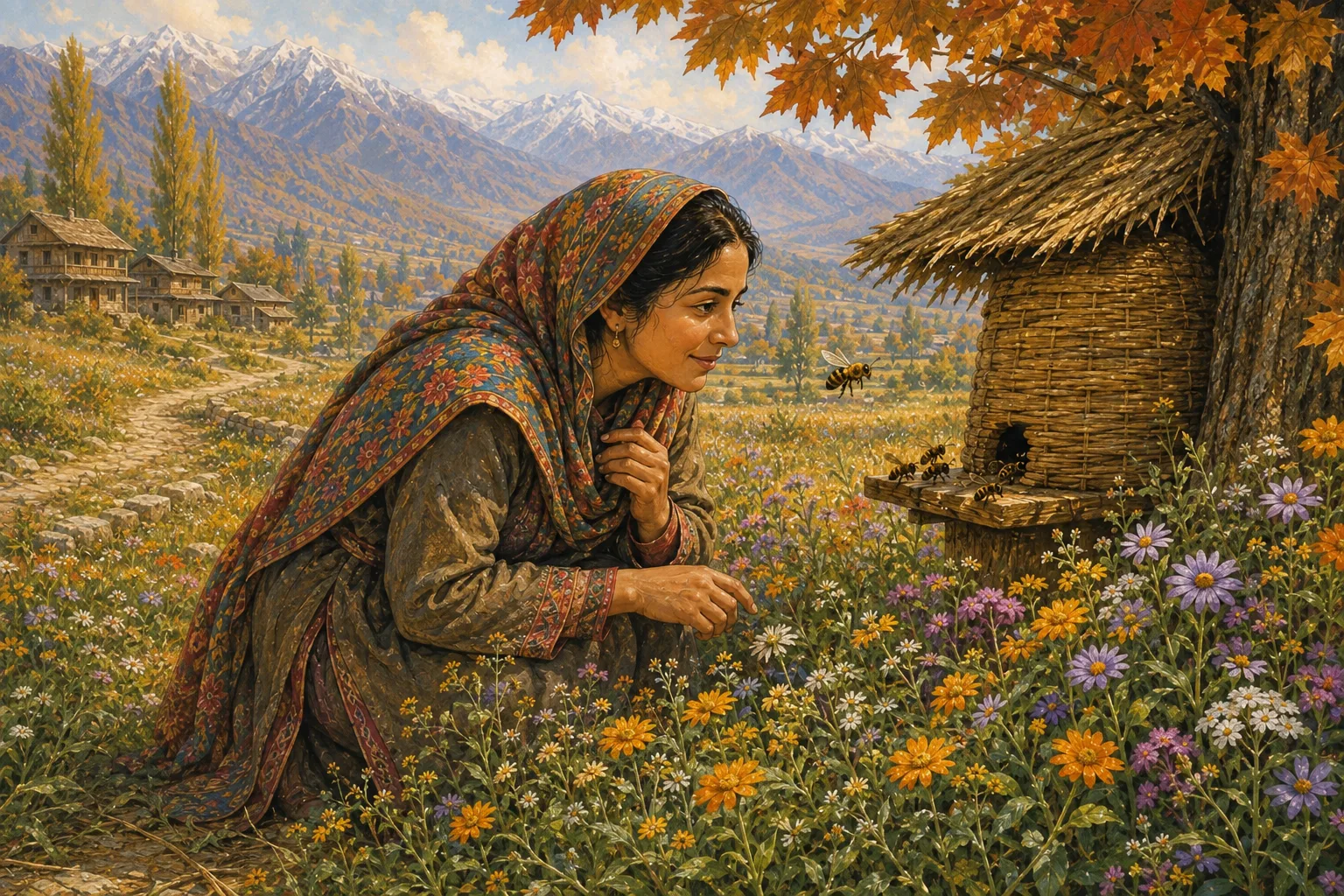
The woman told her story. Then she asked, “And why does your hive sound so empty?”
The bee explained that her colony had gathered nectar from hill after hill. A bear had broken their first home, so a farmer offered them a new hive. But when the combs became full, he took nearly all the honey and left too little for the bees.
“We both worked,” said the woman, “yet others treated our work as if it belonged only to them.”
The bee settled on a yellow flower. “Then let us begin again with fairer rules.”
The farmer's wife invited the bees to build near her field. She placed their hive where bears could not reach it and promised to take only the extra honey after the colony had enough food. In return, the bees carried pollen from flower to flower and helped the crops grow.
The woman also gathered the villagers. Together they asked that harvests be measured in public, with every family present. When the officers saw the whole village standing together, they agreed.
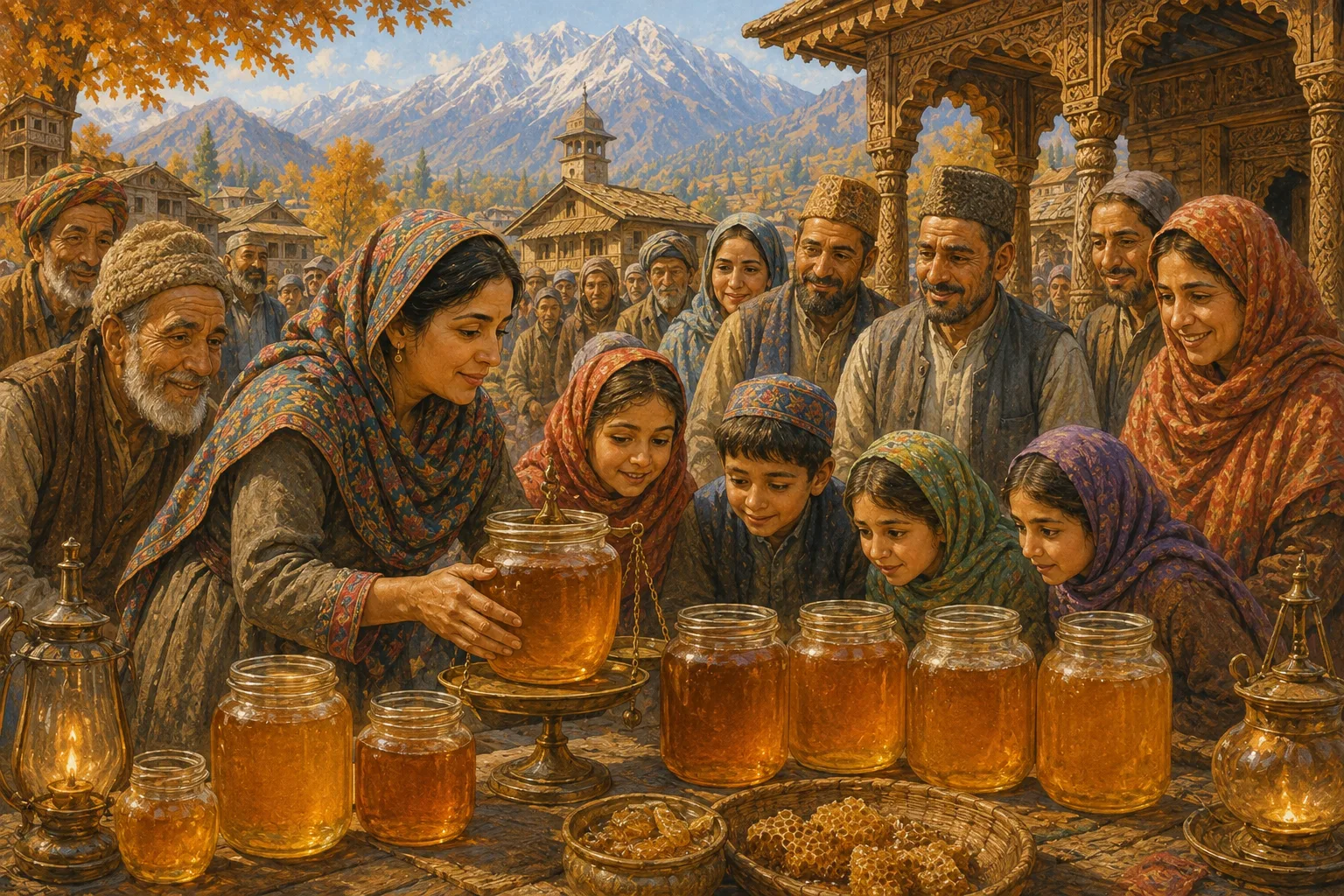
The next autumn, grain filled the baskets and honey shone in the combs. The farmer's wife shared food with neighbours in need, and the bees kept enough for the cold months.
Neither had forgotten hardship. Instead, they had turned it into a promise: those who produce life's sweetness should never be left without their fair share.
“Work and generosity deserve protection from greed.”
New stories in your inbox
One story every week, and a special tale on festivals. Free, always.
Your email goes to our newsletter provider (beehiiv) so we can send you stories. It is not linked to any child's reading on this site. Unsubscribe any time from the email footer.