Ramanujacharya and Lord Jagannath
Sri Ramanujacharya was the great Sri Vaishnava teacher of the eleventh and twelfth centuries. He travelled to sacred places across India while teaching devotion, surrender, and the philosophy of Vishishtadvaita. Historical traditions remember his visit to Puri, the growth of a Sri Vaishnava presence there, and his association with the Emar or Embar Matha. His era also overlaps with the Eastern Ganga king Anantavarman Chodaganga Deva, with whom the construction history of the great present-day Jagannath temple is associated.
Ramanujacharya was accustomed to the carefully organized Vedic and Pancharatra Agama rules followed in South Indian temples. In Puri he encountered the ancient and distinctive service tradition through which local sevayats worshipped Lord Jagannath, Balabhadra, and Subhadra. It was more than a single written procedure: generations of servant families carried particular responsibilities connected with food, clothing, festivals, and every part of the deities' daily routine.
Ramanujacharya asked the local king, Chodaganga Deva, to change the temple's worship arrangements according to the strict Vaishnava rules he prescribed. The king agreed, and it was announced that worship would begin under the new rules.
The temple's local sevayats and priests strongly opposed this change because they were attached to their traditional and intimate form of worship, which had continued for centuries. They served the Lord not only as a royal deity but as a member of their own household—waking him, feeding him, dressing him, and arranging his rest.
Puri and Sri Vaishnava traditions then tell a celebrated devotional story. On the morning when worship under the new arrangement was to begin, the king and everyone else waited for Ramanujacharya, but he did not arrive. It is said that during the night Lord Jagannath appeared in Ramanujacharya's dream and rebuked him: “Who are you to change the way I am worshipped? You cannot understand the love and relationship between my devotees and me, so do not trouble them.”
According to the devotional account, Lord Jagannath asked his vehicle Garuda to carry the sleeping Ramanujacharya far from Puri to Kurma Kshetra—present-day Srikurmam in Andhra Pradesh. Srikurmam is an ancient sacred place associated with Vishnu's Kurma incarnation.
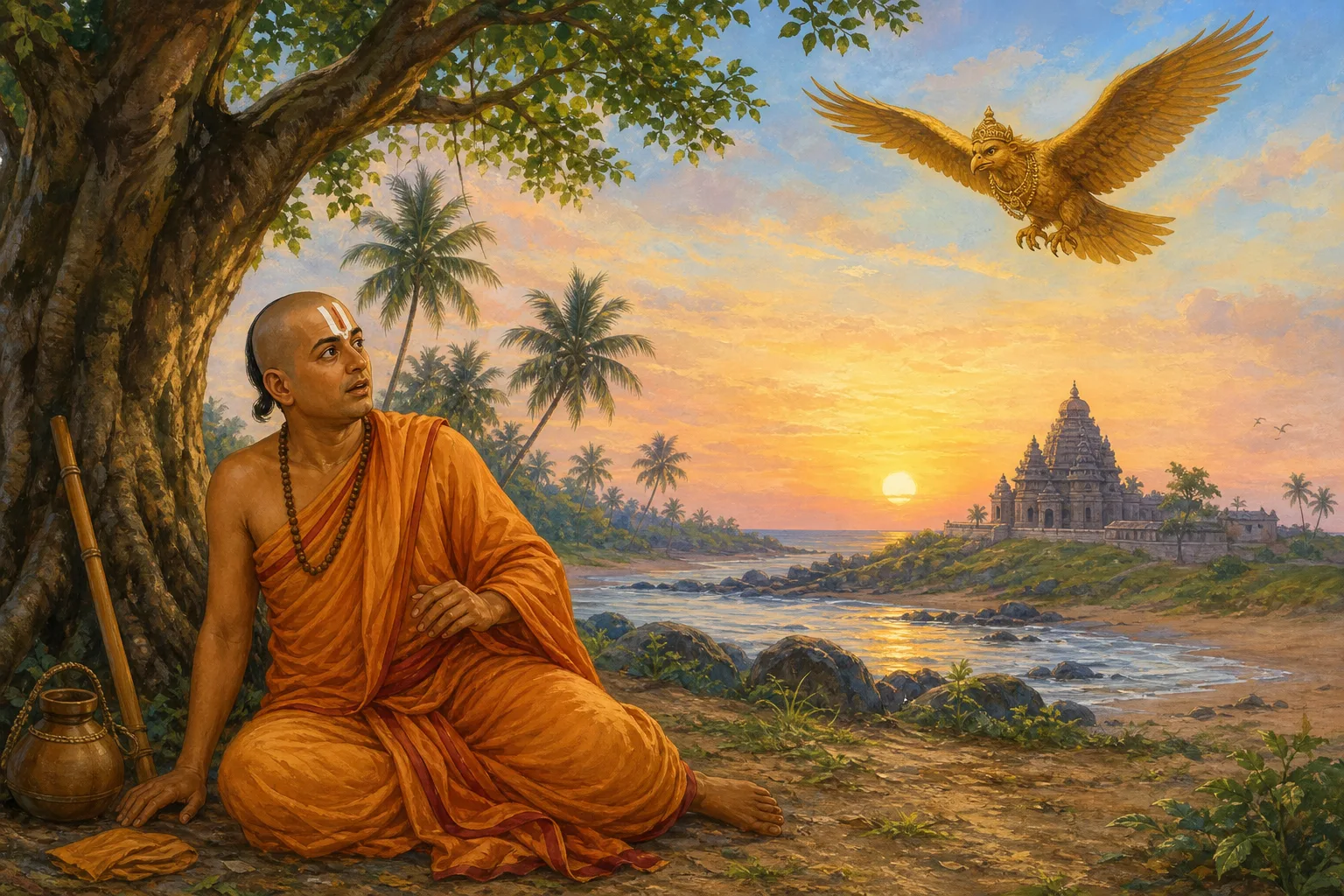
When Ramanujacharya opened his eyes in the morning, he found himself far from Puri. He understood the Lord's wish: scriptural discipline has its own importance, but it is not right to change a living tradition of service without understanding the intimate bond between a sacred place, its devotees, and the Lord they serve.
The miraculous journey is a sacred account preserved in guru tradition and Puri's devotional memory, rather than a documented historical event. Ramanujacharya's connection with Puri nevertheless has a significant historical setting. Emar Matha and other Sri Vaishnava institutions bear witness to the presence of South Indian Vaishnavism, and his respected influence is remembered within Puri's richly varied religious culture. The story therefore ends not in rivalry, but with a lesson in humility and respect among different forms of devotion.
New stories in your inbox
One story every week, and a special tale on festivals. Free, always.
Your email goes to our newsletter provider (beehiiv) so we can send you stories. It is not linked to any child's reading on this site. Unsubscribe any time from the email footer.