How Sri Radha Raman Appeared
Vrindavan tradition remembers Gopal Bhatta Goswami as a saint devoted to loving worship. While bathing in Nepal's Gandaki River, he received twelve sacred Shaligram stones in his water pot and brought them with reverence to Vrindavan.
Every day he bathed the stones, offered flowers and food, and worshipped them with careful devotion. During the month of Kartik, a devotee brought beautiful little garments and ornaments for the Lord.
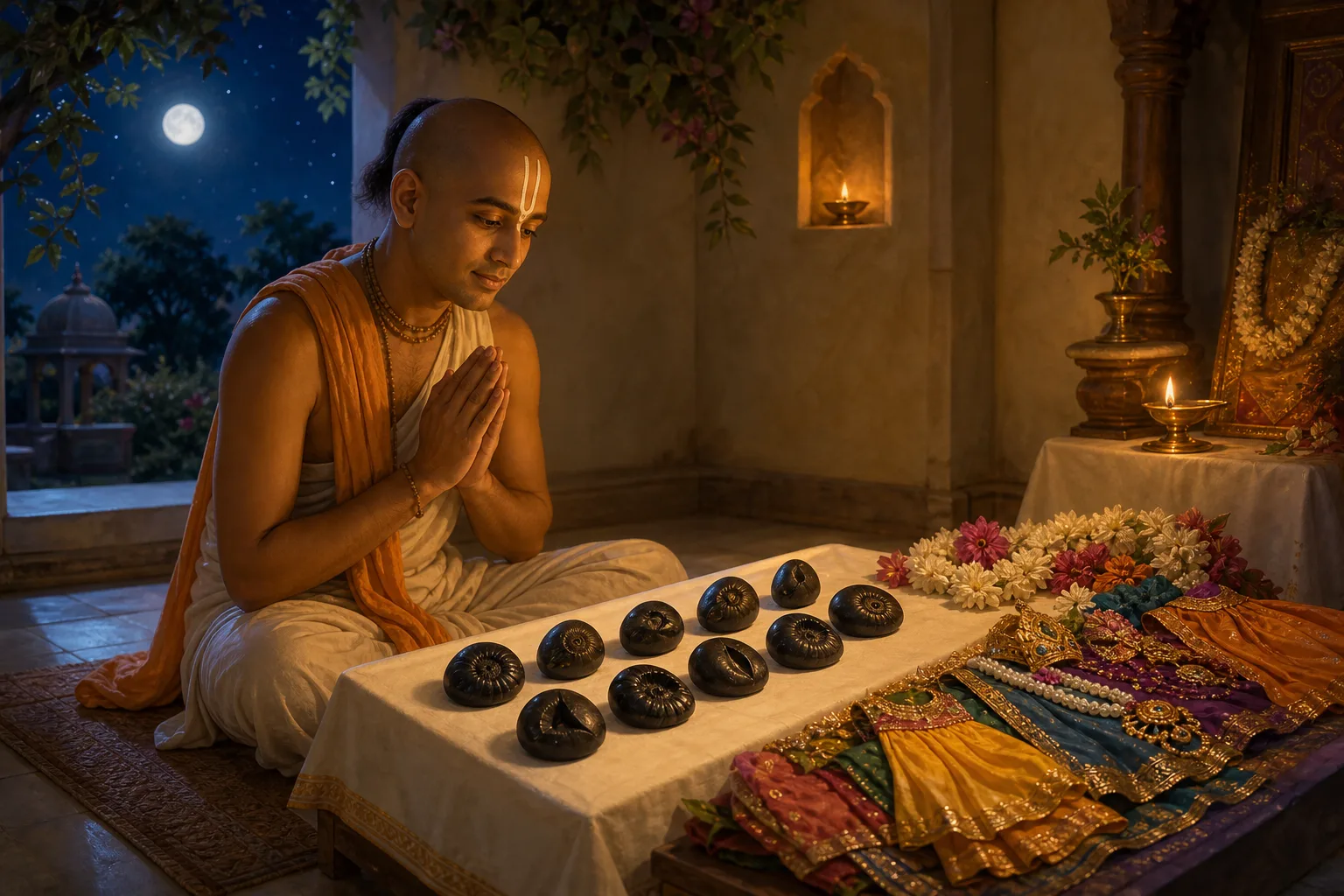
Gopal Bhatta was grateful, yet he wondered how he could dress the rounded Shaligram stones like a standing deity. A deep longing arose in his heart to serve the Lord in a form that could wear the devotee's loving gifts.
That night he prayed with folded hands: “My Lord, if you wish, please reveal a form in which I may offer these clothes and ornaments.” He then rested, leaving his prayer entirely in the Lord's care.
The next morning, devotional tradition says, one of the Shaligram stones had manifested as an enchanting small deity of Krishna in a graceful threefold-bending posture. Gopal Bhatta was overcome with wonder and joy.
Rupa Goswami and other saints came to behold the self-manifested deity and gave him the name Sri Radha Raman—Krishna who delights Radha. The beloved Radha Raman temple in Vrindavan continues to preserve this tradition of intimate, loving service.
“Loving service transforms longing into a living experience of grace.”
New stories in your inbox
One story every week, and a special tale on festivals. Free, always.
Your email goes to our newsletter provider (beehiiv) so we can send you stories. It is not linked to any child's reading on this site. Unsubscribe any time from the email footer.