A Dhanwar Farmer and His Crow
In the forest country of Madhya Pradesh lived a Dhanwar farmer and his family. He grew kodo and kutki millets, sorghum, and rice. His companion was a glossy black crow who flew far and noticed the smallest changes in the land.
One hot season, the crow saw shrinking ponds, leaves yellowing early, and clouds gathering over the hills.
“The plains may receive little water this year,” he warned. “But the signs say rain will reach the high slopes.”
The farmer listened. He shaped small terraces on a hillside, enriched the soil, and planted several kinds of grain.
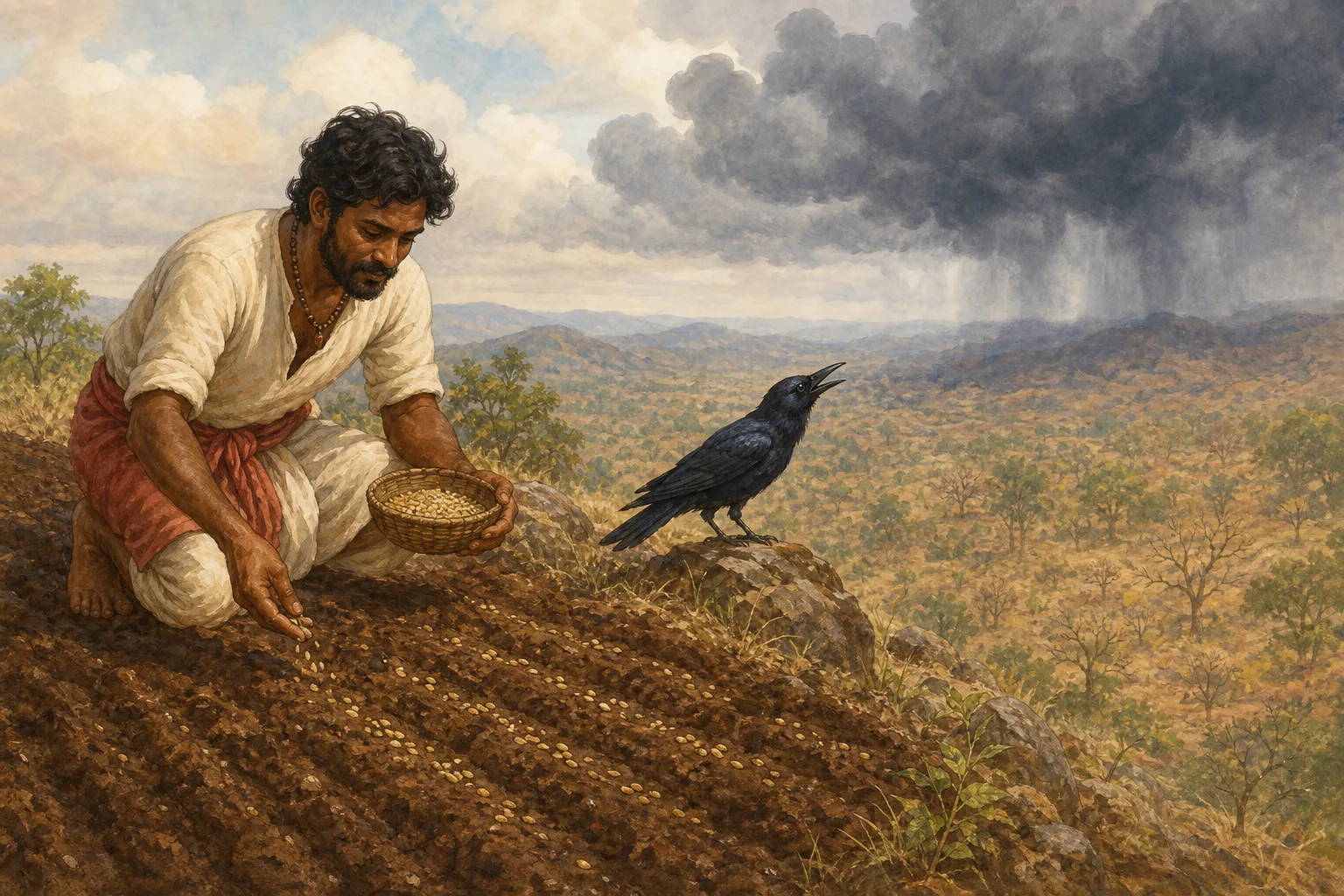
The rain arrived. Many fields below remained thirsty, but water rested behind the farmer’s little terraces. Green shoots covered the slope.
Weeks later, the crow discovered clusters of insect eggs beneath the leaves.
“Soon hungry pests will hatch,” he said.
The farmer did not cover his field with harmful poison. He protected nearby shrubs, set out small bowls of water, and welcomed mynas and other insect-eating birds. The birds found plenty to eat, and the crop remained healthy.
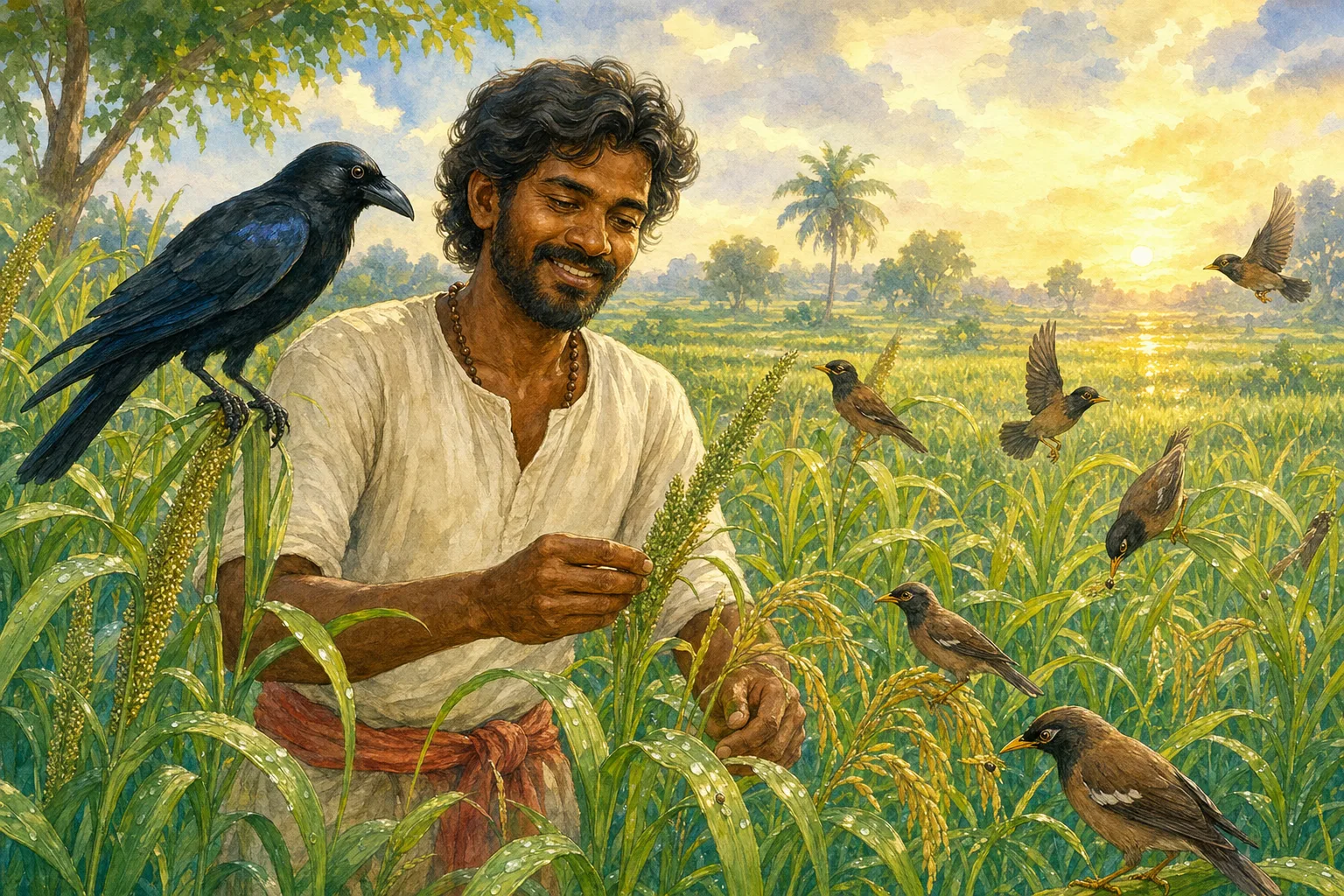
The next season, the farmer began noticing the changing wind, the flight of birds, and the moisture in the soil for himself. The crow no longer needed to explain every sign.
At harvest time, the hillside was rich with kodo, kutki, sorghum, and rice. The farmer saved the first handful of grain for his friend.
“You protected my crop,” he said.
“We protected it together,” replied the crow. “I noticed the signs, and you acted in time.”
Other farmers learned from them too. They saw that caring for the land begins with watching it closely.
“Careful observation and timely preparation can protect what we nurture.”
New stories in your inbox
One story every week, and a special tale on festivals. Free, always.
Your email goes to our newsletter provider (beehiiv) so we can send you stories. It is not linked to any child's reading on this site. Unsubscribe any time from the email footer.