The Story of Amarnath
High in the Kashmir Himalayas lies the sacred cave of Amarnath. Snowy mountains surround it, and every year pilgrims travel through the beautiful but demanding landscape to offer their prayers.
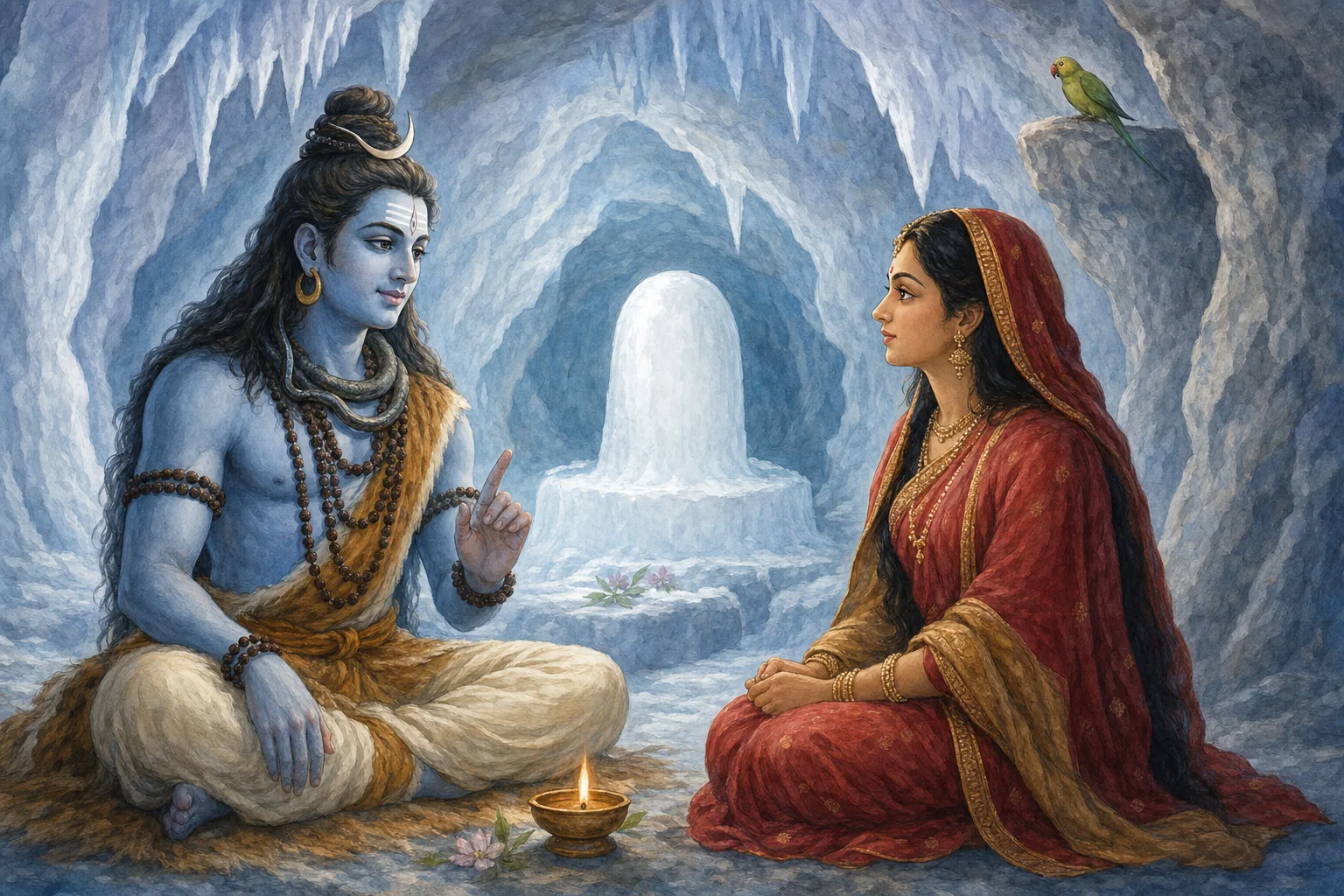
According to a beloved tradition, Goddess Parvati once asked Lord Shiva to explain the mystery of life, death, and immortality. Shiva knew that this was profound knowledge, to be shared with great care. When Parvati continued to ask with sincere determination, he agreed to tell her the Amar Katha—the teaching of immortality.
Shiva chose a lonely cave in the Himalayas where they could speak without interruption. Together, Shiva and Parvati began their journey through the mountains.
The pilgrimage tradition connects places along the route with things Shiva left behind. At Pahalgam, he left Nandi, his faithful bull. At Chandanwari, he released the moon from his matted hair. Near Lake Sheshnag, he left the snakes. At Mahagunas Mountain, he left Ganesha, and at Panjtarni he set aside the five elements—earth, water, fire, air, and space.
At last, Shiva and Parvati reached the quiet cave. When Shiva was certain that they were alone, they sat down together and he began the sacred teaching.
Parvati listened attentively and answered from time to time so Shiva would know that she was following his words. One telling says that, as the teaching continued, she became sleepy. Hidden high on a rock ledge, a small green parrot named Shuka had also been listening. When Parvati grew quiet, Shuka began making the answering sound in her place.
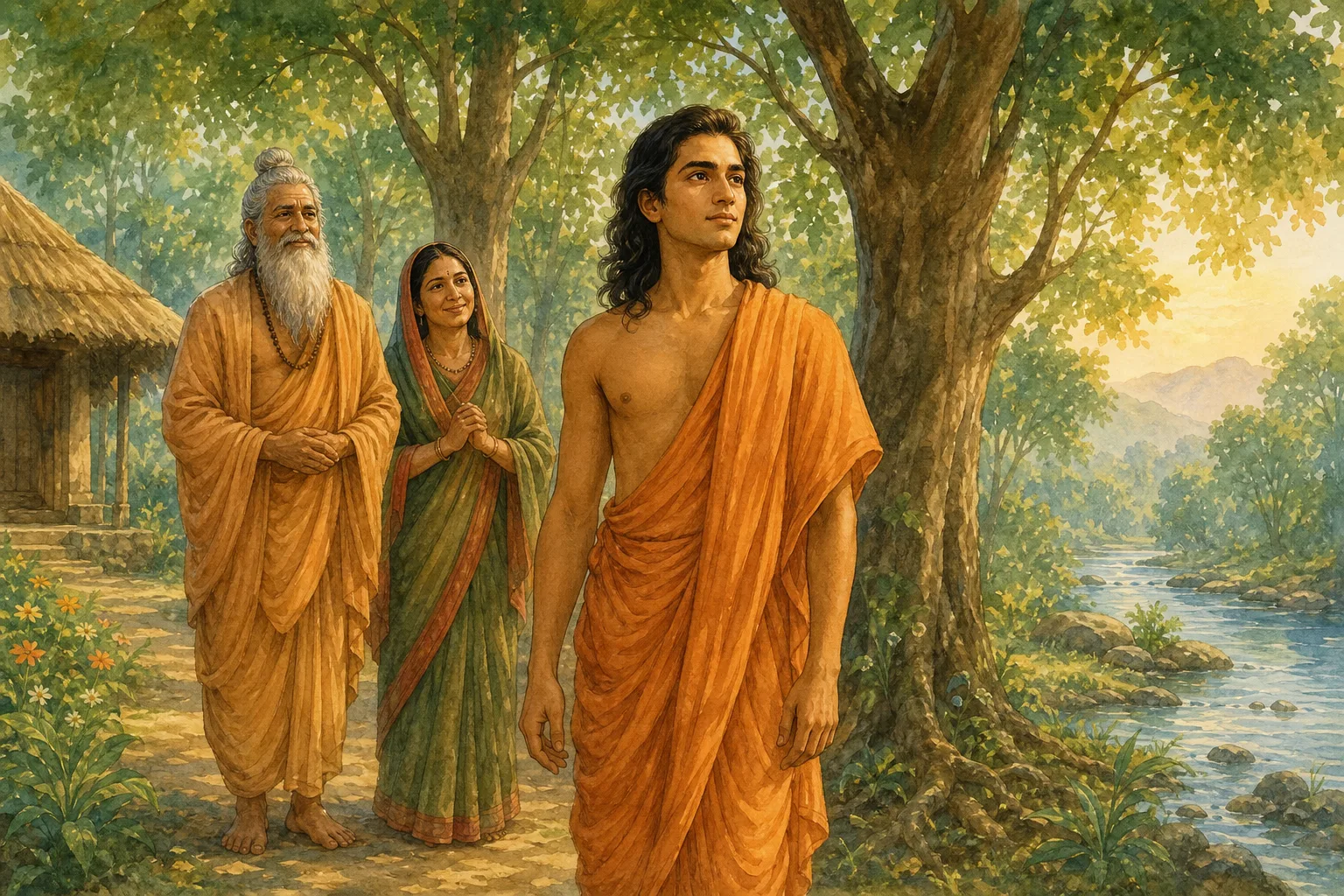
When Shiva discovered the unexpected listener, Shuka flew away. The tradition says that after a long journey the parrot reached the forest hermitage of the sage Vyasa and entered the presence of Vyasa's wife, Vatika, in a subtle form.
In this telling, the child remained within his mother for twelve years because he feared the power of maya, the illusion that makes the temporary world seem permanent. Lord Krishna assured him that maya would not bind him. Only then did he enter the world.
The child became known as Shukadeva, the wise son of Vyasa. Having heard the teaching of immortality, he grew into a sage remembered for spiritual freedom and deep wisdom.
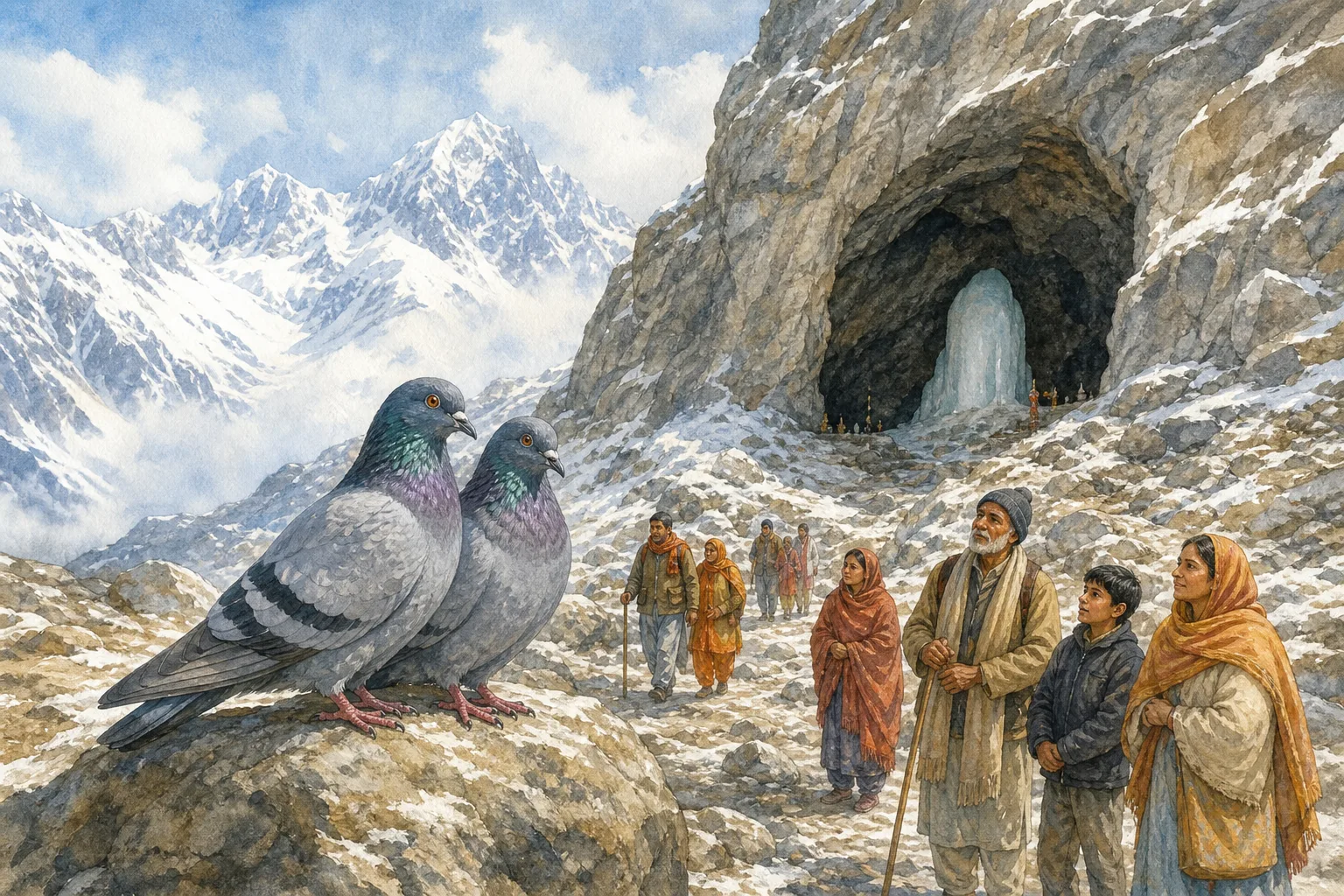
Another Amarnath tradition remembers a different pair of listeners. Before beginning the Amar Katha, Shiva made sure that the cave seemed empty. But beneath his seat, two pigeon eggs were hidden. The eggs remained there throughout the sacred teaching.
When the story ended, the eggs hatched. Because the young pigeons had heard the complete teaching, devotees say they received the blessing of long life. Some pilgrims still speak of seeing a pair of pigeons near the holy cave and remember them as a sign of this tradition.
Many stories are told about Amarnath, and different communities may remember their details in different ways. Together, they express reverence for the cave, the Himalayan pilgrimage, and the search for wisdom that rises above fear.
“Sacred wisdom should be received with attention, humility, and respect.”
New stories in your inbox
One story every week, and a special tale on festivals. Free, always.
Your email goes to our newsletter provider (beehiiv) so we can send you stories. It is not linked to any child's reading on this site. Unsubscribe any time from the email footer.