The Clever Daughter-in-Law
In a village in Madhya Pradesh lived a merchant’s family. His daughter-in-law was quiet, kind, and quick-minded.
One day she was drawing water from a distant well when four tired travelers arrived. They asked for a drink. She had only a heavy clay pot, no cup, and the road was deserted.
“Walk with me to my home,” she said. “There I can serve everyone properly. But I will give each of you a riddle for the journey.”
The first said, “I am a traveler.”
“Which two travelers circle the world every day?” she asked.
The second called himself poor.
“Which two things grow richer when they are shared?” she asked.
The third said he knew very little.
“Which two teachers need no books?” she asked.
The fourth laughed. “Perhaps I am a fool.”
“Then tell me,” she replied, “what are two signs of foolishness?”
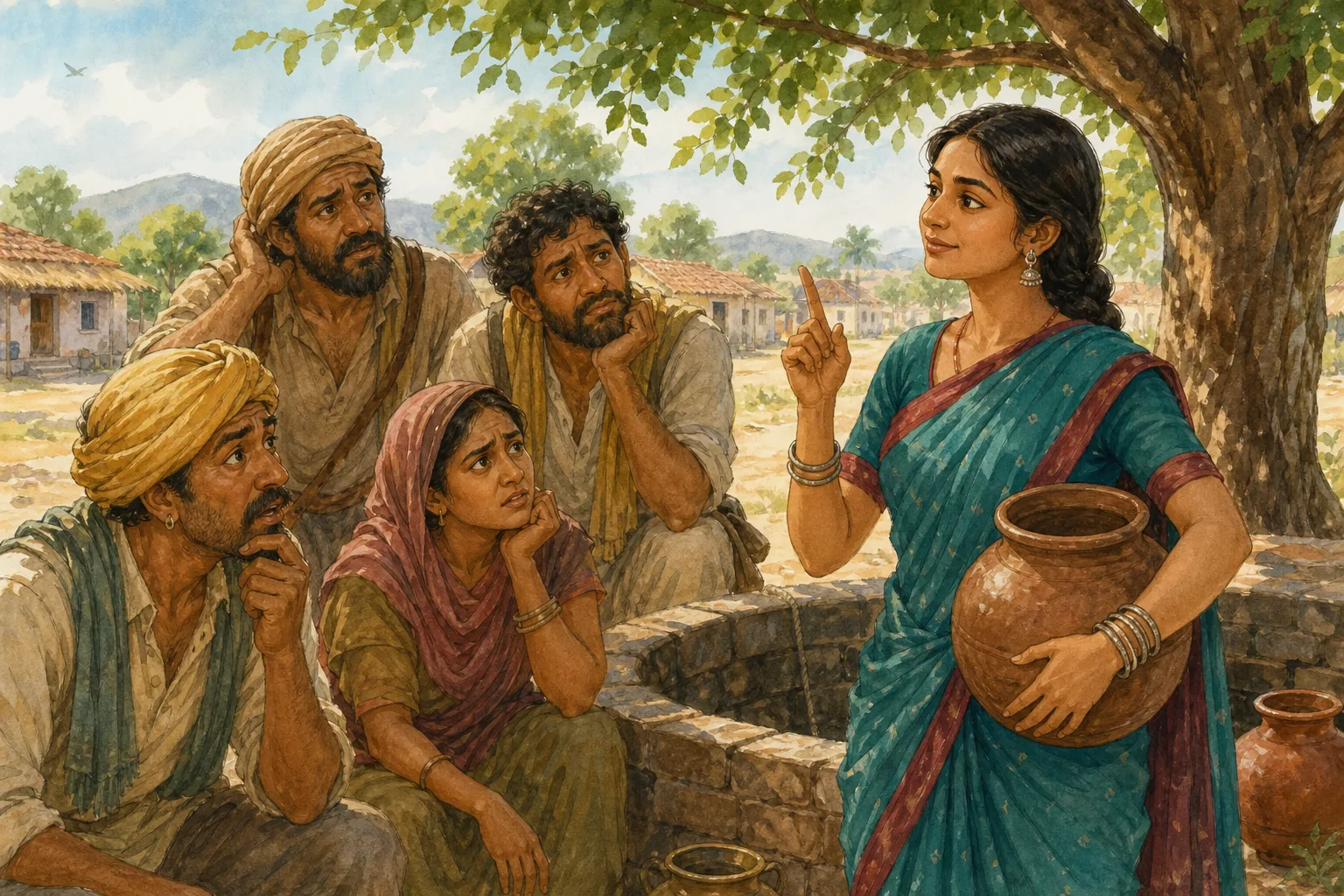
At home, she gave everyone water and a shady place to rest. The travelers asked for the answers.
“The Sun and Moon are the two travelers,” she said. “Kindness and knowledge grow when shared. The earth and experience teach without books. And two signs of foolishness are accusing someone before listening and deciding a matter before checking the truth.”
From another courtyard, her father-in-law had seen only strangers entering the house. Without asking what had happened, he complained to the king.
The king summoned the young woman. She calmly explained the whole event and repeated her final riddle.
Her father-in-law realized that he had accused her without asking a question. The king realized that he too had acted before learning the facts.
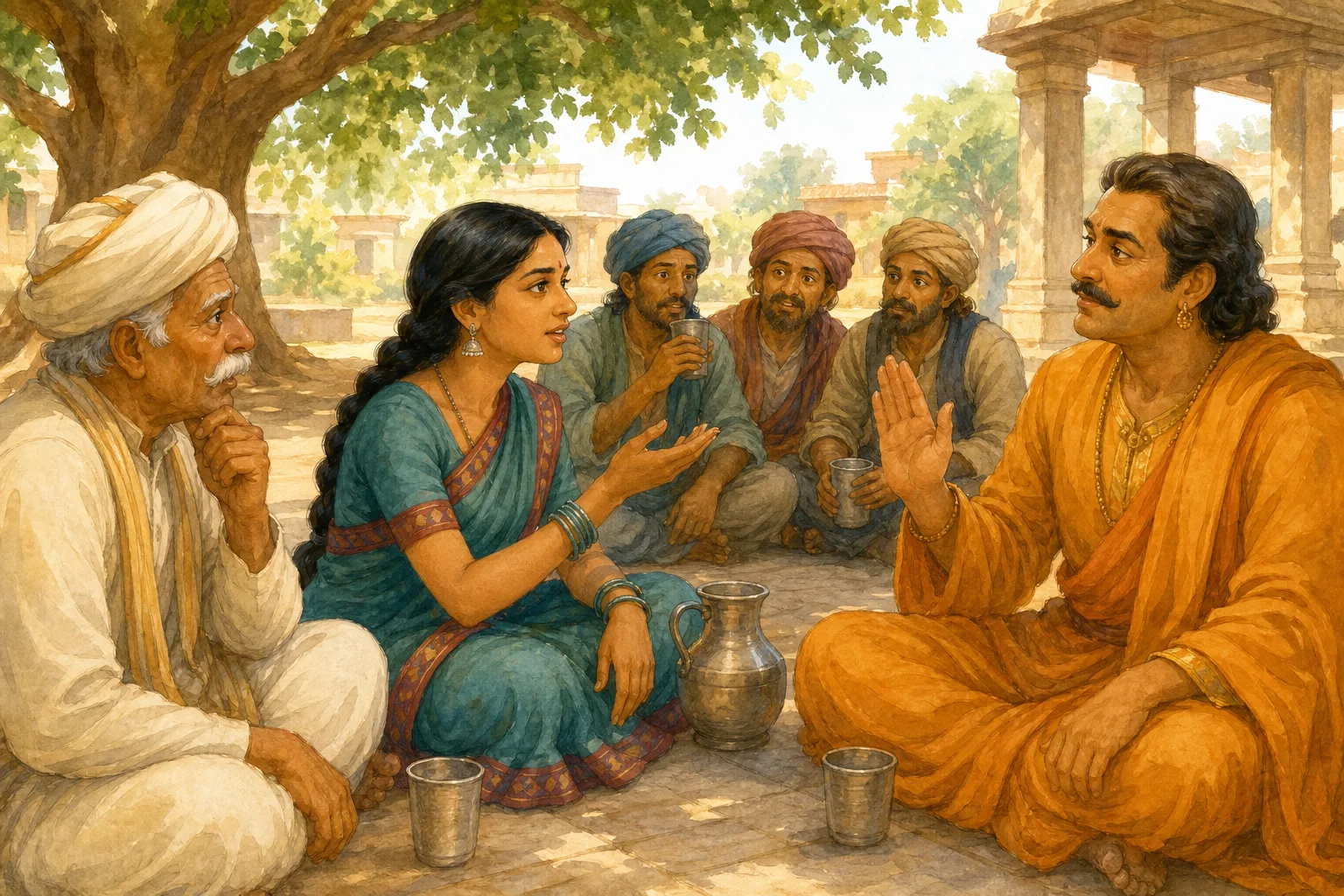
“Your riddle has shown both of us the answer,” said the king.
Her father-in-law apologized. The travelers thanked her for her wisdom and hospitality.
From that day forward, the village council followed a new rule: hear the whole story before giving judgment.
“Good judgment begins by listening before reaching a conclusion.”
New stories in your inbox
One story every week, and a special tale on festivals. Free, always.
Your email goes to our newsletter provider (beehiiv) so we can send you stories. It is not linked to any child's reading on this site. Unsubscribe any time from the email footer.