The Brave Queen of Jhansi
In the nineteenth century, a girl named Manikarnika grew up with a lively mind and a fearless spirit. She learned to ride horses and trained in skills that helped her become strong, disciplined, and confident.
As a young woman, she married the Maharaja of Jhansi and became known as Rani Lakshmibai. She cared deeply for Jhansi and worked to protect its people.
After the Maharaja died, the British East India Company refused to recognize her adopted son as the next ruler and moved to annex Jhansi. Lakshmibai defended her family's rights and the future of her kingdom.
When conflict reached Jhansi during the uprising of 1857, she organized the city's defenses. She listened to advisers, encouraged her people, and prepared to face a powerful army.
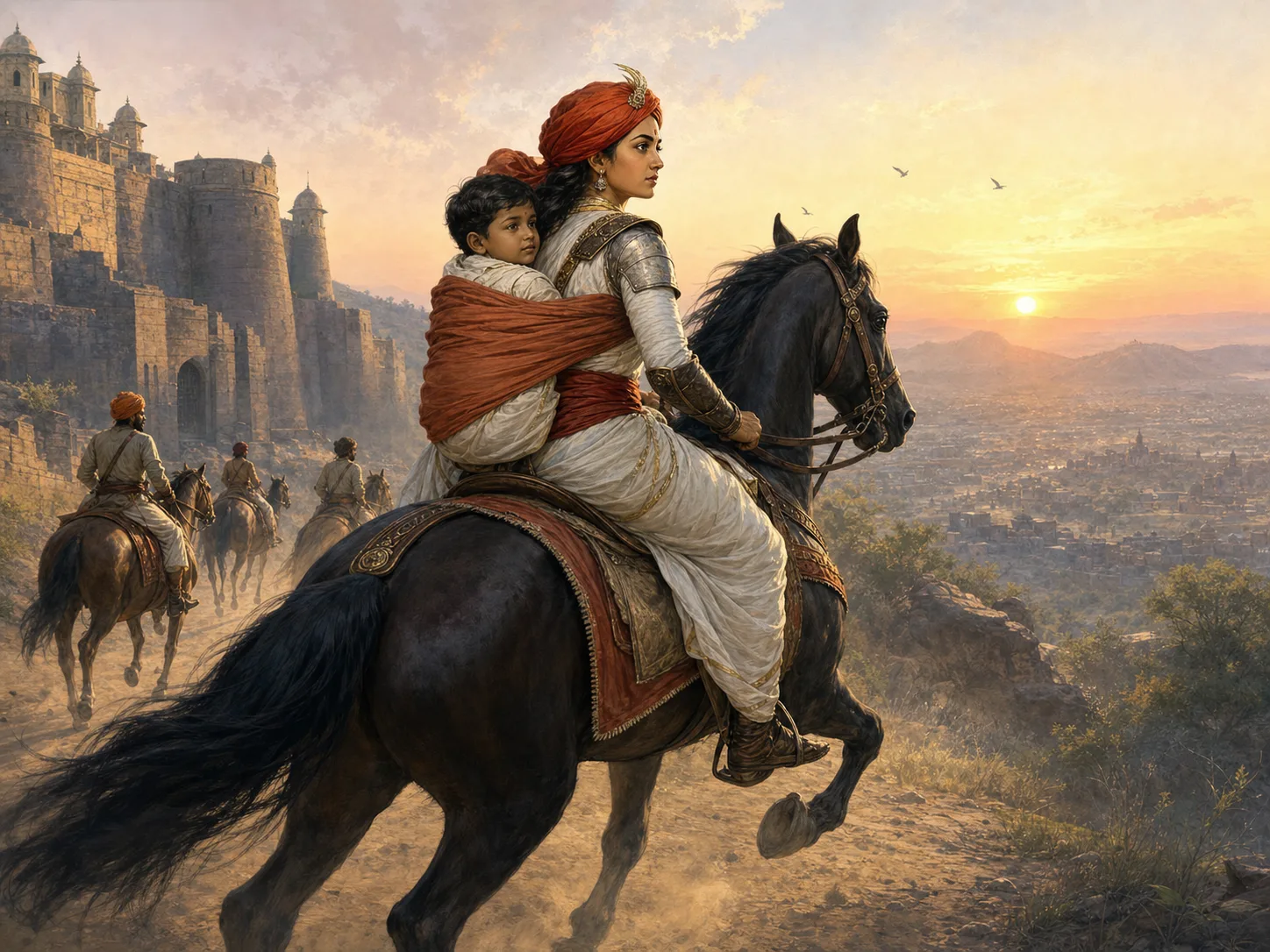
Lakshmibai rode with courage and led her forces during a dangerous time. When the British army surrounded Jhansi, she fought from the fort walls for days. Then, on a dark night, she rode out through the enemy lines with her young adopted son tied securely to her back, and carried the fight on to Kalpi and then to Gwalior.
What mattered most was her resolve: she would not abandon the people and responsibilities entrusted to her.
In June 1858, at Gwalior, Rani Lakshmibai fell in battle against the British forces, sword in hand. She was only twenty-nine, yet her leadership made a lasting impression.
Today, people across India remember the Queen of Jhansi as a symbol of courage, determination, and resistance to injustice. Her story reminds us that bravery grows from responsibility, preparation, and care for others.
Moral: Be brave and stand up for what is right.
“Be brave and stand up for what is right.”
New stories in your inbox
One story every week, and a special tale on festivals. Free, always.
Your email goes to our newsletter provider (beehiiv) so we can send you stories. It is not linked to any child's reading on this site. Unsubscribe any time from the email footer.