The Brave Gujari
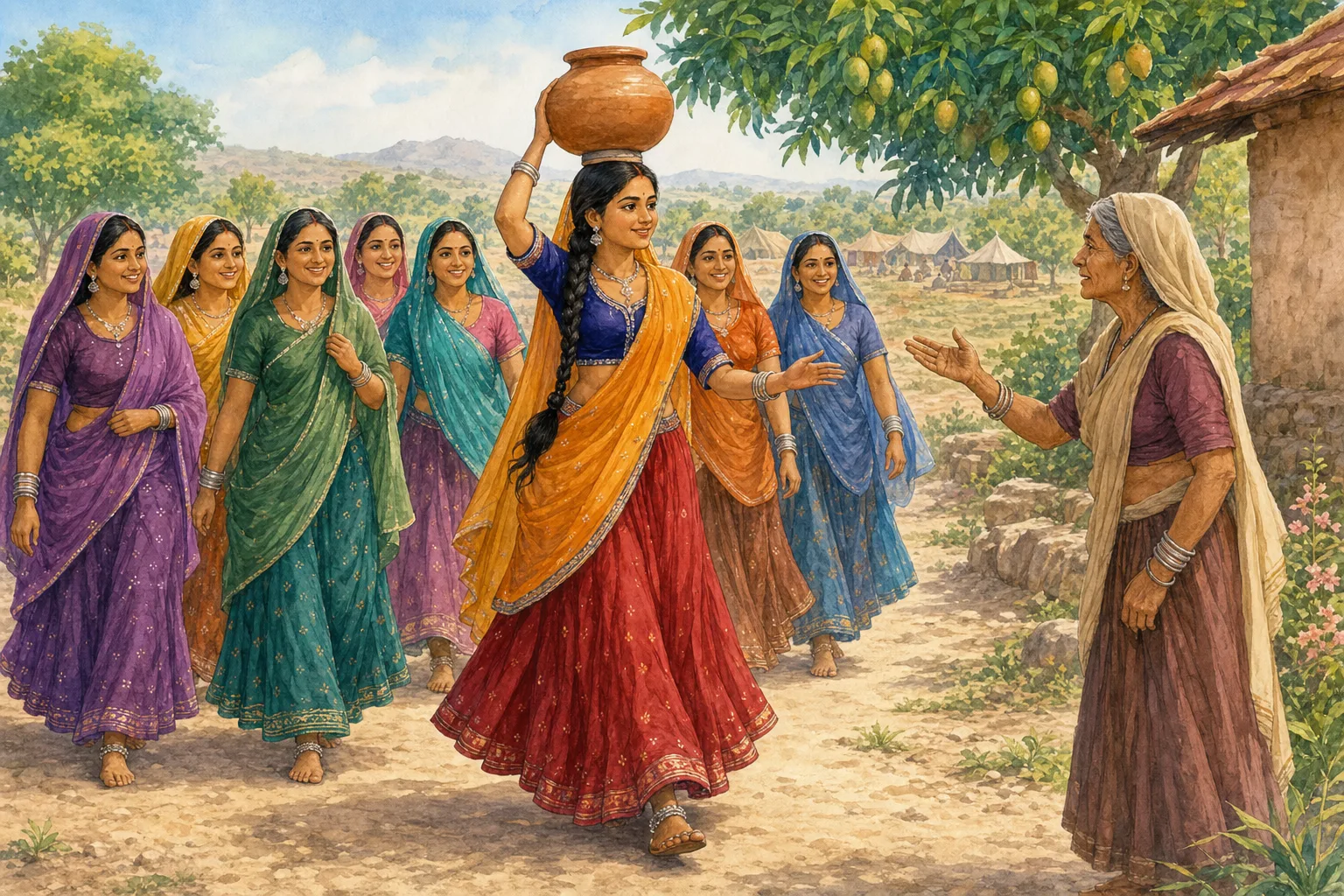
In a village in Madhya Pradesh lived a Gujari who made fresh curd each morning and carried it to town in a clay pot. She usually traveled with a group of women friends.
One day, soldiers camped near the mango grove. The villagers worried because their officer was known to be proud and to trouble people on the road.
“Do not take that path today,” said the Gujari’s mother-in-law.
“I will not go alone,” the Gujari replied calmly. “We will stay together, keep to the open road, and speak clearly if anyone troubles us.”
Her friends set out beside her.
Beneath the mango trees, the officer stepped into their path.
“Why must you sell curd?” he asked the Gujari. “Stay at my camp. I will give you costly clothes and jewels.”
The Gujari placed her pot safely on the ground and stood tall.
“You do not decide the worth of my work or my clothes,” she answered. “I am content with the life my labor supports. Please step aside and address us respectfully.”
The officer tried once more to persuade her.
She raised an open palm. “I have given my answer. No means no.”
Her companions stood firmly beside her.
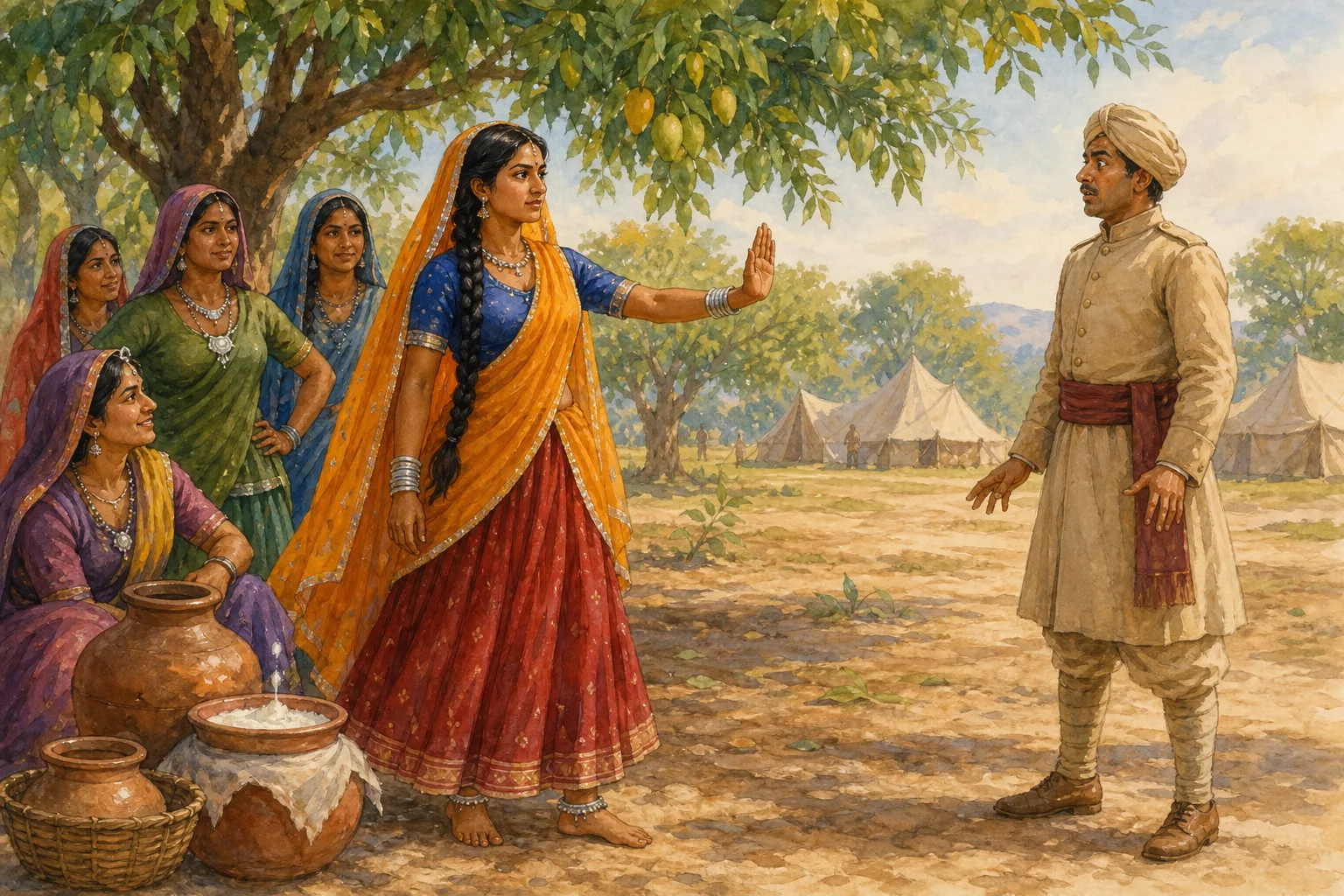
The officer looked around at their steady faces. At last he recognized his shameful behavior and moved aside.
When the commander later heard what had happened, he reminded the officer that power never gave him permission to insult another person. The officer admitted his fault.
The Gujari and her friends sold their curd and returned home safely.
“Were you not afraid?” the villagers asked.
“I was,” she replied. “Courage does not mean feeling no fear. It means speaking the truth despite fear—and standing together.”
“Courage includes speaking clearly when someone crosses a boundary.”
New stories in your inbox
One story every week, and a special tale on festivals. Free, always.
Your email goes to our newsletter provider (beehiiv) so we can send you stories. It is not linked to any child's reading on this site. Unsubscribe any time from the email footer.