Lord Jagannath and His Devotee Salabega
Long ago, Salabega was born into a Muslim family. His father, Lal Beg, served in the Mughal forces. When Salabega grew older, he too became a soldier.
During a battle, Salabega was badly injured. He returned to his mother in great pain. She lovingly advised him to remember Lord Krishna and repeat his name with faith. The devotional tradition says that Salabega recovered, and gratitude filled his heart.
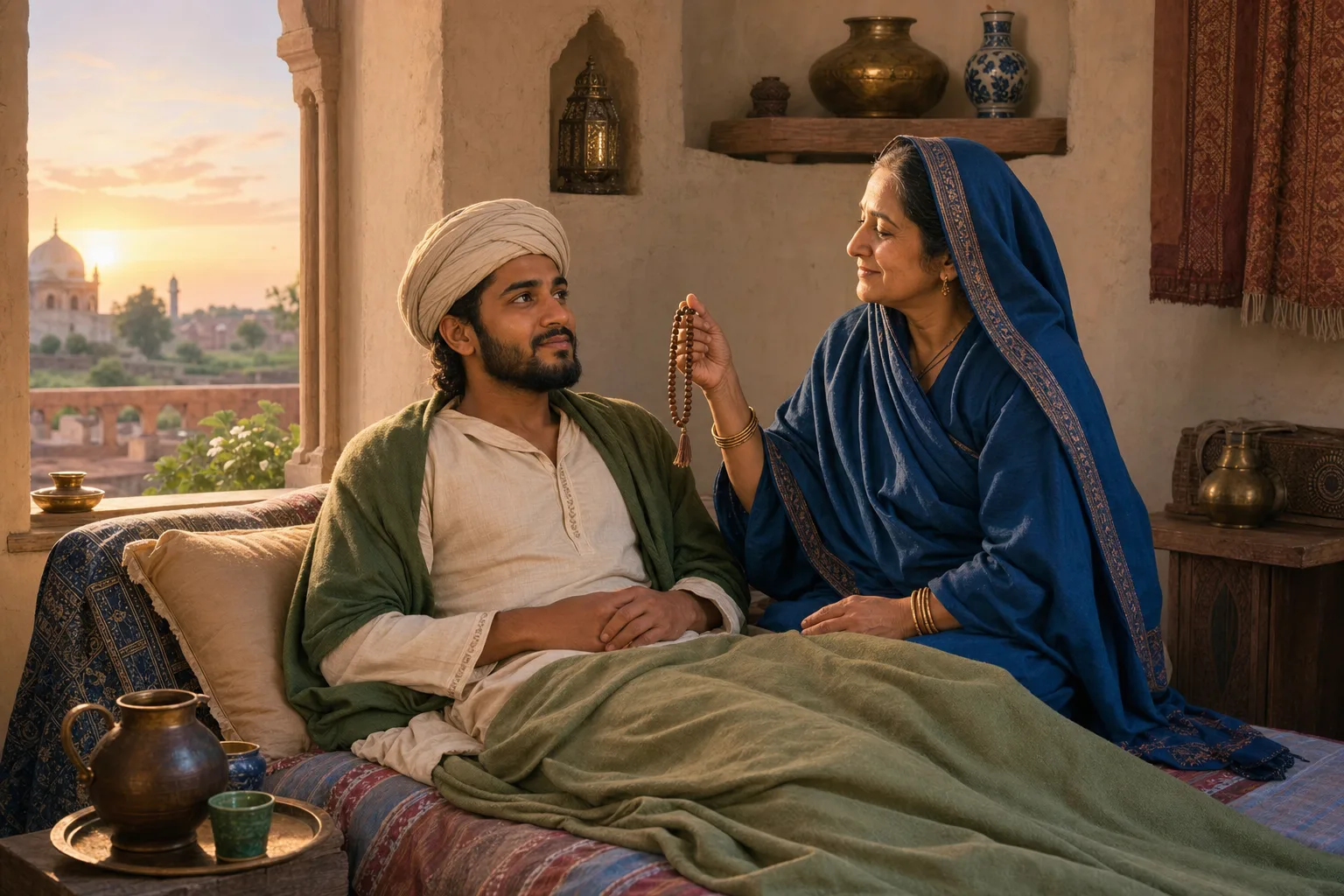
From then on, Salabega’s love for Krishna and Lord Jagannath grew deeper each day. He longed to enter the great Jagannath Temple in Puri, but the rules of that time did not allow him inside because he had been born Muslim.
Though saddened, Salabega did not abandon his devotion. He travelled to Vrindavan, worshipped Krishna, and composed heartfelt bhajans. His songs carried his love for Jagannath wherever he went.
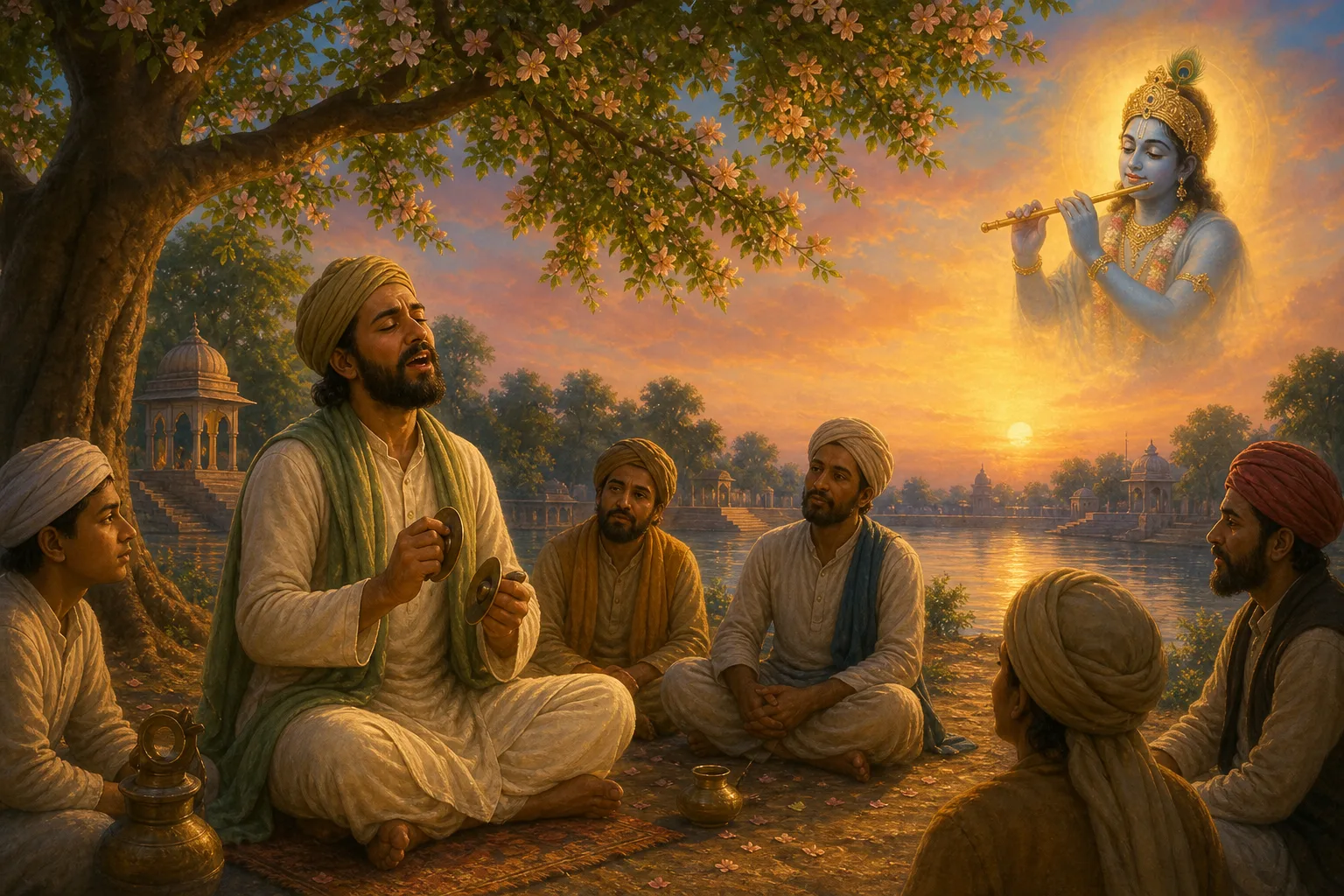
One year, Salabega began travelling back to Puri for the Rath Yatra. The journey was long, and he became very ill along the way. Afraid that he would miss the Lord’s return journey, he prayed, “O Jagannath, please wait for me until I can come and see you.”
The tradition says that during the Bahuda Yatra, Jagannath’s mighty Nandighosha chariot reached Balagandi and suddenly stopped. People pulled the ropes with all their strength. Even elephants could not make the chariot move.
“Perhaps the Lord is waiting for someone,” the devotees wondered.
At last, Salabega arrived, weak from illness and exhausted from travel. He hurried toward the chariot, folded his hands, and looked up at Jagannath with tears of joy.
Only after Salabega had received darshan, the story says, did the great chariot begin to move again.
Salabega became one of Odisha’s beloved devotional poets. In remembrance of his devotion, Jagannath’s chariot traditionally pauses near Salabega’s samadhi on Puri’s Grand Road.
His story reminds people that sincere devotion can rise above the barriers created by society.
“A loving and sincere heart cannot be kept far from the Divine.”
New stories in your inbox
One story every week, and a special tale on festivals. Free, always.
Your email goes to our newsletter provider (beehiiv) so we can send you stories. It is not linked to any child's reading on this site. Unsubscribe any time from the email footer.