Vrinda, Tulsi, and Shaligram
Long ago, there lived a powerful asura king named Jalandhar. He was brave, strong, and proud of his victories. His wife, Vrinda, was gentle, truthful, and deeply devoted to Lord Vishnu.
Vrinda loved Jalandhar sincerely. Every day she prayed for his well-being and followed her vows with complete faith. The strength of her devotion formed an unseen shield around him. As long as Vrinda's vow remained unbroken, Jalandhar could not be defeated in battle.
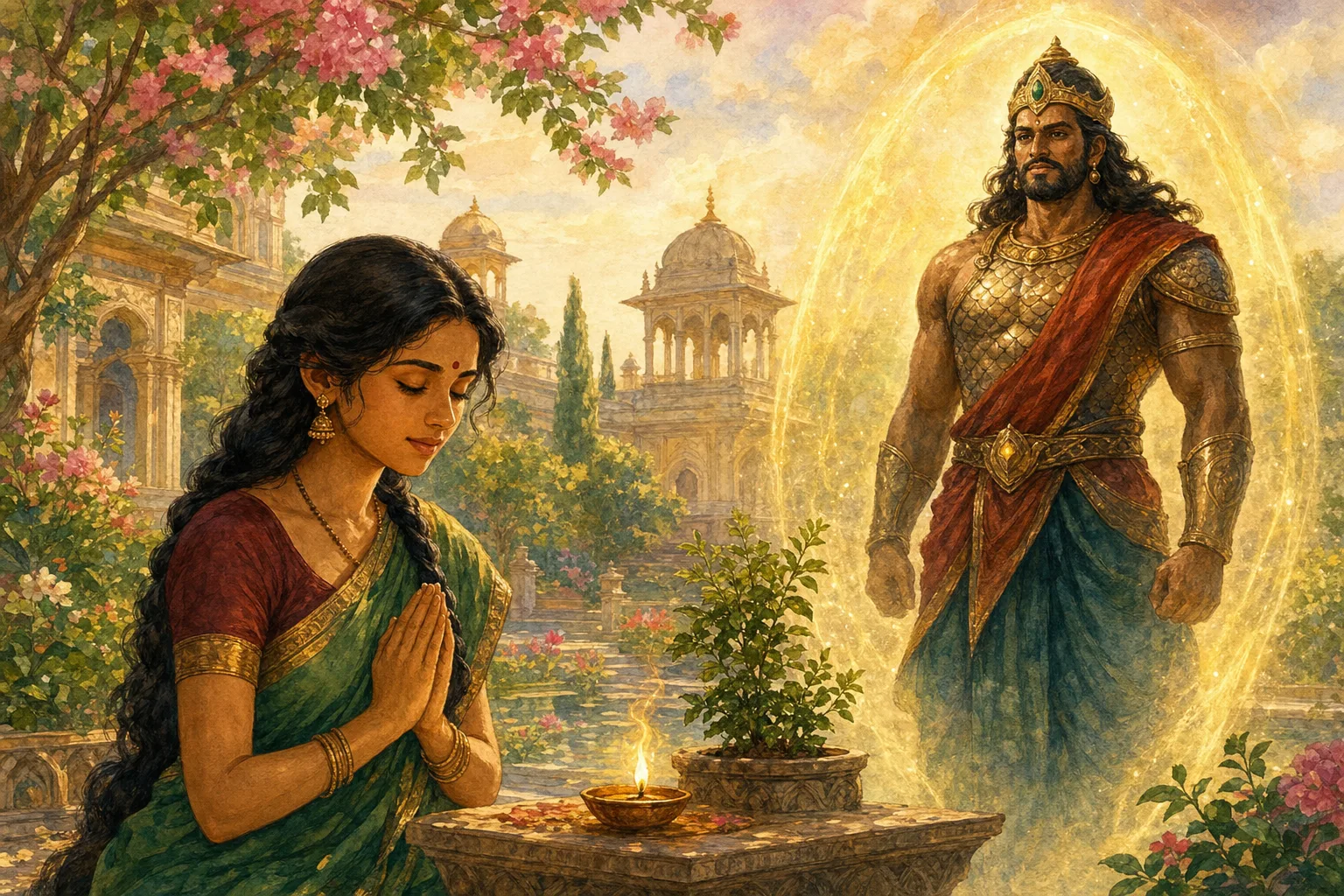
At first, Jalandhar used his strength to protect his kingdom. But slowly, victory filled him with pride. He began to believe that no one could stop him. He challenged the devas and troubled the people of heaven. The devas tried to reason with him, but he would not listen.
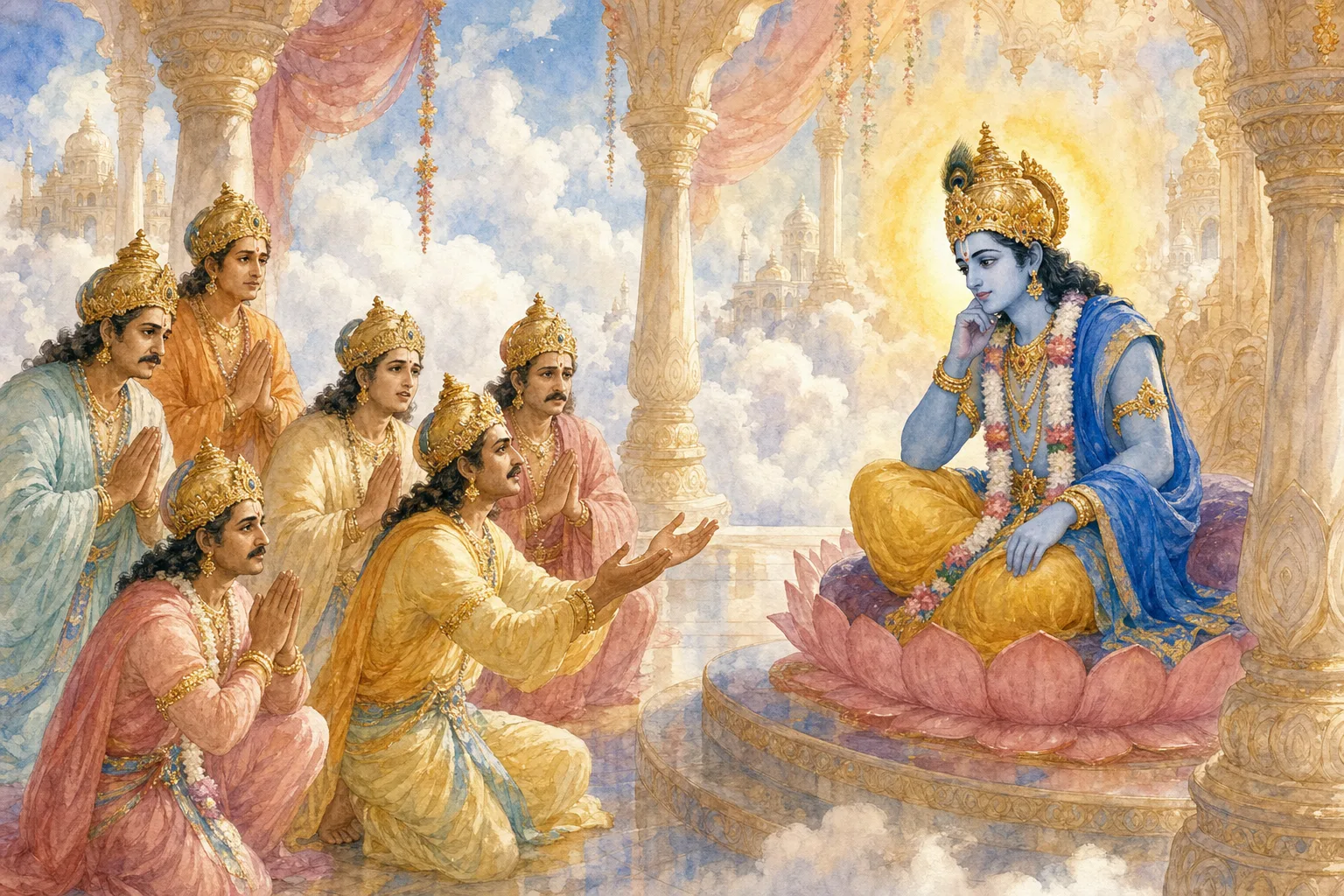
Worried and weary, they went to Lord Vishnu.
“Please help us,” they said. “Jalandhar's pride is causing suffering, yet Vrinda's pure devotion makes him impossible to defeat.”
Lord Vishnu became thoughtful. Vrinda was one of his most faithful devotees, and he knew that she had done nothing wrong. Yet Jalandhar's actions had to be stopped before more beings were harmed.
The old sacred story tells that Lord Vishnu used his maya and appeared before Vrinda in Jalandhar's form. Believing that her husband had returned safely from battle, Vrinda welcomed him. The instant her certainty was disturbed, the power of her vow was broken.
Far away on the battlefield, Jalandhar's protective strength faded. He was defeated, and his life came to an end.
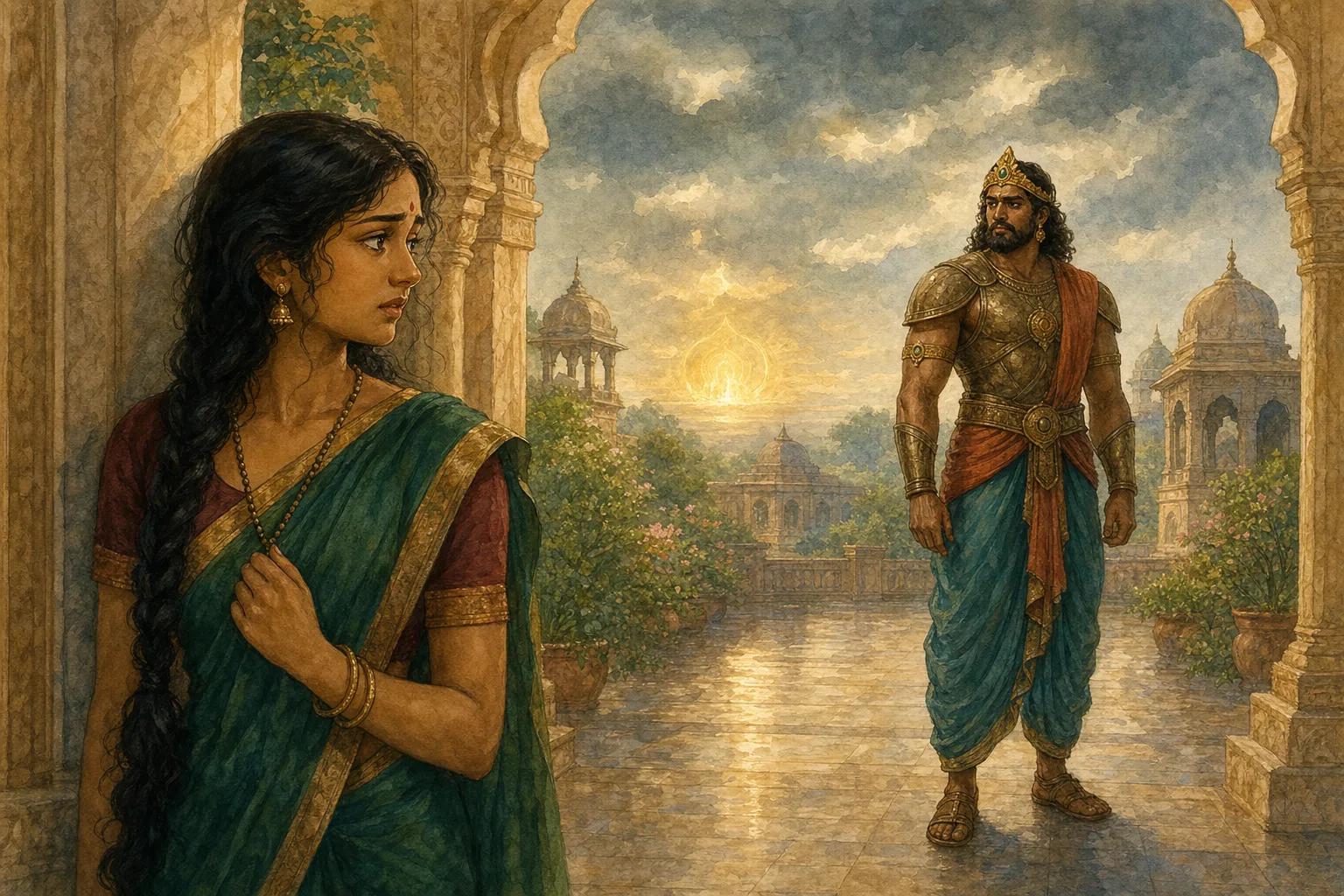
Soon Vrinda understood what had happened. She looked beyond the disguise and recognized Lord Vishnu. Her sorrow became anger—not because she had lost a contest, but because someone she trusted had used deception against her.
“Lord Vishnu,” she said, “I worshipped you with a faithful heart. Yet you used my trust to break my vow. May you become as still and unfeeling as stone!”
Her words carried the force of truth and devotion. Lord Vishnu accepted her anger without argument. He knew that the deception had hurt an innocent devotee.
When the devas saw what had happened, they asked Vrinda to show mercy. After her first grief had quieted, Vrinda withdrew the full force of the curse. But Lord Vishnu did not wish her words to become meaningless.
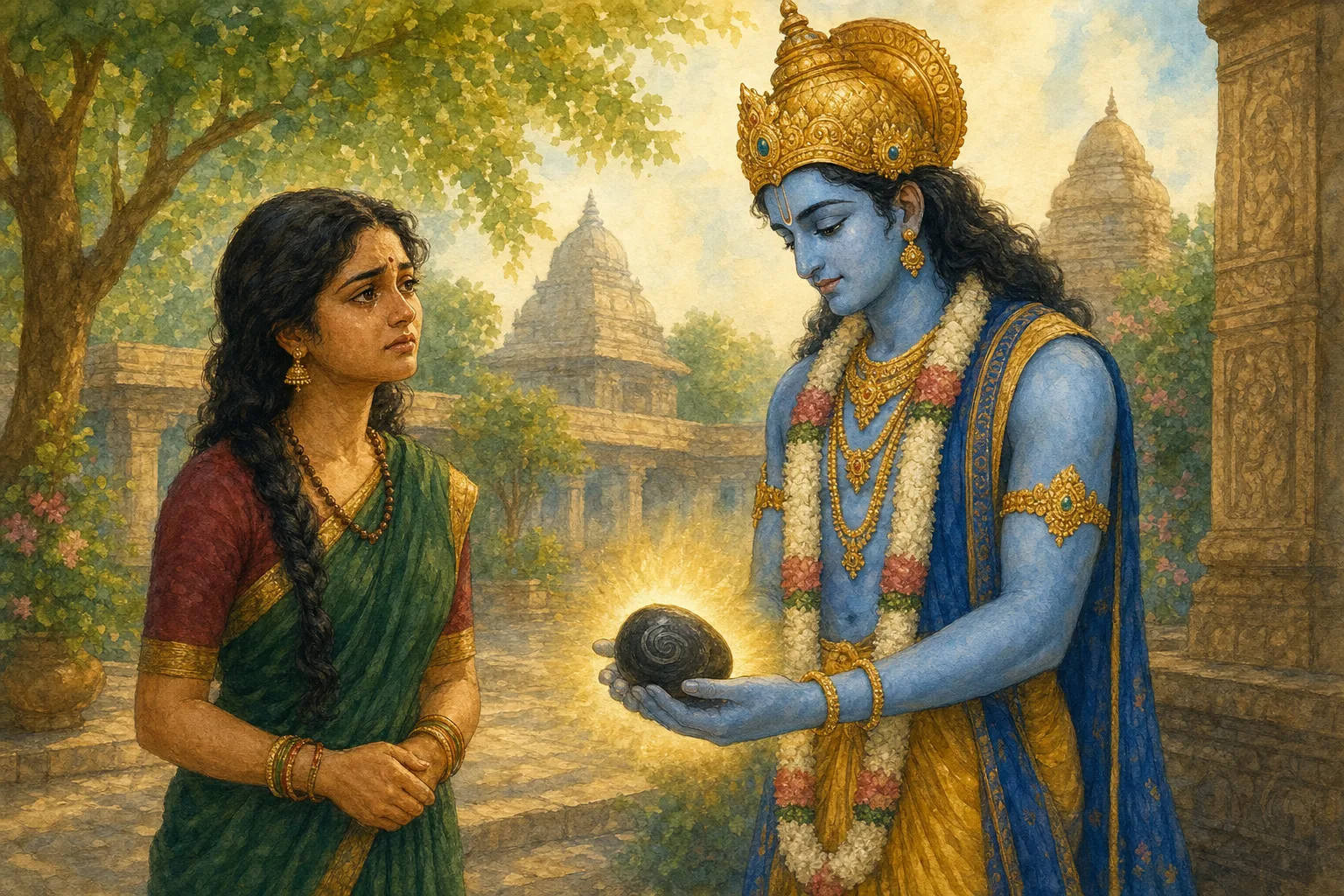
“Your pain is just,” he told her. “To honour your truth, one of my sacred forms will remain in stone.”
That divine stone form came to be known as Shaligram. Devotees worship Shaligram as a form of Lord Vishnu.
According to the tradition, after Jalandhar's death, Vrinda's earthly life also came to an end. From the sacred ashes connected with her final rites, a small green plant arose. Its leaves carried a fresh fragrance, and its presence brought peace.
The devas recognized the plant as Tulsi—Vrinda returned in a new and blessed form.
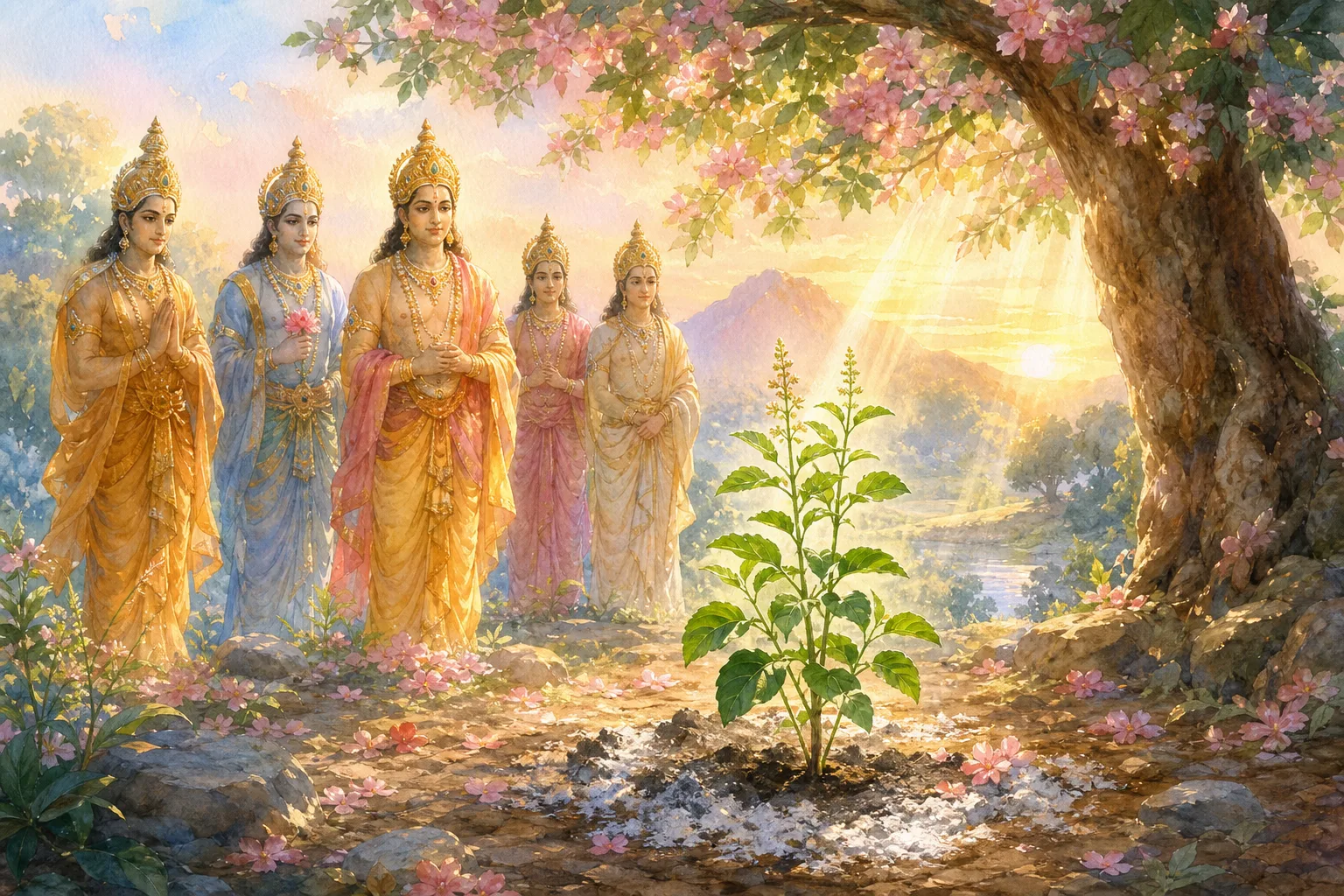
Lord Vishnu blessed her.
“Vrinda, you will live on as Tulsi,” he said. “You will be especially dear to me. Your leaves will be offered with devotion, and your place will be near me. A loving offering made to me will be considered complete when it includes Tulsi.”
To preserve Vrinda's honour and remember her steadfast purity, the devas joined Tulsi and Lord Vishnu's Shaligram form in a sacred wedding ceremony. This celebration came to be known as Tulsi Vivah.
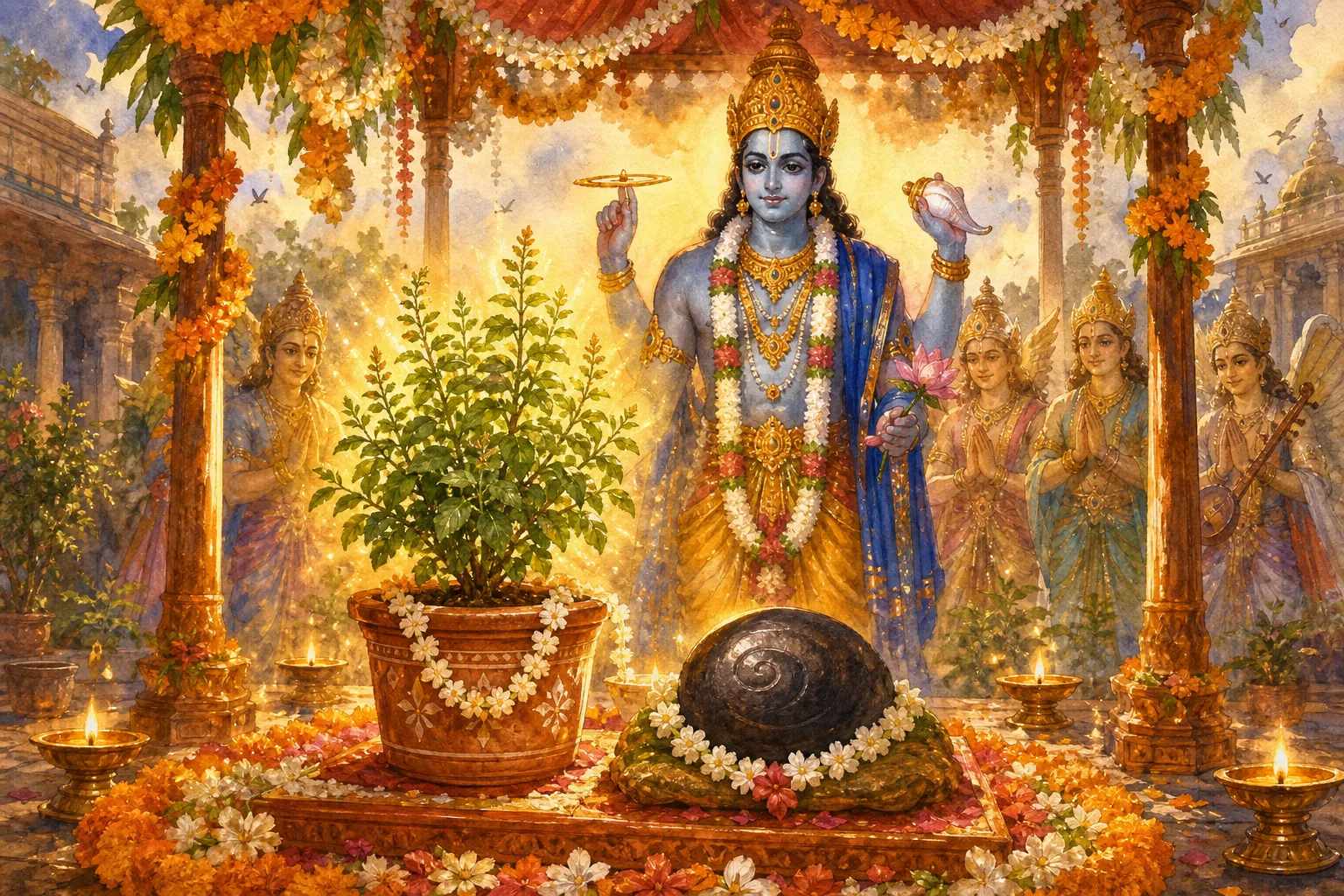
Even today, many families care for a Tulsi plant with love. Tulsi leaves are respectfully offered in worship and placed with Lord Vishnu's prasad. The Shaligram stone is also honoured as his sacred presence.
The story of Vrinda reminds us that devotion is powerful, but power without humility can lead even the strongest person astray. It also reminds us that trust must be treated with care. Lord Vishnu did not ignore Vrinda's pain; he honoured her words and gave her a lasting place in worship.
And so Tulsi's green leaves and the dark Shaligram stone are remembered together—not only as symbols of worship, but also as a promise that truth, dignity, and sincere devotion must never be forgotten.
“True strength needs humility, and another person's trust must always be treated with respect.”
New stories in your inbox
One story every week, and a special tale on festivals. Free, always.
Your email goes to our newsletter provider (beehiiv) so we can send you stories. It is not linked to any child's reading on this site. Unsubscribe any time from the email footer.