Samudra Manthan: The Churning of the Ocean
Part 1: A difficult task
Long ago, the devas had lost much of their strength. Their rivals, the asuras, had grown powerful, and the balance of the worlds was in danger.
The devas went to Vishnu for guidance.
“The Ocean of Milk holds many hidden gifts,” Vishnu told them. “If it is churned, Amrit, the nectar of immortality, will arise from it. But the task is too great for either side to accomplish alone. Make peace with the asuras and work together.”
The devas approached the asuras and proposed a truce. Both sides agreed to share the work of churning the ocean.
They chose the enormous Mount Mandara as their churning rod and Vasuki, king of the nagas, as the churning rope. Yet even all their combined strength could not move the mountain far enough.
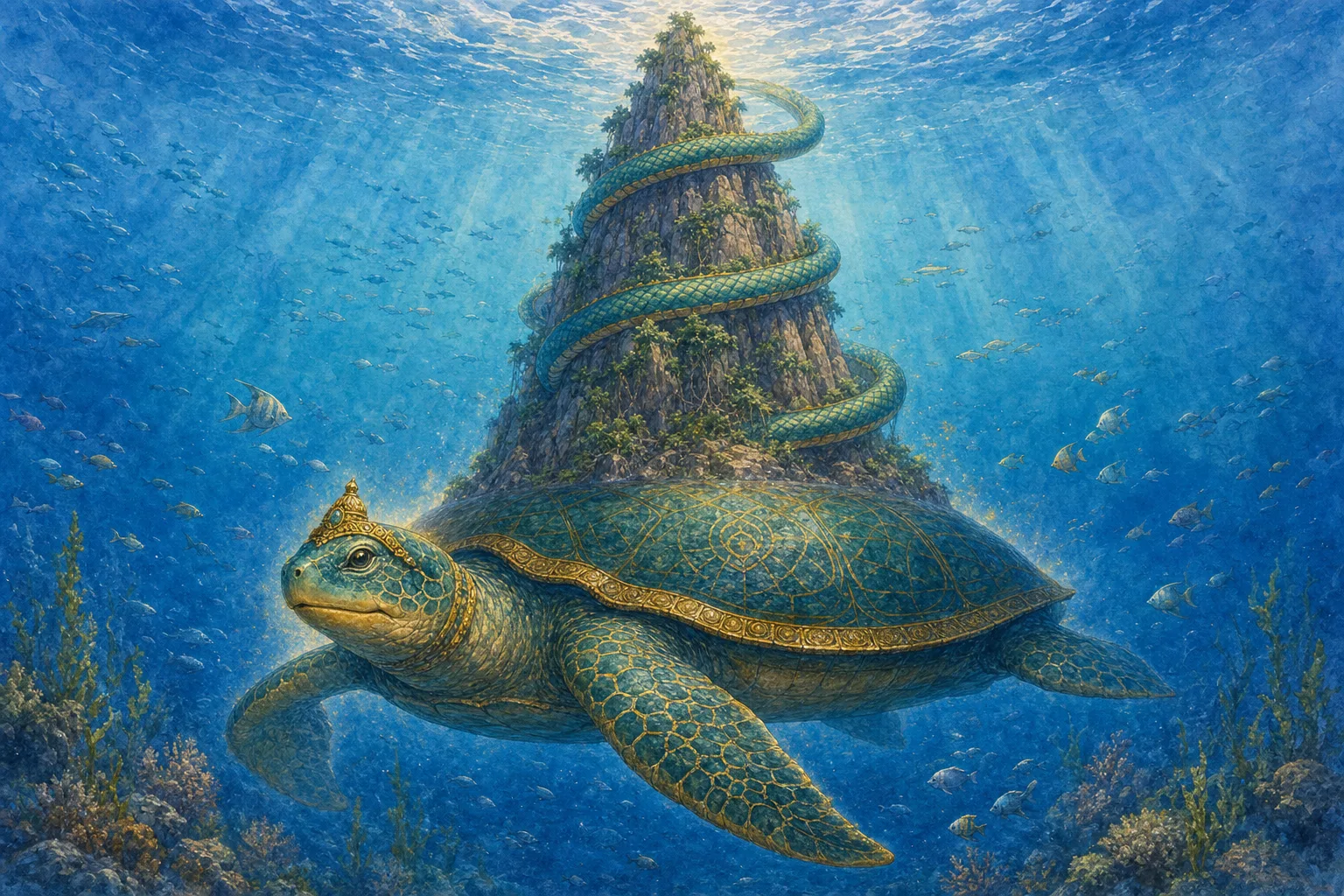
Vishnu helped carry Mount Mandara to the Ocean of Milk. But when they placed the mountain in the water, it began to sink.
Vishnu then took the form of Kurma, a gigantic tortoise. He dived beneath the waves and supported Mount Mandara upon his broad shell. With the mountain standing firmly on Kurma’s back, the great churning could begin.
Part 2: The ocean begins to turn
Vasuki coiled his long body around Mount Mandara. The devas held one end, and the asuras held the other.
They pulled back and forth.
The mountain spun. Waves rose like hills, foam covered the water, and the ocean roared. Trees and healing herbs from the mountain mixed with the water. Whenever the exhausted churners lost their strength, Vishnu encouraged and supported them.
The task demanded patience from everyone. Devas and asuras who usually opposed one another had to pull in rhythm. If one side stopped, the mountain stopped too.
At last, the depths of the ocean began to stir.
But the first thing to emerge was not a treasure.
Part 3: Shiva and the terrible poison
A dark poison called Halahala rose from the waves. Its fumes spread in every direction, threatening devas, asuras, animals, plants, and people.
Everyone stepped back in fear. No one knew how to contain it.
They turned to Shiva for help.
To protect creation, Shiva gathered the poison and drank it. Instead of letting it pass through his body, he held it safely in his throat. The terrible poison turned his throat a deep blue.
From that time onward, Shiva became known as Nilakantha, the Blue-throated One.
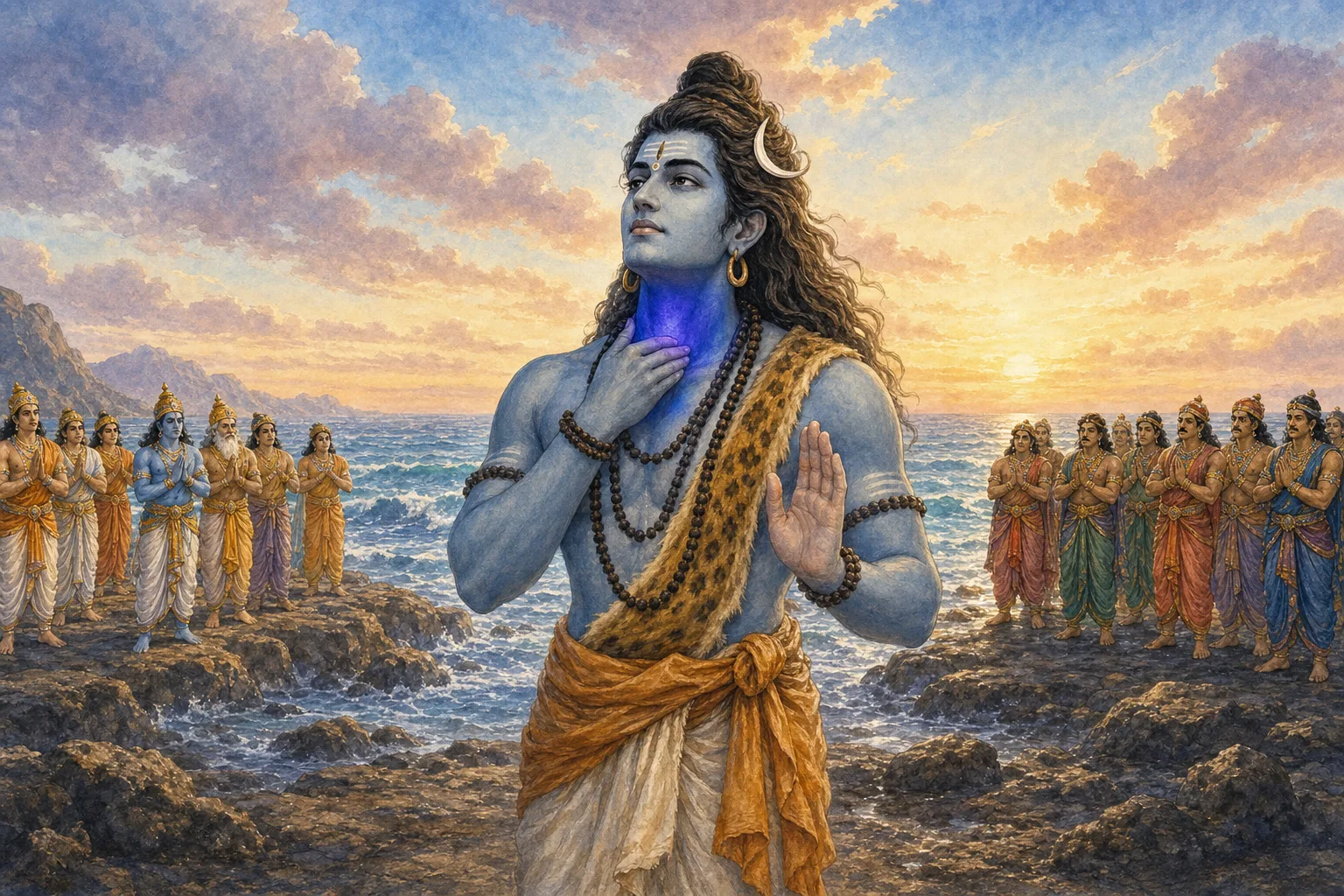
The danger had passed, but Shiva’s sacrifice reminded everyone that great power must be handled with courage and responsibility.
The devas and asuras returned to their places and began churning again.
Part 4: Gifts from the ocean
One by one, wondrous beings and treasures appeared from the shining water. Different traditions describe their number and order in different ways, but many tell of these gifts:
Surabhi, the divine cow associated with nourishment and abundance, rose from the waves.
The fragrant Parijata tree appeared, covered in blossoms.
The graceful apsaras emerged, bringing music and dance to the celestial realms.
The cool, radiant Moon rose from the ocean and took its place in the heavens.
Uchchaihshravas, a magnificent white horse, leapt from the water, followed by Airavata, the great white elephant who became associated with Indra.
The brilliant Kaustubha jewel appeared, and Vishnu wore it upon his chest.
Varuni, a goddess associated with a special celestial drink, also arose from the ocean.
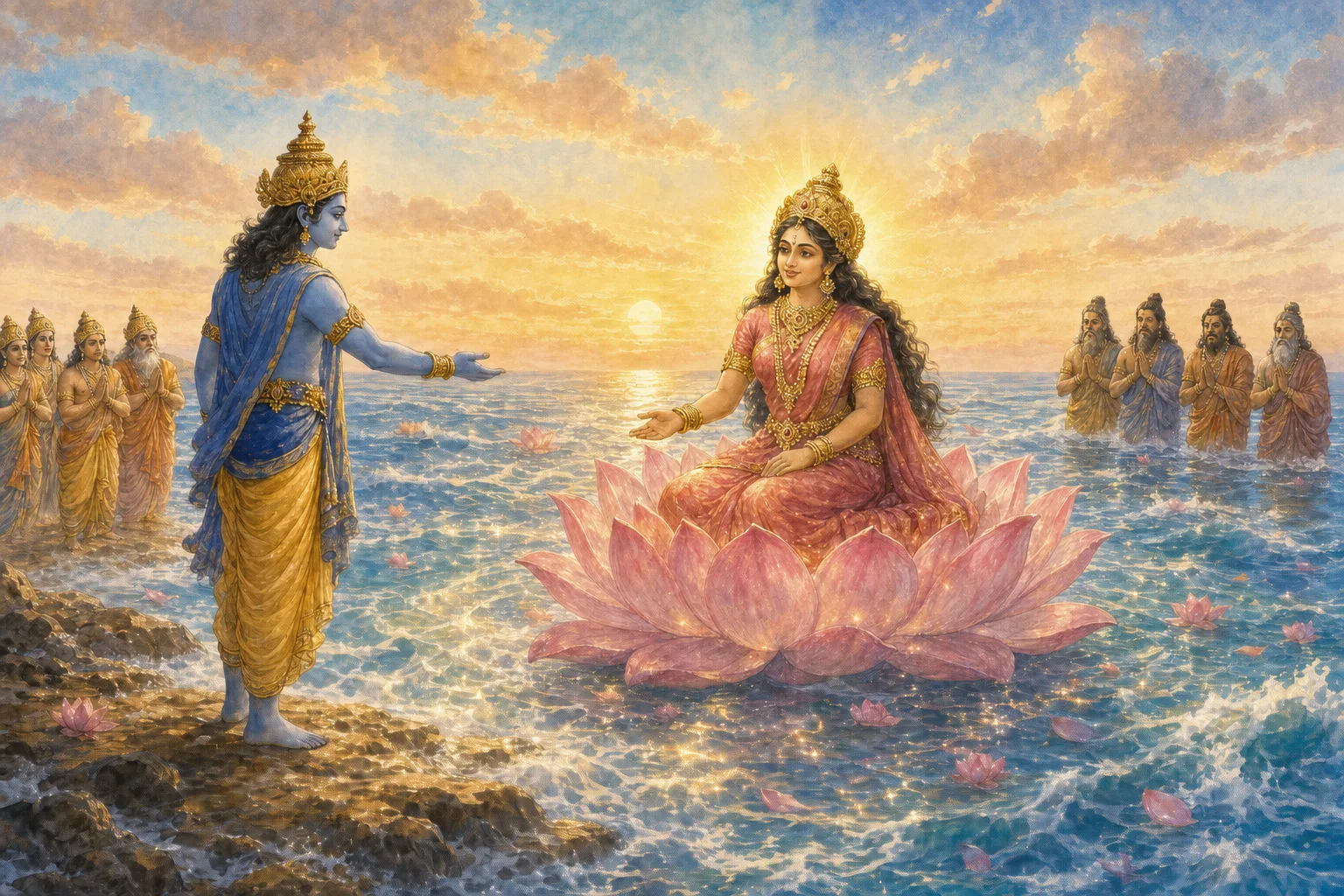
Then Lakshmi, goddess of prosperity, harmony, and good fortune, appeared seated upon a lotus. The devas and sages welcomed her with respect. Lakshmi looked among those assembled and chose Vishnu as her companion.
Finally, Dhanvantari, the divine physician, rose from the waves carrying a vessel filled with Amrit.
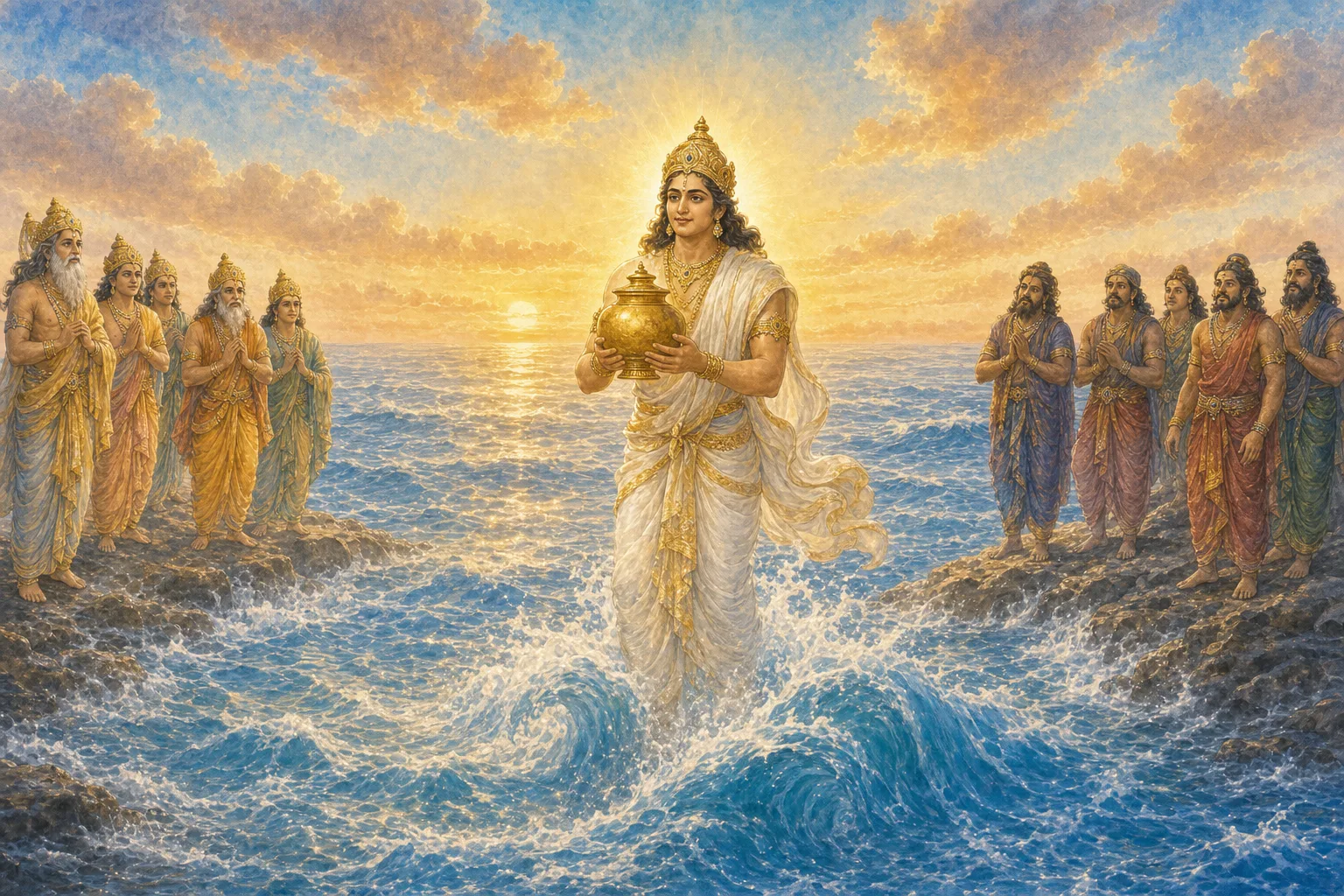
The long-awaited nectar had appeared.
Part 5: Mohini, Rahu, and the nectar
The moment the asuras saw the vessel, they seized it. An argument broke out, and the cooperation that had made the great churning possible began to fall apart.
Vishnu took the enchanting form of Mohini and approached the quarrelling asuras. Mohini offered to distribute the nectar in an orderly way. Captivated by her presence, the asuras placed the vessel in her hands.
Mohini seated the devas and asuras in separate rows. She then served the Amrit to the devas.
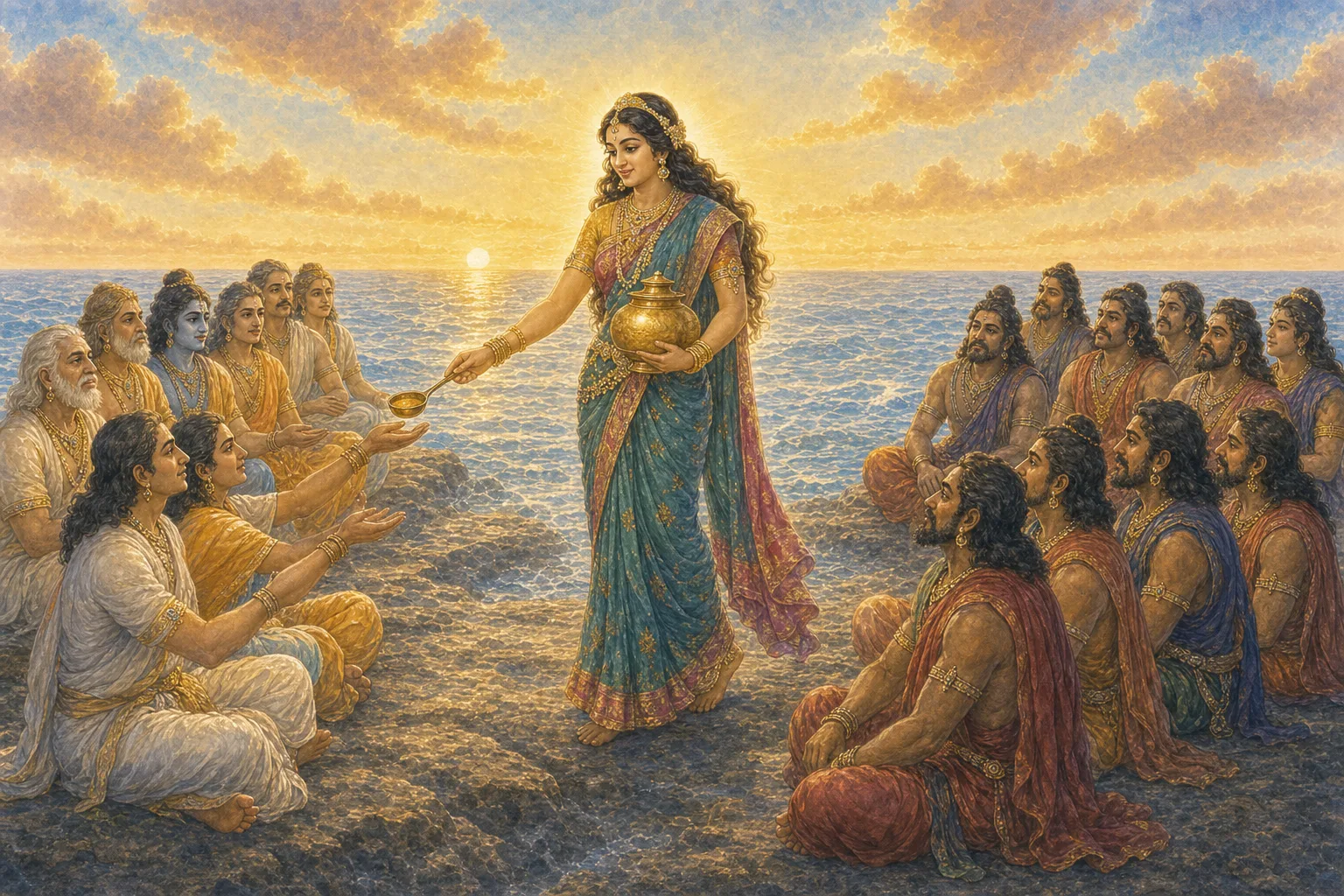
One asura named Rahu understood what was happening. He disguised himself as a deva and quietly sat between Surya, the Sun, and Chandra, the Moon.
Rahu had just tasted the nectar when Surya and Chandra recognized him and alerted Vishnu. Vishnu’s discus flew through the air and separated Rahu’s head from his body before the nectar could travel farther.
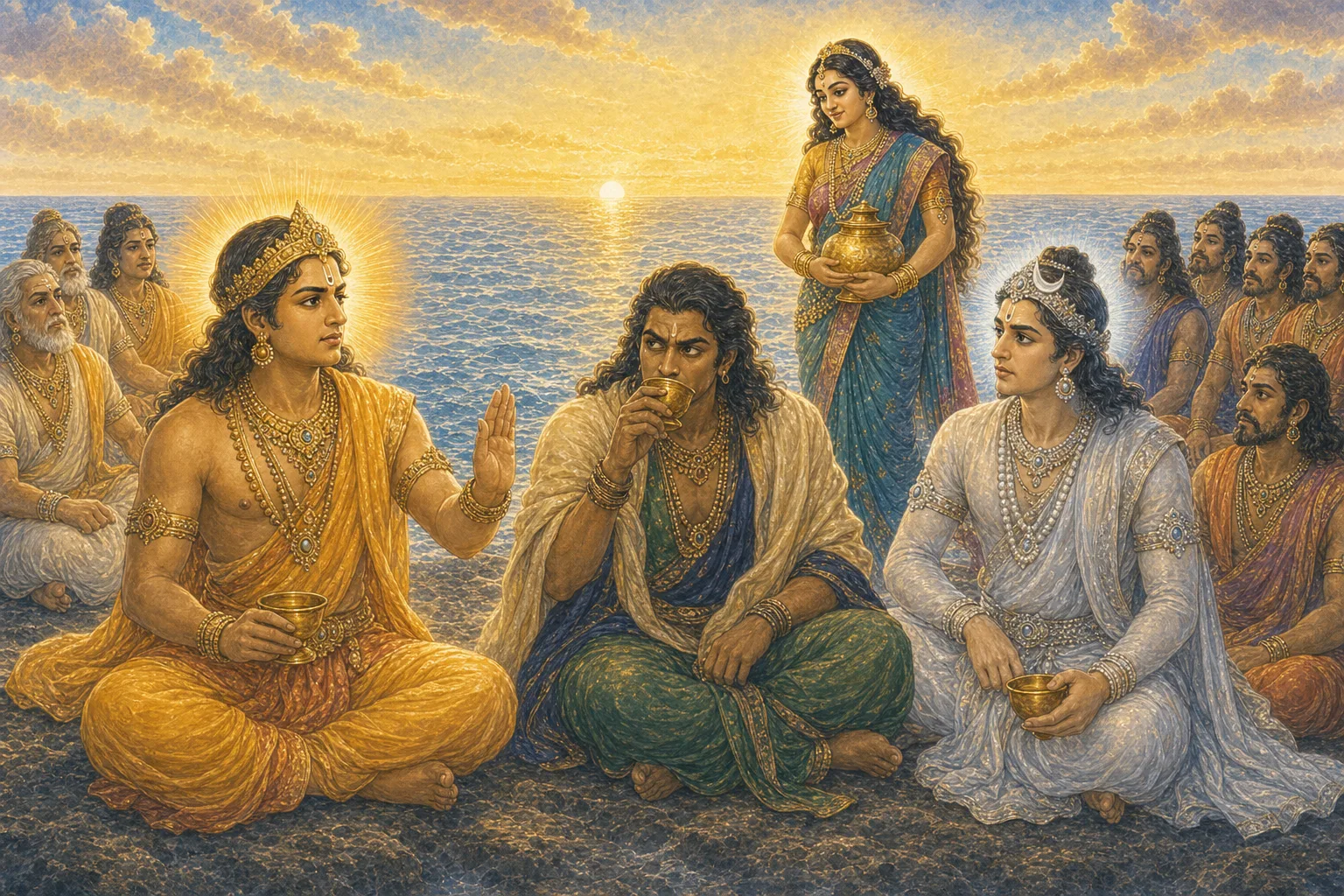
Because the Amrit had touched his throat, Rahu’s head could not die. In later tradition, the remaining part became associated with Ketu. The story says that Rahu remained angry with Surya and Chandra for revealing his disguise and sometimes tried to swallow them.
That is why traditional storytellers connect Rahu and Ketu with solar and lunar eclipses. But Rahu can never hold the Sun or Moon for long, and the light always returns.
The devas regained their strength, and the churning came to an end. Mount Mandara returned to its place, Vasuki was released from his exhausting task, and Vishnu rose from the ocean in his divine form.
The story of Samudra Manthan reminds us that difficult goals can require cooperation even between rivals. It also teaches that effort may bring both danger and treasure, and that strength must be guided by patience, courage, and wise judgment.
“Great achievements require cooperation, patience, and the wisdom to use power responsibly.”
New stories in your inbox
One story every week, and a special tale on festivals. Free, always.
Your email goes to our newsletter provider (beehiiv) so we can send you stories. It is not linked to any child's reading on this site. Unsubscribe any time from the email footer.